USASBE 2016, Entrepreneurship Everywhere?

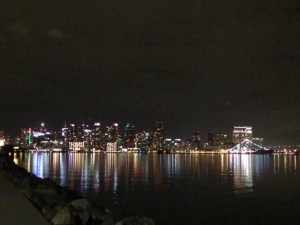
San Diego at nightI recently attended my fourth USASBE conference in the last seven years. (USASBE = United States Association of Small Business and Entrepreneurship.) Despite the fact that USASBE awarded the Pave Program in Arts Entrepreneurship with its Excellence in Entrepreneurship Education Specialty Program Award last year, I always feel a bit like a fish out of water at this conference. About 80% of the attendees are entrepreneurship faculty from business schools. Nevertheless, there is a very active Arts Entrepreneurship special interest group (SIG).

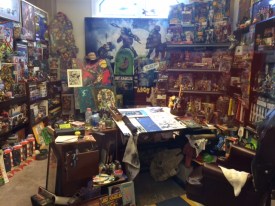
A high point of the conference was a tour of some of San Diego’s infrastructure for San Diego Comic Art Museumarts and culture entrepreneurial activity organized by the SIG. Led by San Diego State’s Donna Conaty, we toured the recently refurbished Naval Training Center Arts District, which includes, among other facilities, dance spaces shared by three of the city’s dance companies and a museum of comic book art. It’s pretty wonderful that these decommissioned military faciliSan Diego Fab Labties have been made into arts and culture spaces. We also visited the developing “IDEA District” in downtown San Diego, anchored by the New College of Architecture and inclusive of a Fab Lab, among other spaces, both rehabbed and new construction.
A low point of the conference was the unfortunate keynote address by noted entrepreneurship scholar and educator Donald Kuratko. In an aggressive and at times belligerent tone, “Dr. K” indicted people (like me) who teach entrepreneurship within disciplines like engineering or the arts rather than in business schools. He accused such practices of diluting the study of entrepreneurship and went so far as to say that when entrepreneurship classes are taught in engineering (or, by inference, arts) schools, the student credit hour generation — and therefore the very revenue model of business schools — is threatened. He sounded defensive and angry; I don’t know that I have ever been made to feel so unwelcome. Ironic, given that the conference theme was “Entrepreneurship Everywhere.”

My positive feelings toward the organization were restored by the Bill Aulet’s plenary speech a few hours later in which he asserted that “entrepreneurship should not be taught in business schools if it is to be driven by innovation.” Aulet is from MIT’s Entrepreneurship Education Forum, which mission is “to promote entrepreneurship education by building a community that shares information and best practices, then integrates them and improves on them through open discussion…” While welcoming – even requiring – cross-campus entrepreneurship education, he also asserted that there is a lack of serious, rigorous scholarship in the field that creates or draws from good data sets. I have been saying similar about arts entrepreneurship.

Three years ago, when I first presented incubator research at USASBE’s San Francisco conference, the observed theme, or the methodology du jour, was Steven Blank’s lean launch and customer development process (he gave the keynote that year). My observation of the 2016 event is that there is a lot of interest in “design thinking” methodology as developed at IDEO and the Stanford d.school. Ultimately, these two “methods” have a lot in common – including empathic listening to the “customer,” or as I prefer to call people, “audience.” Fitting, then, that design thinking is the philosophic and pedagogic approach underlying a new degree being launched by ASU’s Herberger Institute for Design and the Arts: the Master of Arts in Creative Enterprise and Cultural Leadership.
Posted in Uncategorized | 2 Comments

Anticipating Liz Lerman

Acclaimed choreographer, maker, community artist, and MacArthur fellow Liz Lerman is joining the faculty of ASU where I work, first on a visiting basis and then, next year, a bit more permanently. She is teaching a course this semester entitled “Animating Research” and has recruited five researchers/research teams to work with the 25 students enrolled in the course from across the Herberger Institute for Design and the Arts. I am honored, excited, and more than a little bit nervous about being one of those researchers.
 
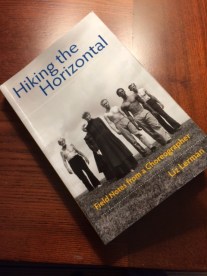
Hiking the horizontalIn anticipation of the class, I am reading Liz’s book, Hiking the Horizontal: Field Notes from a Choreographer. Reading the book it has become clear that she is a consummate arts entrepreneur. She recounts how, throughout her creative life, she recognizes and then seizes opportunities to make art. She does this, for example, by recognizing that a home for the elderly can be a site for creation or a biologist’s lab can provide material for choreographic inquiry. She creates the structures necessary to connect her significant means (her talent, intelligence, and generosity) with the desirable ends of excellent participatory art. She sums up her entrepreneurial approach in four simple words in the “manifesto” that appears on page 40:
“Real work, real reward.”

I look forward to both in the collaboration I am about to undertake with Liz and her students.

Posted in Uncategorized | 2 Comments

Explaining Arts Entrepreneurship

explaining entrepreneurship

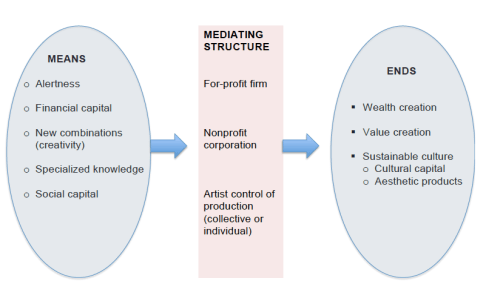
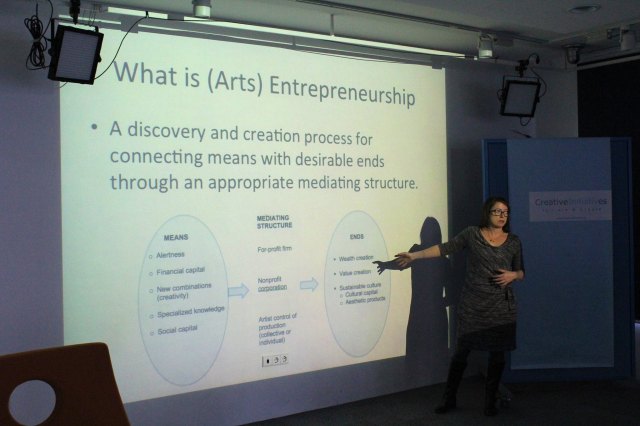
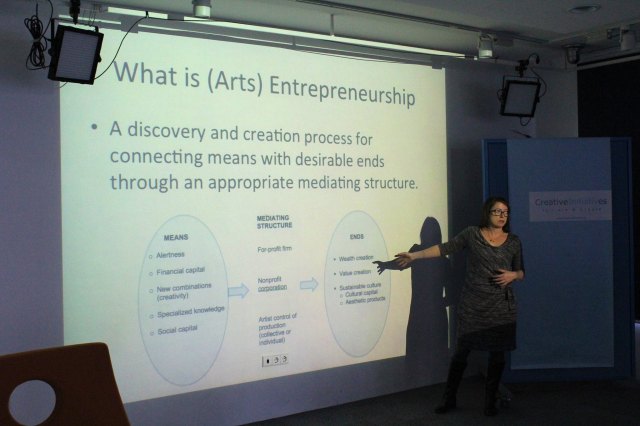
Here I am in Tbilisi, Georgia, discussing arts entrepreneurship with students from Free University Tbilisi, Georgia Institute of Public Administration, and Georgia Theatre and Film Conservatory. I described arts entrepreneurship as a discovery and creation process for connecting means with desirable ends through an appropriate mediating structure where those ends include a sustainable culture derived from cultural capital and aesthetic products. For the long-form 10,000 word development of that explanation, see “Means and Ends: A Theory Framework for Understanding Entrepreneurship in the US Arts and Culture Sector” in the Journal of Arts Management, Law and Society, recently published.

Screen Shot 2015-12-26 at 6.40.49 PM

Posted in Arts education, Arts entrepreneurship, arts infrastructure | Tagged , , , | 5 Comments

NYE 2015

New_Years_Eve_fireworks_Oulu_20121231_03I started this blog on New Year’s Eve 2010 to give voice to some ideas that had been percolating about art, creativity, policy, entrepreneurship, and (occasionally) cooking. In this fifth year, Creative Infrastructure sustained a growth trajectory, with about 22,000 visitors, three times the number of two years ago. Last year’s 184,000+ unique visitors were an anomaly thanks to the viral popularity of “Just Say NO!,” my advice to creative industries workers asked to “do it for the exposure.” While this remained my single most popular post in 2015, international interest in developing infrastructure support for fledgling arts enterprises may be the reason that 2013’s “What is an ‘Arts Incubator’?” was the second most popular post on the site, two years after publication.

pile of booksWho knows what 2016 will bring? My research is moving away from arts incubators to the related topics of training infrastructure for individual artists, artist networking, and the relationship between art, money, and entrepreneurship — so expect to see more on these topics. We are launching a new Master of Arts degree in Creative Enterprise and Cultural Leadership at ASU, the preparation for which will likely lead to several posts about creativity and intellectual property (as I spend this period between semesters reading a literal pile of books on these topics). Cooking — and the experiential learning environment of the kitchen — will, I hope, remain a central metaphor for creative activities of all kinds. I will continue to provide summaries of the (too many) conferences I attend; travel, both domestic and international, will no doubt lead to observations to share here. The future is bright.

Happy New Year!

Posted in arts infrastructure | Tagged , , , , , , , | Leave a comment

Time

Perhaps it’s because I recently watched the space travel epic Interstellar while on a 10 hour flight from Istanbul to JFK, or perhaps it’s because I’m HornsbyWaterClock_SwissClockDiagram(slightly) over 50, or perhaps it’s because there is always a long “to do” list to work through, but I have been thinking a lot lately about time and how time is the most precious resource in our creative infrastructure. Think about it: there are ways to earn/raise/acquire more money and with more money you can hire more talented people. But time is fixed and finite, Interstellar not withstanding. The Internet has helped compress time, in a way, making it possible to collaborative across distance both synchronously and asynchronously. It has made the norms of time-based behavior more fluid (my students think nothing of emailing me at 2am and I don’t need to wait until the 6am delivery of a newspaper to read the day’s headlines). Yet, it still takes two minutes to brush my teeth and there are only 1440 minutes in a day.
Arts audiences experience time in a similarly finite way. When they purchase a ticket they not only exchange money, they are exchanging their time and attention for our artistic time and attention. Too often, especially as arts managers, we think primarily of the financial exchange that might occur between audience and artist/producer. Consider, too, that in addition to the cost of a ticket, your audience is spending their most precious resource, their time.

Posted in arts infrastructure, Arts management | Tagged , , , | Leave a comment

Tbilisi, Day 3 – Cultural Diplomacy (or, a conference and a feast)

Although I was in no way officially representing the United States, my role at the conference hosted by Creative Initiatives on my 3rd day in Tbilisi was to provide an overview of US arts and culture incubation practices. I was able to draw on my research in this area, and specifically on an in-depth cross-case analysis of four arts incubators of different types: Arlington Arts Incubator, Intersection for the Arts, Center for Cultural Innovation, and Mighty Tieton. I explained that arts and culture incubators lower barriers for individual artists and small arts organizations through direct service provision, reduced transaction costs, and knowledge sharing and by providing a “seal of approval” and risk safety net that taken together enable greater artistic risk-taking as well as individual or organizational self-sufficiency and sustainability.

The conference included several Georgian government officials from the Ministry of Culture and the Ministry of Economy and Sustainable Development, as well as the Estonian and Lithuanian Ambassadors to Georgia. As someone largely unschooled in cultural diplomacy, I was fascinated to hear about how these three countries are working individually, together, and with existing EU initiatives to build support infrastructures for the arts and culture (i.e., creative industries) sector.

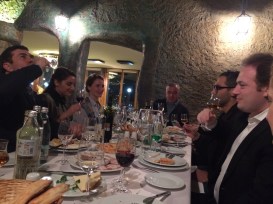
IMG_1592And then there was the Georgian Supra. A “supra” is a feast at which there is much delicious food and many many toasts. Irakli Kashibadze (far left), the chairman of the Georgia Innovation and Technology Agency, hosted this event for the conference organizers and their foreign guests, which included myself and two gentlemen from Russia who had presented on a co-working and event space they developed in Moscow. Kashibadze served as the “tamada,” or toast master, pouring glass after glass of “chacha,” a Georgian liquor similar to grappa, often insisting on a “bottoms up” approach to his toasts to, variously, the future, collaboration, creativity, and so on. While I was clinking glasses in a toast to friendship between the US and Russia, the two countries and the rest of the UN Security Council unanimously agreed to a roadmap to a diplomatic solution to the Syrian civil war. To the future, indeed!
 

Posted in Arts entrepreneurship, arts infrastructure, Arts policy, Culture and democracy | Tagged , , , , , , , , , | Leave a comment

Tbilisi, Day 2- The Workshop (and dinner)

The main event of day 2 was a workshop for students and faculty from several universities, including the Georgia Institute of Public Affairs and the Free University, which we toured with the head of its Department of Visual Arts and Design, Irena Popiashvili. Irena returned to Georgia after 20 years in the US where she co-owned the Newman Popiashvili Gallery in New York to head the Georgia Academy of Arts. She was recruited in 2013 by the new Free University of Tbilisi to build its program in visual arts and design. Now in its second year, the program accepts 30 students annually into three tracks: visual arts, graphic design, and interior design. The entire university is on the campus of what was

tbilisi 7 studio

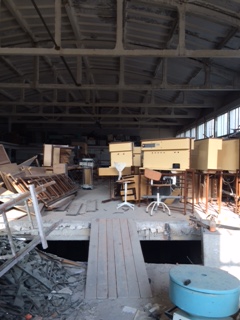
One of several unused buildings on the Free University campus

built as the Soviet Agrarian University during the Soviet era. Some buildings are still empty and un-renovated following the end of the Soviet era and are now home to mountains of 1970s furniture and equipment.

Tbilisi 8

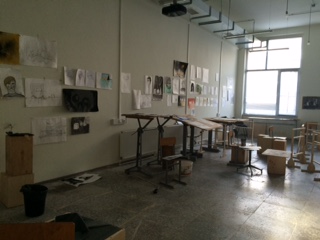
One of the undergraduate studios

The art studios, however, are lovely – light-filled and sparsely furnished. For an undergraduate to have access to such studio spaces 24/7 is a real gift.

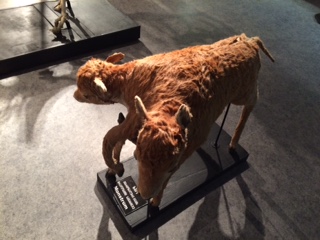
Tbilisi 9 goat

This two-headed goat is one of several anatomical oddities in the natural history museum on the Free University campus.

My sense of the fluidity of time and planning discovered yesterday continued as we talked about maybe grabbing a snack, or maybe heading directly to the venue, which we ultimately did. Arriving slightly ahead of our set-up time of 3:00, the technical staff responsible for turning on the projector and such wasn’t around. Again, context is everything. In the US, I would have been incensed, calling people, trying to track down the missing technical assistant. But my presentation was prepared, the slides were on my computer, and I could see the cable and adaptor all ready to go, so I just sipped on some Nescafe and chilled. The lesson to be learned here, of course, is I don’t need to be incensed at home either – the presentation is ready, the adaptor is within view, and I can just sip on coffee (preferably drip or French press, not Nescafe) at home too. “Its all good.”

attendees 1

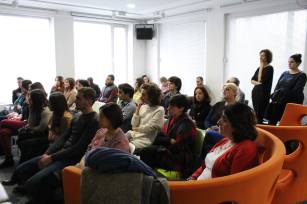
About 30 students attended my arts entrepreneurship workshop

Given that most of the publicity, including an appearance by my hosts on Georgia’s equivalent of Good Morning America, happened in the last 48 hours, the workshop was surprisingly well attended by 30-35 students and 8-10 faculty members from four different Georgian universities and arts conservatories.

explaining entrepreneurship

Explaining arts entrepreneurship as a discovery and creation process for connecting means with desirable ends

I talked about various definitions of arts entrepreneurship, introduced them to the Pave Program in Arts Entrepreneurship, and shared some tools for teaching/learning arts entrepreneurship through a case study of SAM: Student Arts Market.

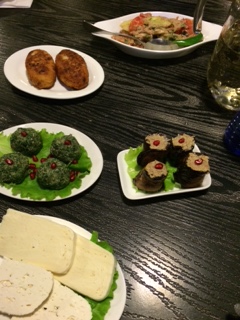
Being the food lover that I am, the highlight of the day was my Georgian dinner. My hosts ordered a selection of traditional Georgian foods, including salad with walnut sauce (walnuts show up in some form in almost every meal), mchadi (a kind of corn-flour bread with cheese bake into it), badrijani (rolls of egpplant filled with walnut paste), spinach pkhali (balls of chopped spinach, onion, walnuts (it’s a theme), and spices), several Georgian cheeses, and piles of khinkali, juicy Georgian tbilisi 6 dinnerdumplings filled with veal, pork, or for vegetarians like me, mushrooms. I learned that the Georgian style of wine is aged in clay vats that are buried underground giving the wine a strong tannic or must flavor (I opted for Georgian wine aged in the European style, not wanting to overpower the taste of the food – or so I explained).
Posted in Arts education, Arts entrepreneurship, Arts policy, Higher education | Tagged , , , , , , , | 1 Comment

Tbilisi Day 1, Fluidity

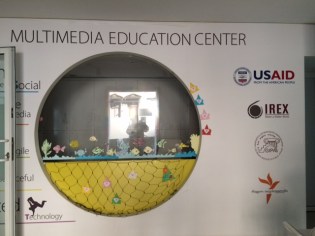
My first full day in Tbilisi yielded two observations: 1) planning here is a very fluid process and 2) this city has been through a lot. The day was largely unstructured, with only two activities scheduled: an afternoon visit to the IREX multimedia education center at which the workshop and conference will be held and a radio interview

Tbilisi 5

The conference venue is a multimedia education center run by IREX

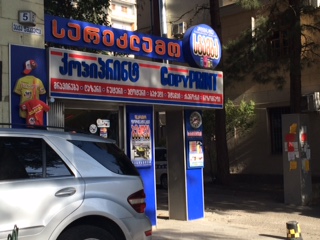
for an English language radio show hosted by Radio GIPA (Georgia Institute of Public Affairs). The rest of the day was spent variously in coffee shops and my host’s car as we did things like visit a print shop and chatted about the goals of the organization that brought me here: Creative Initiatives.

Tbilisi 1d

The print shop we visited in downtown Tbilisi

Throughout the day, Nino and Gela fielded emails and phone calls, massaging the conference schedule in response. Speakers were added; times were changed. Ultimately, the program order was adapted – for good reason – based on the confluence between the content of my keynote address and that of two attendees from Russia who would be presenting on a creative industries incubator in that country. The fluidity of the scheduling process, and the day as a whole, may have annoyed or frustrated me in the US context, but it seems to be the norm here and leads me to appreciate the lower level of anxiety such fluidity and flexibility both requires and engenders. (Periods without internet connectivity have also been a welcome respite.) This fluidity carries over to the lane markers on the roadways, which seem to be considered by Georgian drivers to be only suggestions – but I digress.

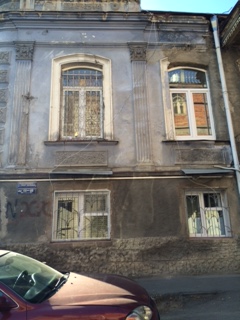
The main traffic circle in the center of the city is marked by a soaring monument to the 2008 Russo-Georgian war, the remains of which are still present in the Russian occupation of the South Ossetia region, about 80 miles north. Nearby is the April 9 monument, commemorating the 1989 protest in what is now Freedom Square, during which over 20 protestors were killed by Soviet troops hanging on to the last vestiges of their control of the city and the country. The civil war that followed led to economic and social decline that Georgia is still climbing out of 25 years later. Little attention has been paid to building codes, zoning, and the like. As a consequence,

Tbilisi 1b

A house in the Mta-Tsminda [holy mountain] neighborhood near the IREX multimedia ed center

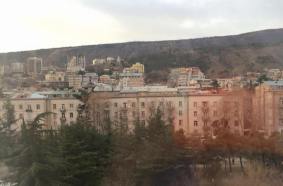
the facades of many buildings are decaying, the brick understructure showing through the Soviet-era concrete or European plaster decoration that preceded it. The scars of the city were made real to me when one of my hosts pointed to one of these crumbling buildings (not pictured here) and explained, “This is my grandmother’s house where I was born. My grandfather was executed by the [Stalinist] communists in the 1930s.” There is beauty here – but you have to look for it and see it in its historical context.

Tbilisi 1a

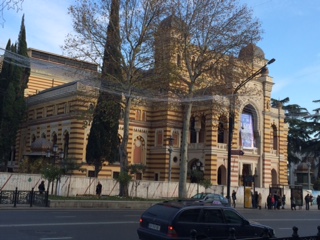
The Georgian National Opera House is about to re-open after an extensive restoration

Posted in Arts entrepreneurship, arts infrastructure, Arts policy, Culture and democracy, Higher education | Tagged , , , , , , , | 1 Comment

Tbilisi, first impression

tbilisi morning

Tbilisi in the morning

I am visiting Tbilisi, Georgia this week at the invitation of Creative Initiatives, a new organization “dedicated to leading the process of commercialization in Georgia’s creative industries by merging the rich cultural traditions of the region with viable international business practices.” I will be leading a workshop for students and faculty of the Free University, Georgian Institute of Public Affairs, Tbilisi State Academy of Arts and Ilia State University and then keynoting their First Annual Creative Industries Conference.

My first impression of Georgia, the result of a ride from the airport is that CULTURE MATTERS. The main street here is Rustaveli Street – not named for a general or political leader, but a 12th century Georgian poet.

Posted in Arts entrepreneurship, Arts policy, Culture and democracy, Uncategorized | Tagged , , , | 1 Comment

Museums and Capital Conversion

“The Senate Finance Committee is scrutinizing nearly a dozen private museums opened by individual collectors, questioning whether the tax-exempt status they enjoy provides sufficient public benefit to justify what amounts to a government subsidy.”

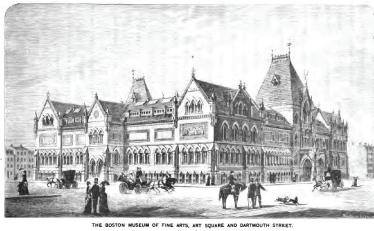
Boston_MFA_Back_BayThis lead to a report in today’s New York Times caught my eye, especially in light of an essay of mine published recently in the Journal of Arts Management, Law and Society. In it, drawing on the work of Paul DiMaggio, I suggest that cultural elites establish nonprofit arts organizations as a method for, among other potential purposes, converting excess financial capital into cultural capital. Ultimately, the dispute between the Senate Finance Committee and several new museums founded by private collectors is over whether the new museums are serving the public interest in exchange for the tax benefits they receive. One example of a private individual founding a museum that converts financial capital to cultural capital in the public interest is cited in my own essay: Robert J. Ulrich, former Target CEO and founder of the Musical Instrument Museum, or MIM. A brief National Public Radio story points to the uniqueness of Ulrich’s entrepreneurial process:

“He did it backward, if you use most museums as a guide. Usually, someone gathers art or artifacts and decides to build a museum to house them. This time, Ulrich established the museum … and hired curators to fill it with instruments.”

Broad_Museum_LA

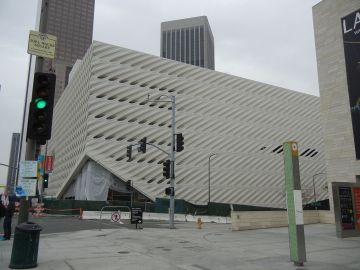
The Broad Museum, under construction. Photo, Bahooka, CC 4.0

The new Broad Museum is one of the most highly publicized examples of the other kind of capital conversion, from private holdings to a museum with, ostensibly, a “charitable purpose” as defined by IRS code section 501c3 that may or may not be serving the public interest. Even the New York Times referred to the Broad as “an old-fashioned museum for a new gilded age.” But I commend the Broad for having totally free admission as well as evening hours three days a week. The collection has been made available to all with little or no barriers to the public. I have not yet had the opportunity to visit, but hope that the curatorial staff has made efforts to engage its community so that the public interest is truly served and made transparent to museum visitors (and the Senate Finance Committee). I contrast their approach to that of the Neue Galerie in New York, another “charitable organization” founded to house a private collection that has limited accessibility. At some point, the Senate Finance Committee will need to hear from the arts and culture sector writ large about how nonprofit arts organizations serve the public interest. I hope we can speak with one unified and rational voice, untainted by private interests. (A girl can dream…)

Posted in Arts entrepreneurship, Arts funding, Arts policy, Culture and democracy, Uncategorized | Tagged , , , , , , | Leave a comment