Interconnectivity — AAAE 2013

new orleans streetAlthough the thematic title of the 2013 Association of Arts Administration Educators conference in New Orleans was “One Step Ahead: Advancing New Paradigms,” my takeaway theme is “interconnectivity.”  Both the invited speakers and my academic colleagues discussed the interconnectedness of elements within and without the arts and culture sector.

Mario Garcia Durham, currently executive director of APAP, the Association of Performing Arts Presenters, discussed the importance of interconnectivity across subsectors as he relayed his experience as one of the founding  curators of Yerba Buena Center for the Arts.  He, a performing arts curator, shared an office with the visual arts curators, enabling crosspollination of both spirit and events.  More globally, he discussed the connectivity between festivals and neighborhoods, citing the NEA study, “Live From Your Neighborhood” on the impact of arts festivals on communities.  Garcia Durham pointed out that because the barriers to access to arts festivals are very low – if they exist at all – attendance at festival events tends to be more demographically representative of a neighborhood then would be, for example, attendance at an ballet company in the same neighborhood.

Maria Rosario-Jackson provided a rhetorical tool for reconsidering the interconnectivity between arts and audience.  “Think of them,” she said, “as ‘publics’ rather than audiences.”  On the same plenary panel, artist Vicki Meek suggested that when it comes to working with communities of people (“publics,” to use Rosario-Jackson’s term), we in the academy should focus on creative engagement rather than community engagement. In creative engagement, she advised us to position “the academy as instigator, rather than preservationist.”

Breakout sessions that I attended focused on using Local Arts Index data in the classroom, teaching research methods, my own session on arts entrepreneurship (based in part on material from the inaugural issue of Artivate), and a fascinating session on group creativity led by Monika Herzig in which she demonstrated the value of interconnectivity amongst collaborators by using jazz improvisation.  The (inter)connectivity will continue as I bring some of what I learned back to my classroom in Tempe and to my own research.

The New Orleans food was pretty darn good too – many thanks to our host institution, the University of New Orleans, and my colleague there, Harmon Greenblatt.

———————-

There is still time to register for “Entrepreneurship, the Arts, and Creative Placemaking,” the Pave Program in Arts Entrepreneurship Third Biennial Symposiumhttp://www.regonline.com/Register/Checkin.aspx?EventID=1170284
Posted in Uncategorized | 4 Comments

Michelle Obama’s Bully Pulpit

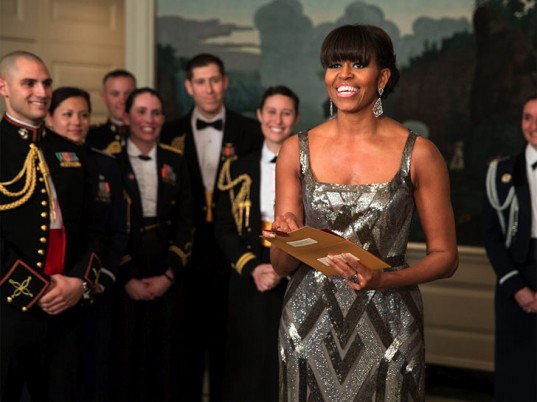
“every day through engagement in the arts, our children learn to open their imaginations to dream just a little bigger and to strive every day to reach those dreams.”

MIchelle Obama Oscar announcementThe numbers aren’t in yet, but it is estimated that a couple hundred million people worldwide watched and heard Michelle Obama speak those words as she introduced the Academy Award for best picture.  Approximately 40 million of those viewers were in the US – more than the 33.5 million Americans[i] who watched her husband’s state of the union address eleven days earlier.  The president didn’t mention arts and culture in his speech – not once — but it may not matter.  The first lady’s bully pulpit comment may be a signal of good things to come.

During her husband’s first term, Michelle Obama made childhood obesity her primary policy focus.  The “Let’s Move” initiative and the White House Task Force on Childhood Obesity resulted.  From there, school lunch menus across the nation have changed.[ii]  Let’s call on the First Lady to make arts engagement for children the policy focus of the second term.  She doesn’t need to focus on the arts as an economic driver, she can focus — as we all should[iii] — on the arts as a driver of the imagination – the impact of the arts on our dreams and our hearts.

Thank you, Michelle, for making this strong statement in support of arts education to tens of millions of Americans.  Now, please, follow through with action.

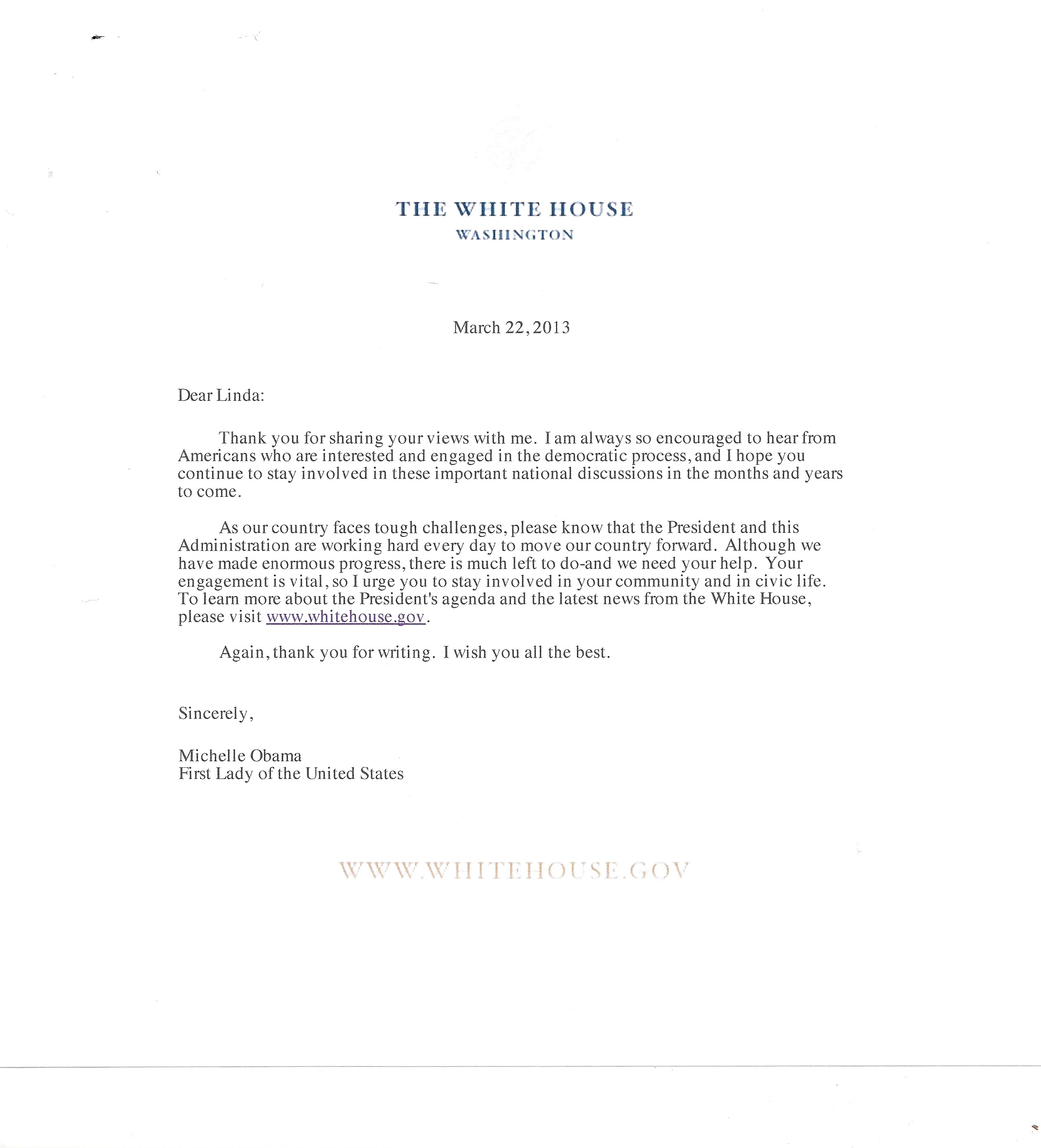
UPDATE: I wrote to the First Lady. Her response said nothing about the arts <sigh>:

Michelle response

[iii] See https://creativeinfrastructure.org/2012/06/20/its-not-the-economy/ for why I think the economic impact argument in support of the arts is incomplete, at best

Posted in Arts education, Arts funding, Culture and democracy, Uncategorized | Tagged , , , , , , , , | 2 Comments

Diversity, Equality, Bus Lanes, and Arts

I had the opportunity to hear urban theorist and former mayor of Bogotá Enrique Peñalosa speak this week about his vision for more sustainable and egalitarian cities.  He is a public transportation and urban greenspace evangelist.  One of the basic concepts he espouses is that in an egalitarian society, because every bus rider is equal to every car driver, a bus with eighty passengers should be given eighty times the road space of car with a single driver.  Further, bicycles in motion should be given higher priority than cars that are parked.

Excerpted from "Endless Cities"

See Penalosa, “Endless Cities”

In Bogotá, this meant dedicated bus lanes; it meant bike lanes protected from automobile traffic by a median for parked cars; it meant bike lanes and sidewalks were paved before parking lanes.  Peñalosa talked not only of egalitarianism, but of valuing human life and human lifestyle over that of cars. His transportation policies reflected his values.

While listening to Peñalosa’s talk, I couldn’t help but be reminded of the recent provocative posts by Clayton Lord, Diane Ragsdale, and Barry Hessenius about valuing (versus managing) diversity and how the policies of arts organizations and funders might – or might not – reflect the values they espouse.  What could be the arts programming analogs to Peñalosa’s bus and bike lanes?  One response is to have, as many cities do, culturally specific arts organizations that serve culturally specific communities (bikers served by bike lanes; bus riders by bus lanes).  Funding organizations would, as Peñalosa did, fund these organizations first, before funding the parked cars (what Diane referred to as “reluctant dragons”).

Yet more radical would be adopting a philosophy not of “diversity” but of “egalitarianism.”  There is a tendency not only to maintain flagship “institutions” but also flagship “forms.”  In a more egalitarian city, arts organizations would not shoe-horn plays by or exhibits featuring African-American artists onto stages and museums in February but would consider the spoken word poet and the operatic tenor as equals, the former training with mentors for ten years on the street, the latter for ten years in a music conservatory.  Why should I, from my position of white liberal privilege (see Ian David Moss on that one), be allowed to espouse that one type of Greco-Euro-Anglo derived form of art is better – or for that matter worse – than the Afro-Caribbean or Indo-Asian art of my neighbors?  I should not be.  Similarly, funding entities should not be allowed to privilege one form of art over another except insofar as their mission requires them to do so.

My point is this: perhaps it is time to stop talking about diversity and start talking about equality – equality of participation, equality of access, and equality of value.

Posted in Arts funding, arts infrastructure, Culture and democracy, Uncategorized | Tagged , , , , , | 10 Comments

Keeping Art at the Center

citycouncilmeeting960x280I received a writing prompt recently from actor/writer/artist Aaron Landsman who is spending some time on my campus developing his new collaborative and socially engaged performance work City Council Meeting: “how do you be an arts entrepreneur without losing sight of the art?” A recent blog “conversation” about the field of arts entrepreneurship suggested the concept is “ill-defined.”  I respond to both: arts entrepreneurship is entrepreneurship that never loses sight of the art; it is entrepreneurship that keeps art-making at the center of what is otherwise a “big tent.”

One thing I do in my classes is attempt to differentiate “arts entrepreneurship” from “entrepreneurship.”  I really don’t like to define anything by what it is not; it is far stronger to define it – whatever “it” is – by what it is (see Jaan Whitehead’s great article from 2001 about this definitional conundrum in the nonprofit theatre community). Thus, I can’t just stand up in front of my class of 35 students and say “well….it’s not just new venture creation….” Instead we keep the art at the center of the discussion in a positive way.  For example, in our unit on marketing, begun earlier this week, I explain the classic “utilities of exchange” (form, time, place, possession), but remind the class that they also read about the utilities of exchange as defined by an artist, in our case, Anne Bogart, whose book “And then, you act” is one of two required texts. Her principles of magnetism — empathy, entertainment, ritual, participation, spectacle, education, and alchemy — are an artist’s utilities of exchange.  Bogart’s chapter from which these are drawn is titled “magnetism.” In other contexts, it would be called “audience engagement” or “customer development,” but in the arts entrepreneurship classroom, we begin with an artist and how an artist defines the utilities of exchange – that is, as with the “principles of magnetism.”

I spoke recently with someone from another arts entrepreneurship program, one administrated through its university’s business college.  Artists in this program learn how to sell their commercial products – many students have etsy shops or other e-commerce portals to sell jewelry or prints. They have business models drafted on Osterwalder’s “lean canvas,” a very useful tool for business plan generation.  I argue, however, that while this may be “entrepreneurship,” it is not necessarily “arts entrepreneurship.”  The bottom line of the business school approach is profit back to the maker or return on investment to the investor; the bottom line in arts entrepreneurship is the opportunity to make the art one is driven to make while also making the rent and, as Aaron reminded us recently in a series of comments on the issue, the health insurance payments.

[Side note – if you’re interested in arts entrepreneurship and how keeping arts at the center of a community leads to community vibrancy, consider attending the Third Biennial Pave Symposium: Entrepreneurship, the Arts, and Creative Placemaking, April 12-13 in Tempe and Phoenix AZ]

Posted in Arts education, Arts entrepreneurship, Higher education, Uncategorized | Tagged , , , , , , | 11 Comments

My Big Tent

In my role as the publisher and co-editor of the only US journal in the field of arts entrepreneurship, Artivate: A Journal of Entrepreneurship in the Arts, I have the opportunity to discuss — and argue with — a wide array of artists and educators working in this field.  This discussion “goes public” at the conference of the Association of Arts Administration Educators conference next month and in the pages of the journal, especially in its introductory article.  There seem to be three broad schools of thought on the topic – 1) arts entrepreneurship is new venture creation in the arts and creative industries, 2) arts entrepreneurship is self-employment of and by artists in their own disciplines, or 3) both, inclusive of all that falls in the middle.

Believing in “the wisdom of the and versus the tyranny of the or,” I fall firmly in school #3. There is the potential for dichotomous conflict — conflict that should be avoided — even in the subtitle of the journal I publish.  “A Journal of Entrepreneurship in the Arts” implies approach #2 – entrepreneurial behavior applied within arts disciplines.   I confess that I didn’t fully realize the philosophical implications of that two letter preposition at the time my co-editor suggested it.  I see this dichotomy too in an article we’re publishing in the next issue, “Infusing Entrepreneurship within Non-business Disciplines.”  This title stands in contrast with my own article of several years ago entitled “Suffusing Entrepreneurship Across Theatre Curricula.”  “Infusing within” versus “Suffusing across” is not merely a rhetorical difference.  It is indicative of the potential conflict facing the discipline as it attempts to define itself as focusing on self-employment for artists or the “universal human action”* that is entrepreneurship.

James Undercofler, who seems to be struggling with this dichotomy in his classroom, shared a useful definition of entrepreneurship, from Richard Green:

“…we understand entrepreneurship to mean the transformation of an idea into an enterprise that creates value—economic, social, cultural, or intellectual…”

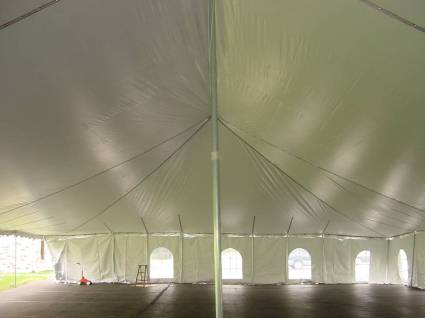
maxfields_tent_insideDepending on how one defines “enterprise,” I like this definition because it erects a big tent within which the entire spectrum of arts entrepreneurial activity can exist. I like it too because “value” need not be measured only through the lens of profitability but could be value delivered as social good, cultural richness, or new ideas.  Welcome to my tent…

[UPDATE: In a follow-up post, I offer a reminder that art and artmaking should remain at the center of the big tent]

*See Koppl and Minnitti (2008)

Posted in Arts education, Arts entrepreneurship, Higher education, Uncategorized | Tagged , , | 2 Comments

Catch 23 in Kansas

Kansas Map - Perry Castenada Map Collection, University of TexasWichita Public Radio did a story this week* about the before-and-after effects of the decimation and then partial restoration of the Kansas Arts Commission, now the Kansas Creative Arts Industries Commission.  The change is not just rhetorical.  The piece lists four ways in which the commission is fundamentally altered, paraphrased here:

  1. less money
  2. new mission supports economic development function of arts industries rather than the experience of arts and culture
  3. focus on Kansas as an ideal place to live
  4. housed in department of commerce

Let’s look at the fallacies inherent in number 2 and then in numbers 2 and 3 together.  The implication of the new mission statement “The commission is dedicated to measuring, promoting, supporting and expanding the creative industries to grow the state’s economy and create industry-related jobs” implies that the arts (which by the way constitute only part of the creative industry sector defined by the new commission) are useful only as an instrument for economic growth.  I have written about this fallacy before – while the arts can be an instrument for economic growth, that is not where the arts have the most impact nor are the arts the most effective driver of that economic growth. What the arts are best at doing is making a location “a great place to work, live and visit,” the goal of #3.  So, there is a conflict here between numbers 2 and 3, a Catch-23, if you will.  The new commission will not support art that doesn’t drive economic factors in a measurable way (note that “measuring” is the first activity to which the commission is dedicated) yet it is the unmeasurables of art that make locations great places to work, live, and visit. **

*Thanks to Thomas Cott’s “You’ve Cott Mail” digest for bringing this story to my attention.

** This is the premise behind the “vibrancy” goal of the creative placemaking movement, measurement of which is, so far, by proxy indicators.  If you’re interested in the topic of creative placemaking, consider attending Pave’s third biennial symposium, Entrepreneurship, the Arts, and Creative Placemaking, April 12-13 in Tempe and Phoenix, AZ.

Posted in Arts funding, Culture and democracy | Tagged , , , , , , , , , | Leave a comment

Danger, Will Robinson

DangerWillRobinson (1)As a child, I heard the Robot on “Lost in Space” warning “Danger, Will Robinson, danger, danger!” As an adult, I sometimes find myself in the precarious position of the Robot seeing danger signs before me, but being a human, add emotion and intuition to my calculus before saying, “Danger, small arts organization, danger danger.”  Unlike the Class M-3 Model B9, General Utility Non-Theorizing Environmental Control Robot, when I work with an organization, I need to persuade its members to see danger before running away or firing a weapon.  What are some of the danger signs an arts organization needs to address sooner rather than later so they don’t get blown off course like the Robinsons of the TV show or the JD Wyss novel on which it is based?  I had a little fun with some lessons to be learned from the TV show of my youth:

  1. “Does not compute” – the Robot would look at a balance sheet that, well, doesn’t balance and say “does not compute.”  An arts organization whose expenses exceed its revenue, year after year, is not sustainable.  This is an organization with a broken business model.  The sooner the board of directors (if a nonprofit) or executive director recognize this the greater the likelihood the problem can be rectified.
  2. “I compute it to be an ionic directional probe searching for receiving outlets” – is the organization searching for receptors – I mean audience – and not finding any? Perhaps this is another symptom of a broken business model: there is not a “receiving outlet” for the value being produced.  Find a new outlet, build a new pipeline to it, or change the “directional probe” so it makes for a better fit.
  3. “Don’t leave me alone. Wait for me!” The leadership team is split, going in multiple directions simultaneously, leaving important people behind.  Losing sight of organizational mission or, conversely, having board members who can’t keep up with it, drags down the forward momentum of an organization.
  4. “Yours not to question why; yours to do as I say or die.”  When a board blindly follows a visionary leader, important governance and oversight issues may be neglected, leading to problems down the road…like 1, 2, and 3 above.
  5. “Oh, John, you can’t! It’s much too dangerous.”  Naysayers may prevent an organization from taking the risks necessary to achieve true innovation.
  6.  “I’m a doctor, not a space explorer”  An organization needs a balanced board with expertise on the board and staff that can support its success.  If there is nobody with marketing expertise, or nobody who can put together a budget, there’s going to be a problem.
  7. “There’s a lot of space out there to get lost in”  Is the board room empty? Have board members lost interest and stopped coming to meetings? In that case, “Danger, Will Robinson, danger, danger.”
Posted in Arts entrepreneurship, arts infrastructure, Arts management, Uncategorized | Tagged , , , , , , | 1 Comment

Measuring Incubator Success

Coincident with a spate of interesting blog posts about defining success for oneself (digested today by Thomas Cott), I am traveling to a conference to present some research on measuring the success of arts venture incubators.usasbe conference Specifically, I look at the ways in which several university-based arts venture incubators[1] measure their success as a pilot for a larger study on public, nonprofit, and commercial arts incubators.  If you would like to read my report, it will be published later this year, but I thought I would share some concluding thoughts here:

Most of those interviewed for the study indicated that “encouraging thinking” in a value-based way about the arts is a goal of the program with which they are affiliated. What, then, are the measurable outputs of the entrepreneurial “thinking” encouraged in the academy and in the continuous learning process that follows?   The preliminary business plans that constitute the application to the programs are one such output, as are the new ventures that result.  Is the success and longevity of such ventures evidence that the learning outcome is met? I suggest, instead, that the launch activity itself is adequate evidence of a successful learning outcome.  The venture does not need to succeed per se in order for the learning outcome to be met.  As the Corzo Center director indicated, in an educational setting, failure is a necessary condition.

(For more on failure, see the text of my Tedx talk: Experience Failure for a Change)

UPDATE: For an update on this research, drawn from a cross-case analysis of incubators of different types, see Arts Incubator Evaluation Variables.


[1] The study included the New Venture Challenge at the Eastman School of Music, the Corzo Creative Incubator at University of the Arts , and the Pave Arts Venture Incubator, of which I am the director.

Posted in Arts education, Arts entrepreneurship, arts infrastructure, Higher education, Uncategorized | Tagged , , , , , | 6 Comments

It’s Complicated

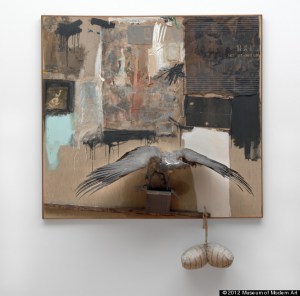
Robert Rauschenberg. Canyon. 1959. © 2012 Museum of Modern Art. Photo by John Wronn.

Robert Rauschenberg. Canyon. 1959. © 2012 Museum of Modern Art. Photo by John Wronn.

Relationships are complicated.  Perhaps none are more complicated than the relationship between art and money.   What makes the relationship so complicated isn’t “love,” but “value.”  Economic theories from Adam Smith to Karl Marx focus on the distinction between value-in-use (a pencil has value for its use) and value in exchange (a diamond can be traded for necessities, or for more diamonds).  J.M. Keynes, arguably the most influential economist of the twentieth century, saw no difference between value and price – value, according to him, is a complicated calculus of demand, money supply, and velocity but for Keynes, everything has a price and price is the measure of value.  If art has no price, then does that mean it has no value?  If it is not or can not be exchanged, can it have value?  This is the tangled web woven around Robert Rauschenberg’s “Canyon,” a work of art valued by the IRS at $65million, but which could not be sold because it includes a bald eagle carcass.* Marx would have valued the work based on Rauschenberg’s labor in creating it; Smith might very well say the work has no value as it is not useful and cannot be exchanged.

This conundrum isn’t limited to high profile artists and big numbers.  The question of value pervades the arts policy community.  That’s why I was surprised to read this recent statement from Ian David Moss’s createquity blog, “[O]fficially, Createquity takes no position on the value of the arts.”  I’m not faulting most of what Ian wrote– I agree with his critical look at “mood affiliation,” but I believe it neither desirable nor possible to disentangle the concept of “value” from the arts if we are going to talk about public or private investment in artists and arts organizations. Rather than trying to pretend that there is a positive relationship between the arts and society about which some abstract “we” all agree (i.e. mood affiliation) let’s talk about the value proposition of the arts in a more specific way. For whom do “the arts” (itself a highly problematic aggregate term) provide value? Can that value be measured in something other than money?

The market is not now, nor has it ever been, an accurate means for determining the value of art (witness the “Canyon” controversy) but that doesn’t mean the arts don’t have value.  Figuring out a way to talk about that value and yes, even measure that value, reflects not only the value of the art, but the VALUES that these abstract aggregated “we”s hold dear.

* The work was subsequently donated to the Museum of Modern Art as part of a settlement agreement with the IRS

Posted in Arts entrepreneurship, Arts funding, Arts policy, Uncategorized | Tagged , , , , , , , , , , , , , | 16 Comments

A Loss for Words

internet-silence. Brendan Smialowski/AFP/Getty ImagesI have been at a loss for words.  At first, my blogosphere silence was caused by wrapping up a semester of teaching, research, and service. I figured I would just wait until December 31 and write an anniversary post (Creative Infrastructure will be two years old on that day). Then Newtown happened and I was silenced by shock, sadness, and anger.  I was reminded that one of my earliest CI posts was a blank page, a “moment of silence,” for the Tuscon shootings, which occurred January 8, 2011. Moments of silence and the tolling of bells are respectful initial responses. Thoughtful action is a respectful second response.  I am sorry that I did not actively respond after Tuscon (although I did engage my state legislator in some “discourse” on the topic of guns on campus – discourse that made its way, in part, into the Huffington Post).  Thoughtful action requires preparation, learning, and of course, thought.  What I have been thinking about is the role of the arts not only in healing but in prevention, the preservation of freedom (especially the freedom of speech), and policy.

When I first heard of the tragedy, I was stopped in my tracks.  I took a breath and then posted the following on facebook:

We must rein in this country’s worship of guns and of violence, we must provide mental health services with compassion, we must support public schools, neighbors, and neighborhoods. We must move from a culture of fear to a culture of love and empathy.

The arts have a unique capacity – and now, I think, a duty – to build that culture of love and empathy.  Neurologists find a connection between specific neurons called mirror neurons and empathy (see VS Rmachandran’s talk on the subject) and further between certain types of live performance (theatre, dance) and the firing of mirror neurons.  Watching theatre and watching dance can cause individuals to adopt the point of view of others empathically.  Doing so can build our ability to see the world from the perspective of others. If Adam Lanza had had the capacity to see the world through the eyes of an innocent six-year old, perhaps he would not have killed 20 of them.  Perhaps that is pushing the idea beyond credulity, but if we can empathize with others, with “the other,” how many of our social problems could be addressed differently? Gun control, immigration, access to healthcare, could be addressed with compassion and not just cost/benefit analyses.

freedomgroup_custom-b089bf284b97c254ead7af116459c03422805f27-s6-c10Gun enthusiasts, and even gun makers, often use “freedom” as both a mantra and a brand (the manufacturer of the gun that Adam Lanza used is called “The Freedom Group”).  The arts community needs to tread carefully around the question of freedom and do all it can to preserve it.  While the second amendment provides the “freedom” to bear arms, it is the first amendment more than anything else that enables arts and culture in this country: Congress shall make no law … abridging the freedom of speech, or of the press; or the right of the people peaceably to assemble….  On the Sunday following the shootings, President Obama made a televised speech at the Newtown memorial that interrupted the Sunday night football broadcast.  The twitterverse lit up with vitriolic hate speech describing our democratically elected president with the worst kind of racial epithets for privileging sympathy over football, a game, I note, based on war strategy.  Several people suggested twitter remove the hate speech, to which I say NO! Censorship cannot be the answer.   Once we go down that road, we have not only an armed state, but an armed state that censors speech.  Instead, let the arts lift up the haters and help them to find the love and empathy we need to heal.  It is not only an issue of racism toward our first non-white president, it is an issue of a culture that worships violence in the movies and on the playing field.  Having just expressed my absolute refusal to censor, what to do about it? Offer alternatives.  Offer concerts and performances that are as much fun.  Offer films that celebrate the human spirit rather than crush it. Support sports that are not about violent combat, but are instead about finding home (OK, my baseball worship shows up here).

Finally, policy. Something must be done to curb the easy access to guns and to open easier access to mental health services.  As artists we can deliver content that makes this point, but as individuals we can contact our elected officials, attend community meetings, volunteer at clinics, organize educational forums about gun violence and always remember to vote.

Or, we can continue in silence, forever at a loss for words.

Posted in arts infrastructure, Arts policy, Culture and democracy, Uncategorized | Tagged , , , , | 1 Comment