Recharging

Rest…(too apathetic)

Relaxation…(lacks energy)

Restoration…(something you do to inanimate furniture)

Recovery…(from what?)

Recharging…

Recharging…

battery-clipart-cliparti1_battery-clip-art_01I like that. Recharging sounds active, although recharging is something our brains do automatically while we sleep. According to some new and developing research, taking time to recharge well makes us more resilient and supports creativity. So in the interest of running at fully powered and resilient creativity and curiosity, I’ll be taking some time to recharge. I encourage you to take the recharge time you need too. Happy summer!

Posted in arts infrastructure | Tagged , , | 1 Comment

Gender (In)Equity

cropped coffeeMy morning coffee was upset by an article in the NY Times that reported on a phenomenon I knew anecdotally to be true: gender-neutral tenure clock extensions for childbirth benefit men but harm women in their bids for tenure; there’s now empirical data to prove it. Let’s face it, as one business school dean put it, “giving birth is not a gender-neutral event.” Neither, I might add, is carrying a child or nursing her.

If my breakfast was moderately upset by an article affirming something I already knew, my stomach positively lurched when I read Porsche McGovern’s inventory of LORT design hiring. It is appalling that in 2016, 72.6% of all design positions are held by men and if we discount the costume design category, well over 80% of all design positions are held by men. Correlation does not mean causation, but it’s interesting to note that the numbers are slightly, but only very slightly, better when there is a female director than a male director (by “better” I mean closer to 50/50). What really makes me mad about these statistics isn’t only that they paint a skewed picture today, but that they are roughly the same – or slightly worse – than the statistics I uncovered about lighting designers over 10 years ago.

Ten years = no progress

In the recent important (and overdue) conversations about cultural equity and inclusion in the arts, the significant problem of gender inequity has gone largely unexamined except insofar as it relates to Queer and Trans people. Perhaps we mistakenly take for granted that in the arts, women have already achieved equity and inclusion. HAH! When only 19% of set design positions go to women and only 15% of lighting design positions (down from about 20% at the beginning of the century) we cannot pretend that women have achieved equity in the workplace.

Vera_Project_03It took some time for the theatre community to realize that “color-blind” casting was not the road to greater equality on our stages. We similarly need to realize, in both higher ed and in professional theater, that “gender-neutral” hiring and retention policies are not the road to achieving equality for women in academic and theatrical workplaces. We need to make affirmative choices about putting women into positions from the sound booth to the artistic director’s office. And, while you’re at it, consider that we can put a woman in the White House too, who just so happens to be the most qualified candidate for the job.

(original coffee image by Ahlram Anashri, CC 4.0; Vera Project photo by Joe Mabel)


Posted in Arts management, Culture and democracy, Higher education | Tagged , , , , , , , | Leave a comment

Distracted


cj hendry over NY

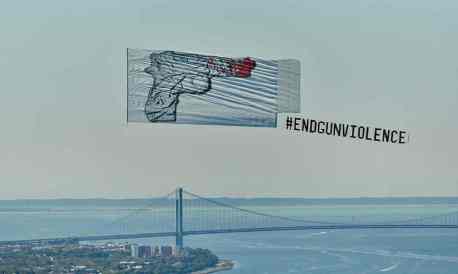
CJ Hendry’s artwork in flight. Photo by Darren McDonald

I’ve been a bit distracted lately from my core focus of writing about “thoughts and ideas about infrastructure for the arts.” First, there was the hideousness and chaos of the current presidential race; then the tragedy of the Orlando massacre; followed by a surge of hope about a Senate vote on sensible gun legislation that quickly became acute disappointment; and then hope again as House members occupy the floor for a day (they are still there as I write this). But is this really a distraction? Or is it the context for art-making in 2016?

After the mass shooting in Tucson that killed 6 and wounded 12 others, I paused for a moment of silence, posting a blank page here. After Newtown, I paused again, at first at a loss for words, but then pleading for the arts sector to lead a culture of love and empathy. There have been over 1000 mass shootings since then – including the recent and most deadly in Orlando: 50 dead, including the shooter. Now, along with building a culture of love and empathy, the arts community needs to take action. Every community needs to take action. We need political change at the local level, at the state level, and eventually at the federal level.

I can’t get on a plane without showing ID, emptying my pockets, and taking off my shoes, but I can go to the corner store and buy ammunition for a semi-automatic rifle. Like a line from The World Turned Upside Down, made famous again by Lin-Manuel Miranda, but which laments the removal of charity from the celebration of Christmas: “Kill a thousand men, or a Town regain, we will give thanks and praise amain.” Bring back charity, empathy, love – act now to stop the killing. And if you’re an artist, make your art matter now, when we really really need it – this is the context we live in. Make it big like CJ Hendry, or make it small in your neighborhood, but make it, tweet it, call your congressman.

Here are some arts action against gun violence websites, articles, and other info:

https://www.theguardian.com/artanddesign/2016/jun/18/artist-gun-violence-sky-cj-hendry
http://remembersept25.org/
http://www.forbes.com/sites/adamlehrer/2015/12/11/artist-tim-clifford-explores-gun-violence-and-the-marketing-of-fear-at-howl-happening/#9e531021f5a5
http://www.artammo.org/
http://www.jonathanferraragallery.com/exhibitions/guns-in-the-hands-of-artists
http://massappeal.com/endless-cycle-tim-tate-gun-violence/
https://www.washingtonpost.com/world/national-security/campaign-demand-a-plan-to-end-gun-violence/2012/12/22/35190cea-4c76-11e2-9a42-d1ce6d0ed278_video.html

Posted in arts infrastructure, Culture and democracy | Tagged , , , , , | 1 Comment

The Dance of Leadership

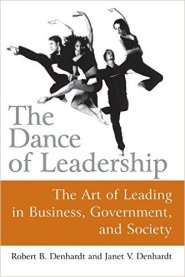
Three Airmen participate in dog-sled expeditionMy biggest summer project is the design of two courses as part of the new Curb MA in Creative Enterprise and Cultural Leadership. The first of these, “Leadership in the Cultural and Creative Industries,” is a short one-credit course that introduces the students to the two concepts at the core of the program: 1) leadership and 2) cultural and creative industries. Choosing the right reading material for a course is always a challenge, but when it’s a course that isn’t even the tip of the iceberg but really just pointing the viewfinder to where you might find the iceberg, choosing the one best read is really hard. I have been asking colleagues, “Without thinking too much, off the top of your head, what’s your favorite book on leadership?” I got several good- and not unexpected – responses such as Collins’s Good to Great, Lencioni’s The Advantage, or Palmer’s Let Your Life Speak. Ultimately, I keep coming back to the book that would be my answer to that same question, Denhardt and Denhardt’s The Dance of Leadership.

dance of leadershipThere are number of reasons I like this book, including that the authors were colleagues here at ASU, Bob Denhardt leading the School of Public Affairs during the period when I was leading the School of Theatre and Film. More importantly relative to my new class, the Denhardts use artistic practice, and especially dance, as a way of explaining leadership concepts. Very often, when leadership is taught in/for the arts, a business leadership book (like those I mention above) is shoe-horned into the arts context. This book, however, will provide an entry point for students coming into the program with an arts background to understand leadership concepts and that the work that they do as artists is itself a form of leadership.

I think I’ve just talked myself into my decision….

(Air Force photo, by Tech. Sgt. Dan Rea, public domain)


On another matter….

PrintFor several years, I’ve offered my observations of the (too many) academic conferences I attend. At the most recent, the Association of Arts Administration Educators, where I presented on both arts entrepreneurship and, on behalf of Artivate: A Journal of Entrepreneurship in the Arts, readying one’s research for publication, I was elected to the organization’s board of directors. Because I don’t want to appear to have any conflict of interest between my board position and anything I might write here, I will no longer be offering up these conference “reviews” on Creative Infrastructure.


Posted in Uncategorized | 2 Comments

A Memorial Day Thought

vietnam

Photo from the US Army Quartermaster Museum

This Memorial Day weekend, I’ve been thinking about some images from my youth – of the Vietnam war and, especially, watching the evening news with my parents and seeing coffins of soldiers killed in action being unloaded from a plane. More than the image itself (I couldn’t find the exact one of my memory, but this comes close) was the feeling I remember sharing with my family as we sat safely in our suburban basement where a couple of years earlier we had watched a grainy image of Neil Armstrong taking one small step on our 11” black and white television. My own children have also grown up during a war – our longest – but while they know it is going on, we don’t have the shared experience of watching those killed in action return to US soil in flag-draped boxes. My children seem far more disconnected from the wars in Iraq and Afghanistan than I was from Vietnam. Faulty parenting may be partially to blame, but the way we experience media (and fight wars) is so fundamentally different than it was 40 years ago that that seems the real culprit. We watch TV on a screen smaller than that old B&W of years ago, with ear buds or headphones that enable people to be in the same room while listening to different soundtracks. We can choose from an almost infinite variety, almost none of which includes news from the front. When there is news, it is of a drone strike: even killing is by remote control.

To what extent are we doomed to experience all culture in this way, individually, deaf to what goes on around us in the real world thanks to noise-canceling headphones? Or, perhaps, can an arts experience, a social experience, counteract the disconnections of our time? Or, perhaps, I should just send links of war news to my kids via text message…

[For a more nuanced perspective on Memorial Day (including a salute to the two fallen soldiers that saved my father) see this http://www.forbes.com/sites/toddessig/2016/05/28/five-ways-to-reflect-and-remember-on-memorial-day/#2105a58ddf1c ]

Posted in Uncategorized | Leave a comment

Hoke, Daisy, and an Equity Ethos

[This essay is also posted on the Americans for the Arts blog, ARTSblog ]

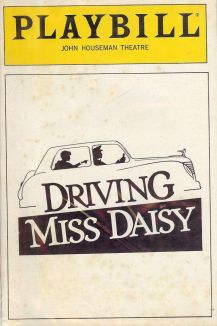
Daisy programThere’s a line in Alfred Uhry’s play Driving Miss Daisy that has stuck with me for the last 30 years. In response to a well-meaning, but misguided (and forgotten) comment by Daisy, an elderly, White, Jewish, southern widow, to Hoke, her equally elderly Black chauffeur, Hoke replies, “How do you know what I see unless you can look out of my eyes.” I heard the play at least 50 times over several years serving as its associate lighting designer on numerous companies but that is the only line I remember today. I remember it because it is foundational to the development of my personal ethic of cultural equity. In one way or another, Hoke’s reminder that we all have unique, individual, and valuable perspectives formed by unique, individual, and valuable lives informs the way I interact with students, colleagues, board members, artists, neighbors, and all the other people with whom I interact who neither look like me nor believe what I believe.

“How do you know what I see unless you can look out of my eyes” were the words that sprang to mind unbidden when I was invited by AFTA vice president Clay Lord to comment on AFTA’s new Cultural Equity Statement and again a week later when I read about egregious statements made by the (now former) executive director of the National Association for Music Education. But an individual ethos can only go so far. We need to go up a level to organizations if we want to in turn change the system, which seems to be what AFTA and, previously, Grantmakers in the Arts, are trying to do in their public expressions of equity and inclusion policies. The GIA statement acknowledges a need to shift perspective: “Recommended solutions of the past, which have focused on diversity rather than structural inequities, have not resulted in successful outcomes in equitable inclusion and/or grantmaking.” The AFTA statement goes even further: “In the United States, there are systems of power that grant privilege and access unequally such that inequity and injustice result, and that must be continuously addressed and changed.” How, then, can we change the structures that undergird the system?

I don’t have the answer – or any answers. No one individual person can. It is only by listening inclusively and equitably to multiple diverse voices that answers can begin to surface. One voice that I “listened” to recently was Carlton Turner’s. His description of the setting for an arts leadership workshop as “a sterile windowless classroom listening to much older professors that don’t look like me lecture on business strategies, market segmentation and innovation” made me sit straight up and shout to myself “THAT’S ME AND I’M DOING EVERYTHING WRONG!” While in retrospect I understand that I’m not doing everything wrong, I can do much much better at executing the three principles Turner avows:

  1. Be aware of and acknowledge local cultural practices.
  2. Validate leaders who are responsible and accountable to their communities.
  3. Build coalitions by actively breaking down racial, ethnic, geographic, religious, and class barriers that separate communities experiencing the same struggles. [emphasis mine]

And, if I can do better, each individual in the arts ecosystem can also do better. That’s how change happens: each individual doing better to affect change in each organization to shift the way the whole system operates. For nonprofit organizations, that change has to happen at the board level, the seat of organizational power, with individual members whose perspectives reflect the rich diversity of our world. Actively break down barriers: get rid of give/get requirements; actively recruit underrepresented board members along the dimensions not only of ethnicity but also socio-economic and ability status; involve the audience/community in programming decisions (or at least dialogue); go out and meet the people your organization serves one-on-one in their own neighborhoods; hire people whose backgrounds are different than your own; find alternative structures for including all voices; and keep questioning when and why privilege is affecting equity. I can’t see out of Hoke’s eyes, but I can help make a place for him at the board meeting so he has a voice there.


Posted in Uncategorized | 1 Comment

Knowledge, Clubs, and Journals

Artivate CoverThree articles/blogs/news items about academic journal publishing hit my inbox in the 24 hours prior to a guest lecture for Seattle University on the topic of….academic journal publishing. The primary mission of academic journals is – or should be – the dissemination of new knowledge and thus the advancement of a field or discipline. The secondary echo effects of the journal publishing process, as any tenure-track faculty member will tell you, are the employment benefits that can accrue from publishing in peer-reviewed journals: recruitment, promotion, tenure, enhanced reputation, and so on. And there are other less tangible externalities such as the opportunity to engage with new collaborators and more.

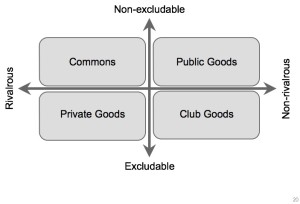
The first of the three articles was from the Australian blog Economists Talk Art. In it, the authors posit that knowledge is not a private good (although treated as such by academic publishers who charge exorbitant journal subscription fees to libraries and others), nor is it a public good (although often thought of as such by the scholars who receive no direct compensation for the publication of their work), but rather a club good. Club goods are excludable, but non-rivalrous. Club goods are things like private parks, satellite tv, or, obviously, club membership privileges. This begins to make sense when we consider the “clubby” atmosphere of academic conferences and learned societies; only members of the “Society for the Study of Some Really Specialized Topic” end up reading the “Journal of the Really Specialized Topic,” plus a few others who may have a tangential interest in the “Really Specialized Topic” because it intersects with their own research on “Another Specialized Topic.” I was thinking about this clubbiness of academic societies when an opinion piece suggesting that the peer review process be separated from the publication process and put in the hands of just such learned societies reached my in box from The Chronicle of Higher Education.

In this model, authors would submit their work to one or more of the professional societies most appropriate for that work. The societies would oversee the peer review and give accepted works an imprimatur. Authors could then shop their works with imprimaturs to different publishers, which would be in the business of dissemination rather than evaluation.

Like most academics, I belong to several such societies and have even served on the boards of them. Thus I can attest that they do indeed function as clubs, which has both positive and negative consequences. Like many nonprofit organizations, such societies may have governance structures that are resistant to change and innovation. This would not be an environment conducive to the review of the most cutting edge research. It may also come as no surprise that academic politics sometimes get in the way of the advancement of knowledge in such groups. Although many of the same people who serve as reviewers of journal manuscripts also serve on the committees of learned societies, putting the review of the newest, most experimental writing (on any topic) in the hands of a potentially large organization is akin to asking an ocean liner to steer the rapids when a raft would actually be the better choice.

goods-300x204Consider instead that scientific knowledge is neither a private good, nor a public good, nor a club good, but rather a commons, self-governed by those with knowledge of the “Really Specialized Topic.” (We published an article related to this topic in Artivate: A Journal of Entrepreneurship in the Arts, Pave’s free, open-access peer-reviewed journal on a really specialized topic). The knowledge is already governed as a commons through the review process: we who know something about a specialized topic act as the pro bono gatekeepers of the commons, keeping out the work that would pollute the knowledge commons and supporting the development of the ideas (through the reviewers’ comments) that help make the published material in the commons the highest quality for the benefit of all.

This brings me to the third of the three articles: the news that SSRN, the Social Science Research Network, a free repository of pre-publication working papers, had been sold to Elsevier, one of the largest for-profit academic journal publishers. For years, SSRN had treated knowledge as a public good; Elsevier most definitely treats it as a private good and profits from its excludability. This new arrangement will probably not turn out well. I, for one, will no longer post my works-in-progress on SSRN and am confident that I am not alone in making that decision. Why should Elsevier profit from what should be open access to knowledge?

I agree with The Chronicle’s Michael Satlow that we need a new business model for academic publishing. Perhaps we can use the commons of the internet to figure out what that should be. In the meantime, I will continue to publish and co-edit a journal that is free, open access, and rigorously peer-reviewed by commons stakeholders.


Posted in Higher education | Tagged , , , , , | Leave a comment

Book proposal

I’m working on a book proposal – let me know what you think. [Please see the revised proposal instead]
Ouroboros with text

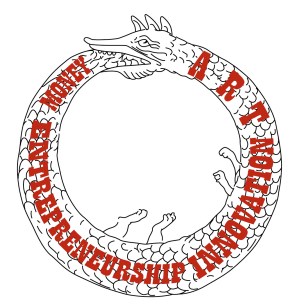
An Ouroboros: Art, Money and Entrepreneurial Action will be a collection of original essays for an interested lay audience that bridges the gap between my scholarly writing for academic publications such as the Journal of Arts Management, Law and Society and popular writing such as that on this blog, Creative Infrastructure. The long form of a book enables me to delve deeply into the relationships between art, innovation, entrepreneurship, and money to explore what is arguably the most critical issue for the arts today: how can an artist make work and live in our late-capitalist society? I approach the study of art not through the lenses of history and criticism but rather as an artist (my MFA is in Design for Stage and Screen) and policy analyst (my PhD is in Public Administration and Policy). As such, I approach my analysis dramaturgically, assessing the given conditions, the setting, the actors in the arts economy, their motivations, and the potential outcomes for both individuals and the economic and social systems of which we are all part.

The book’s ten interconnected essays will be presented in four sections corresponding to the head, torso, belly, and tail of the Ouroboros: Art, Innovation, Entrepreneurship, and Money. The essays draw on my ten years of research, practice, and teaching in the nascent field of arts entrepreneurship and from my work as a creative artist. From this dual perspective, I argue that entrepreneurial action leads to positive results for individual artists, yet individual entrepreneurial action may not benefit the “arts sector” writ large. Artists who produce work entrepreneurially either as individuals or collectively will be deployed as case study examples in each essay. Other data undergirding the essays comes from research conducted on artists’ professional development needs and on arts incubation practices about which I have written previously.

Preliminary Table of Contents

Prologue

Essay 1: Introduction: An Ouroboros. This essay introduces the Ouroboros as a visual metaphor for the relationship between art, innovation, entrepreneurship, and money and the theoretical constructs undergirding each section. It explains my “dramaturgical” method of analysis and deploys that method to describe the late-capitalist arts economy.

PART 1: ART

Essay 2: Art and Symbolic meaning. This essay explores non-pecuniary motivations for making work that has impact: the expression of symbolic meaning in which use value is present but secondary. Ana Teresa Fernandez’s “Erasing the Border” is a central case.

Essay 3: Art, Economy, and Control of Production. Drawing on the work of economists from Karl Marx to Richard Caves, the artist is described as someone who makes unique work and maintains control of the means of the production of that work. Visual artist James Turrell and pop band Pomplamoose are cited as examples.

PART 2: INNOVATION

Essay 4: Novelty. Novelty or “newness” can be evidenced in individual works and in and by organizations. This essay begins to connect the individual with the organization and subsequently the economic system along the spectrum of novelty by exploring the differences between the unique and the mass-produced in the arts and culture sector. Museum gift shops are examined at that nexus.

Essay 5: Impact. According to Mihaly Csikszentmihalyi, for something to be an innovation it must not only be novel, but also have impact. This essay looks at trends in the social practice of art and how such social practice can sustain artists while making positive change in communities. Examples may include Donna Neuwirth of rural Wisconsin’s WormFarm Institute and the other artists with whom she works.

PART 3: ENTREPRENEURSHIP

Essay 6: The Nature of Entrepreneurial Action . This essay looks at examples from across the visual and performing arts to explain how artists create mediating structures that connect their novel and impactful work with their audience and other publics.

Essay 7: Being an Entrepreneurial Artist. Drawing on data collected for “Artist Professional Development Needs” and new interviews, this essay addresses the issue of the sustainability of artist careers. Interviews with artists served by the Lower Manhattan Cultural Council and the Arizona Artsworker Program inform the analysis of the entrepreneurial actions being undertaken by individuals.

PART 4: MONEY

Essay 8: Abundance and Scarcity. Where are the sources of abundance in the arts economy? We know where there is scarcity, but this essay shifts the perspective from scarcity to abundance by showcasing the ways in which artists have used entrepreneurial action to generate the material resources they need to make their work happen.

Essay 9: Selling Up, not Selling Out. When an artist follows mission rather than money, they can “sell up” instead of “sell out.” In this essay, examples are drawn from community development (for example in Phoenix’s Roosevelt Row district), arts service organizations (such as Springboard for the Arts), and individual artists’ practice, tying together three levels of analysis: system, organization, and individual.

AN OUROBOROS

Essay10: A Future Imaginary: Money Feeds Art. This concluding essay connects the tail (money) back to the head (art) within the context of the arts and culture economy as it exists today and how it can be imagined for a sustainable and sustaining creative future.

 

Posted in Arts entrepreneurship, arts infrastructure, Arts policy | Tagged , , , , , , , | 19 Comments

Showcase, Not Competition

idea students

The Herberger Institute student participants.

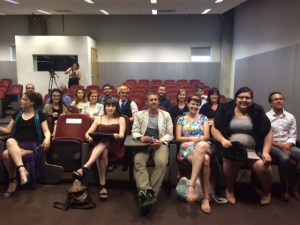
The Herberger Institute Office of Enterprise and Entrepreneurship Programs, which I direct, just hosted its First Annual Herberger Institute Student Idea Showcase. It was a great event, with 18 students pitching ideas for everything from an app that reminds you to water the houseplants to theatre for the very young in a yurt, the latter winning the judges choice award; a visual impaired comic book artist won the audience award for her narration-enhanced Sonic Comics. For the ten years that I’ve led the Pave Program in Arts Entrepreneurship, I’ve been reluctant to produce a traditional pitch competition. This event came close, but we wanted to create an event that wasn’t only about “business,” but rather one that rewards arts and design students for their innovation, for novel ideas that have the potential for positive impact.

Idea judges

Our judges (l to r): Lawdan Shojaee, Jessica Rajko, Sara Cochran, and Bob Booker

My reticence to foster the kind of high-competition atmosphere one sees in some pitch competitions may have some basis in research. As I’ve been conducting a review of the literature on networking and entrepreneurship*, I noticed that entrepreneurial success in the arts and culture sector may be fostered by environments of low competition where networks that enable cooperation and friendship provide both emotional and business support, rather than the kinds of cut-throat competitive environments one associates with Shark Tank or high-stakes Silicon Valley VC presentations. So, we will continue to host our new event on annual basis by emphasizing “IDEA” and “Showcase” rather than “competition.”

* The two articles in our sample of 53 that address this issue also happen to be two of only three that specific look at the arts and culture sector:

  • Konrad, E. D. (2013). Cultural entrepreneurship: The impact of social networking on success. Creativity and Innovation Management, 22(3), 307-319.
  • Kuhn, K. M., & Galloway, T. L. (2015). With a little help from my competitors: Peer networking among artisan entrepreneurs. Entrepreneurship Theory and Practice, 39(3), 571-600.
Posted in Arts entrepreneurship, Higher education | Tagged , , , , , , , , , | Leave a comment

“The Dramaturgy of Public Policy”

thumbsI’ve had the great good fortune to have had several interactions recently with the brilliant Roberto Bedoya, artist, arts administrator, public intellectual, and someone who has earned the title of “thought leader.” The first of these interactions was at the 3 Million Stories Conference hosted on the ASU campus, then two weeks later when he returned as a guest on our Pave Speakers Series talking about “Property Rights, Human Rights, and Places,” and then this week during the ArtPlace Summit held in downtown Phoenix. It was there that I heard him use the phrase, “the dramaturgy of public policy.”

The dramaturgy of public policy.” And with those words, I could almost hear the heretofore tenuously connected gears of theatrical design and public policy analysis mesh together and begin 70px-Cog-scripted-svg.svgrunning smoothly in my head. “Of course!” said the voice in my head, “you understand policy the way you analyze a script dramaturgically: the characters, the setting, the given conditions, the motivations, the inciting action…” I thought to myself: Dramaturgy can be the entry point to understanding policy analysis for the theatre makers, dancers, and visual artists in my policy class. The garbage can model and policy streams could be thrown out the (policy) window in favor of a metaphor these students can relate to: policy as dramatic script.

Thank you, Roberto!


Posted in Arts education, Arts management, Arts policy, Higher education | Tagged , , , , , | Leave a comment