Leadership Axioms from Jim Ed Norman

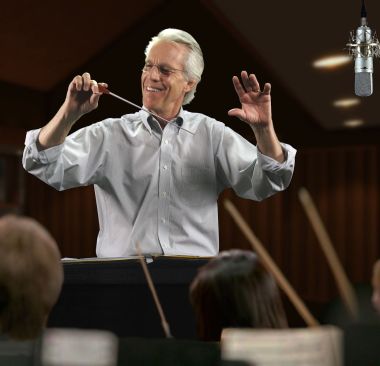
jim_ed_norman_conductingWhat a treat! Our guest this week in “Leadership in the Creative and Cultural Industries” was Jim Ed Norman: musician, arranger, producer, former president of Warner Records Nashville and, after coming out of retirement three years ago, CEO of Curb Records Group. Jim Ed is quick to point out that his CEO position is Chief Excitement Officer. It was fitting that after the students read a chapter on improvisation in leadership in Denhardt and Denhardt’s The Dance of Leadership, that Jim Ed identified one of the most important creative leadership skills as “be quiet and listen.” Any jazz musician knows that listening is key to improvisation. Listening – especially the kind of empathic listening that is foundational to design thinking – has been a through-line in the course. The key to being effective as a listener is, according to Jim Ed, to understand how to arrange what you’ve heard. Although the in-class conversation was casual and unrehearsed, a few key phrases jumped out that sound, only in retrospect, like leadership axioms. I suggest heeding them:

  • Learn humility
  • Allow people to fail gracefully
  • Retain your inner child
  • It’s fair to be skeptical, but don’t become cynical
  • Get comfortable with being wrong
  • Maintain camaraderie
  • Respond to the world as it really is not the way you want it to be.

(photo by Keith Nealy, public domain)
Posted in Arts education, Higher education, Institutional Infrastructure, Personal infrastructure | Leave a comment

The Dark Side of Leadership

I was talking recently about cultural leadership with a colleague, himself a cultural leader of tremendous insight and experience. He noted that people don’t really talk about the emotional challenges one faces as a leader and that few people (and none of the leadership literature) address this. Here are a few thoughts he shared about what he finds challenging:

  • Always trying to run ahead of the pack;
  • Looking in the hat for the next rabbit;
  • Just plain stress and exhaustion;
  • Lately a new increased call for older leaders to leave and make room for a new “visionary/creative” group of younger leaders, when they themselves do not understand the history and pathways to success in the field;
  • Loneliness;
  • The fear that you have lost your mojo, or;
  • …that maybe the hat is empty.

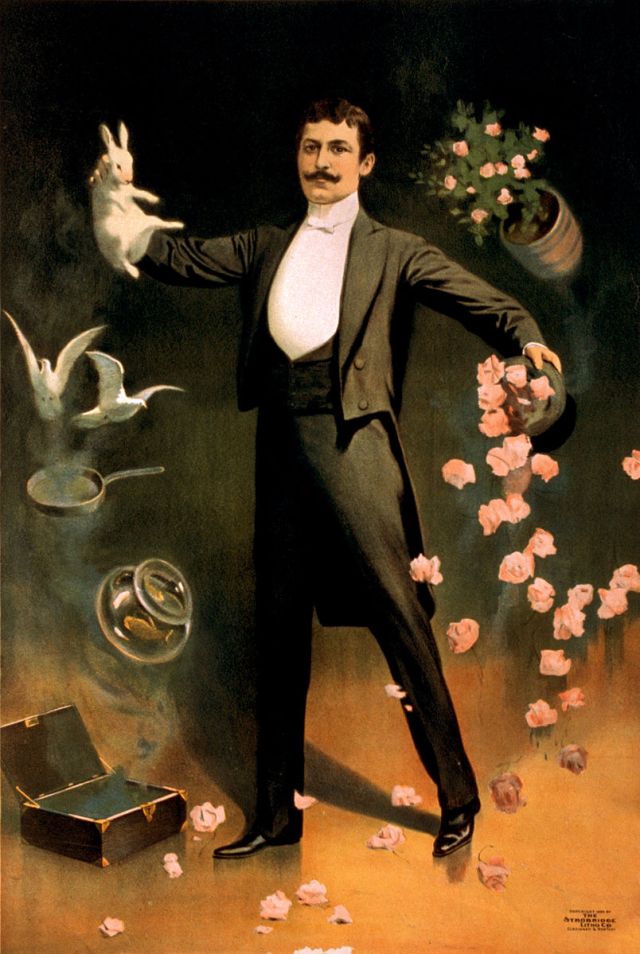
zan_zig_performing_with_rabbit_and_roses_magician_poster_1899

I can attest from my personal leadership experience to these being very real concerns. In order to persevere through these challenges, one needs a strong personal infrastructure, both within and without. I offer a few suggestions for boosting personal infrastructure that would work for me and can maybe work for you:

  • surround yourself with people who love you at home [a challenge when you’re single, but friends count];
  • surround yourself with people who love you at work – not sycophants – but people who love you enough to give you honest and constructive feedback and who continue to love you as you evolve based on that feedback;
  • slow down and take the time needed to asses where you are and where you’re going;
  • get enough sleep, eat a healthy diet, and don’t drink too much;
  • but drink a lot of water – stay hydrated [seriously, this matters, especially if you live in the desert];
  • create and use a feedback mechanism so you can be like a one-person learning organization;
  • communicate regularly with staff and other stakeholders;
  • give yourself permission to have fun at work;
  • give yourself permission to get annoyed about work, but try not to show it;
  • when you fear the hat is empty, take stock of where you’ve been and how far you’ve come;
  • amaze yourself by being yourself; it’s not magic.

Now, if I could just actualize my own advice…

(Image: Zan Zig performing with rabbit and roses, advertising poster by Strobridge Litho. Co., Cincinnati & New York, 1899. Public domain)


Posted in Arts management, Personal infrastructure | Tagged , | 2 Comments

Uber, Gigs, Artists

uber_sidecar_lyft

One car, three transportation networks. Photo by Colin@TheTruthAbout

I heard a story on NPR this morning about a high school teacher in California who drives for Uber because the cost of living in his community is so high he can’t quite make ends meet on his teacher’s salary. Then I looked at the front page of the NY Times and there’s a story about Uber testing self-driving cars in Pittsburgh. The company many had thought of as part of the “sharing economy” is truly, as it has always said, really just a tech company. But what really struck me was the connection between the two stories. As Uber becomes more “efficient,” it will no longer need its independent contract drivers like the teacher. I am well aware that in the long history of industrial organization, as technology has increased efficiency and productivity, the members of the workforce have seen temporary setbacks that lead to long-term improvements for society as a whole. This feels different. My concern is that the teacher featured in the story and his wife, also a teacher, cannot afford to live in the community they serve on the salary the community is paying them. That does not result from technology; that results from skewed priorities.

What does this have to do with the arts? Much has been written recently about the “gig economy” for artists. And, others have written about art and arts work in the “sharing economy.” But what happens when the technologies of sharing cause the gigs themselves to dry up, as self-driving cars most assuredly will? Must our artists all become schoolteachers to supplement their gig-life and build a gig-life to supplement their teaching income — because our communities undervalue both?

Posted in arts infrastructure, Culture and democracy, Institutional Infrastructure | Tagged , , , | 2 Comments

Beauty Helps

My leadership class visited the Scottsdale Museum of Contemporary Art last week and met with its director and chief curator, Sara Cochran. The focus of our discussion was on how leaders employ images and symbols to lead. One of the questions we asked Sara was, “How does the museum, at the organizational level, use symbols and images to affect change in the local community?” She began her response with “Beauty helps.”

sama-alshaibi-at-smoca

Installation of the exhibition Sama Alshaibi: Silsila at the Scottsdale Museum of Contemporary Art, June 4-September 18, 2016. Photo: Peter Bugg from http://www.smoca.org/exhibition/southwestnet-sama-alshaibi-silsila

When this discussion ensued we were standing in an exhibit by an American Muslim woman artist of Iraqi and Palestinian descent in one of the most homogenous and politically conservative communities in Arizona. Beauty brings people into conversation. It invites people to look at the map of Ibn Batūtah’s journey throughout Asia, the Middle East and North Africa and leads them into a dialogue about exploration, women’s bodies, Muslim identity, borders, and more.

sara-at-map

Sara Cochran: “Beauty helps”

With so much ugliness in the world, it seems especially important this year to lead with beauty.

[For more on “beauty” and creative venturing, watch Diane Ragsdale’s talk at the 2015 pave Biennial Symposium on Entrepreneurship and the Arts here.]


Posted in Arts education, Culture and democracy, Higher education, Physical Infrastructure | Tagged , , , , , | Leave a comment

Creative Sector Success is Like an Iceberg

Mari Andrew is a writer and illustrator living in Washington DC who posts a picture a day on Instagram. I’m not a big Instagram user (although I do have an account: @lindainphoenix) so it was via a different social media platform, Twitter, that I came across Andrew’s illustration of creative sector success:

iceberg-of-creative-success

By the time the public sees a successful creative sector professional, there is an iceberg’s worth of success under the water level. That success is built on a foundation of “putting yourself out there” and is buoyed by the resilience that comes from being rejected “1000000” times. I’ve said such before, but Andrew’s illustration brings home the point symbolically. You can follow her on instagram: @bymariandrew.

Posted in arts infrastructure, Personal infrastructure | Tagged , , , , | Leave a comment

Do What Loves

The best thing I read this past week was a post on Medium by Umair Haque that asserts that suggesting people “do what they love” [a.k.a. “follow their passion”] is not sufficient. Instead, he offers these three pieces of advice:

  1. Do what moves youValentines-Day-Hearts-Clipart
  2. Do what loves you
  3. Do what loves

Because I frequently mentor students and peers, Haque’s piece really resonated with me. It resonated with a lot of other people too: I posted it on the Pave Program Facebook Page and it had over 1000 hits within an hour or two.

What moves you, as Haque explains, are the things that the “things you love” have in common. I’ve written here before about how cooking, lighting design, teaching, and entrepreneurship have common threads that propel my interests. What are your “common threads” and how do they move you?

ouroboros tempAs an arts entrepreneurship educator, I feel it is my job to help artists understand that their work can and should feed them both literally and figuratively. Haque’s idea of work that gives back to you, that has the potential to nurture your body and mind, is analogous to the ouroboros concept central to my next big writing project. The work we do should be generative and regenerative simultaneously.
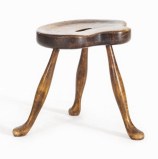
three legged stoolFinally, Haque suggests we should do work that loves others. I was reminded, as I got to this third leg, of the “Good Work” concept developed by Howard Gardner, William Damon, and Mihaly Csikszentmihalyi. “Good Work” is work that is excellent, ethical, and impactful. Haque’s three-legged stool is analogous to theirs and, in its last leg, roughly synonymous. He advises people do: “What really cares for, nurtures, benefits people. What enhances, transforms, and changes their lives.” This last resonated specifically with the work of my past week on leadership and leadership values. If, as Denhardt and Denhardt write, “Leadership is about change, moving people in new directions, realizing a new vision, or simply doing things differently and better,” then we had best lead in a way that cares for, nurtures, and benefits people.
(Joseph Frank, Three-legged stool, c. 1928)

Posted in Arts education, Culture and democracy, Higher education, Personal infrastructure | Tagged , , , , , , , , , , | 1 Comment

Leading and Following

My “Leadership in the Creative and Cultural Industries” course has met twice now and we are making progress toward understanding that leadership and management are not the same, that leadership can happen anywhere in an organization, and that authentic leadership results from the outward manifestation of our personal values.

OLYMPUS DIGITAL CAMERA

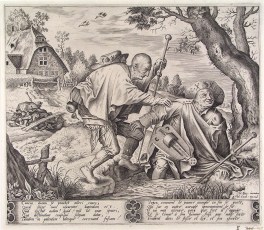
Who better to guide an exercise in leading through space, time, and energy than Liz Lerman and her collaborator John Borstel? They asked the students (including me) to embody leading and following first by pairing us up, having one partner close their eyes and the other leading us on a walk around the room and adjacent hallway; then we switched. But what really hit home was the second half of the exercise. Leader led the sightless follower on a walk and then stopped and left them. The follower waiting until they were approached and then led by another participant. We proceeded in this way, with participants given agency to switch between sighted and sightless when paused, for about five minutes. As we debriefed, students talked about how they needed to feel empathy as both leader and follower, the importance of trust, and the sense of love in the room. These were personal values that had been ranked highly by the students in the previous class session’s “value cards” exercise in our first session. Experiencing these values – and that leadership is itself fluid and not necessarily tied to “rank” or “office” – was itself in-valuable. Also invaluable is the notion that learning good “followership” is as important as learning good “leadership.”

Thank you, Liz and John!

(“The Blind,” Pieter van der Heyden, public domain)

Posted in Arts education, Higher education, Institutional Infrastructure, Personal infrastructure | Tagged , , , , | 2 Comments

Fidelity ★ Efficiency ★Honor….Empathy

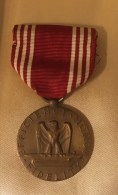
good conduct medalBecause this past Sunday was “Purple Heart Day,” I had occasion to look at my father’s purple heart as well as his good conduct medal, inscribed with the words “fidelity,” “efficiency,” and “honor.” These are leadership values that are not unique to the military. They are also not unique to people of high rank; my father earned this medal while serving as a private (first class). Rank does not necessarily equate with leadership.


In preparation for the first session of my new course, “Leadership in the Creative and Cultural Industries,” I am reviewing my own values and preparing for my students to do the same in a values inventory exercise we’ll do in our first class session. In this exercise, each student gets a stack of 30-40 “values cards” and is asked to pull out their top ten from the deck. They are then asked to choose their top five and rank them, to consciously consider the values that drive their decision-making as leaders. I do this exercise myself at least once a year. “Honesty” has always been my top-ranked value, but this year, “empathy” took the top spot. It seems that we are in a time when empathy is more important than ever. When listening leads to understanding, discourse can lead to genuine collaboration, and collaboration to innovation.

Just a thought to start the school year…

Posted in Arts education, Culture and democracy, Higher education, Personal infrastructure | Tagged , , , , , | 4 Comments

Thank You, Zelda

Zelda Fichandler, who passed away last week at age 91, was a woman who knew a lot about infrastructure for the arts. She was a leader in the regional/resident theatre movement that built the institutional infrastructure of nonprofit theatres across the US; she led Arena Stage in Washington DC, creating the physical infrastructure for playwrights, directors, designers, and actors that lives on today. But here I share a personal story, a story about how Zelda helped me understand what was needed for my own creative infrastructure.

As many of you will know, Zelda Fichandler was one of the most influential theatre leaders of the 20th century. I don’t think it’s an exaggeration to say that we would not have a regional theatre without her. She had a profound effect on me personally – and not in the context one might think. In the summer of 1984, I took a job waiting tables at an Indonesian BBQ joint called “Chicken and Burger World,” (classy, right?) on Sixth Avenue and Eighth Street in New York City. Little did I know it was Zelda’s go-to lunch spot. When I took her order, I was surprised that she recognized me as an NYU Design student – but she did. “What are you doing here?” she asked. “Paying my rent.” “You shouldn’t be here – you should be out designing somewhere!” She was right of course, and a couple of weeks into my Chicken and Burger World tenure, I got a call from Michael Kahn, who was running the Chautauqua Theatre Company at the time, to head up there and be the resident LD for the season. I never worked food service again. I don’t know if she had anything directly to do with getting me the job, but everything to do with helping me understand professional priorities; and understanding one’s professional priorities is a key component of our personal creative infrastructure. Thank you, Zelda! You were a force of nature.

zelda with Ford

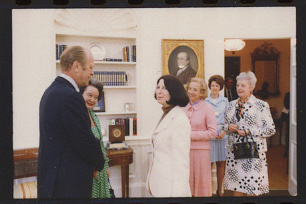
(photo: Zelda Fichandler is welcomed to the Oval Office by President Gerald Ford, May 1975, upon receipt of her International Woman of the Year Award. Photo by White House Photographic Office, public domain.)

Posted in Institutional Infrastructure, Personal infrastructure, Physical Infrastructure | Leave a comment

Return

Creative Infrastructure is back, recharged, with a new look and a renewed focus on “thoughts and ideas about infrastructure for the arts.” Infrastructure for the arts is physical (the art studio, the rehearsal room), institutional (organizations, norms, systems), and personal (education, self-care). In its public policy and planning usage, “infrastructure,” refers to the roads, bridges, or power grids that make human interaction – and commerce – possible. In the 21st century, “infrastructure” includes digital infrastructure too: the fiber optics, cell towers, and servers that make it possible for you to read this blog on a handheld device. Just as the infrastructure required for communication has evolved from telegraph to telephone to wireless, so too infrastructure for the arts evolves over time – and across all of three dimensions of that infrastructure. Over the next several months, I’ll be posting about these evolutionary changes in our physical, personal, and institutional infrastructure environment and practices (and, occasionally, cooking).

So…goodbye wordcloud:

old word cloud

Hello Ouroboros:

ouroboros temp


Posted in Arts education, Arts entrepreneurship, arts infrastructure, Arts policy, Culture and democracy, Institutional Infrastructure, Personal infrastructure, Physical Infrastructure, Technology and arts | Leave a comment