The arts policy conversation was fueled last week by an announcement from the governor of Kansas that the state’s arts commission would cease to be a state agency and by Texas Governor Perry’s statement that the Texas arts commission was not mission critical so should be cut (this statement has not yet been actualized). This leaves many of us in the blogosphere, most notably Arlene Goldbard and Ian David Moss, pondering the role of state arts agencies. My own ideas in this regard are nascent at best, but the beauty of blogging is that I can put some ideas out there, get reaction, do some more research, and then refine those ideas in what I hope will be a long-term iterative project of both formal theorizing and informal activism. So, if you’re willing to accept my disclaimer, read on…
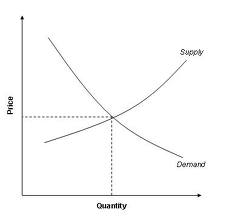
The news of the Kansas Arts Commission’s demise followed close on the heels of a blog-based debate on the supply/demand equation as it applies to nonprofit arts orgs. The two topics are related in some ways, but in fundamental ways are different. One is an argument about arts organization and the second about the arts themselves and more fundamentally, government intervention in a specific cultural and/or economic sector. As others have noted, what it’s not about is the actual dollars — they are negligible to the budget scheme at the state or federal levels.
Since Kennedy’s day, advocates have used a public goods argument to justify public support for the arts. Even Paul Samuelson, in defining public goods in a series of articles in 1954 and 1955, cited cultural performance (specifically an open-air circus) as an example of a public good. Open an introductory economics text and one is likely to find a definition of public goods as those goods and services that are non-excludable and non-rivalrous or, stated another way, goods that are available to all and which use by one person is not precluded by use by another. This definition makes a strong argument for support of the arts (as well as other social goods, such as protection of the environment). Many in the US would prefer that government not interfere in a market-based economic sector. The issue here as Goldbard implies, although she doesn’t put it in quite these economic terms, is that much of what we think of as participation in and production of arts are non-market goods. While there is a market for some art (e.g. a painting for sale in a gallery, a ticket to the symphony) there is no market incentive to produce art for which there is not yet a market even if there may be a market in the future (consider that there was little or no market for Van Gogh’s paintings while he was alive). Similarly, there is no direct market incentive for participation in the arts, despite the positive externalities of culture, democracy, and “creative class” infrastructure such participation engenders.
I see, therefore, two reasons for government to intervene: to seed innovation and to provide equitable access to participation. One of the fundamental problems with government funding for the arts is, as Goldbard notes, “most of these [state arts] agencies channel a disproportionate amount of funding to largely white, red-carpet organizations…” These are organizations that maintain the status quo of arts production. While preservation is an important mission, it should not be the sole –or even primary – focus of arts policy. Here, we can return to the question raised by Landesman about the supply of arts organizations. Is there a way for arts policy (read funding) to be targeted at artists rather than arts organizations so that artists can actually innovate? (Keep in mind that right now, the most impactful policy tool in terms of dollars supporting the arts is the tax deduction for charitable giving which targets neither artists nor arts organizations, but the elite deduction-itemizing affluent taxpayer.) The second justification for intervention is to seed participation – to ameliorate the inequities in participation in the arts caused by geography, economy, and sheer bias.
I haven’t yet listed the most often-articulated justification for government intervention: the arts builds creative economies, supports jobs, etc etc because that argument clearly is not working! Perhaps it’s not working because it’s a market-based argument for a non-market good and you can’t get oranges from a pomegranate tree. When we can make a valid public value argument that is not solely based on economic growth, we may be able to make some progress.

Anne Schneider and Helen Ingraham write that pluralist democracy depends on “citizens who pay enough attention to politics that they can mobilize when their interests are threatened.” What has been heartening about the conversation over the last several weeks is the very fact that we are having it. Unfortunately, we are only having it amongst ourselves. Go out and tell your legislators that art doesn’t just “work,” it “matters;” it is an essential part of who we are as humans and as Americans.
(I have a related post on the symbolic capital of state arts agencies)
photo by Dinah Hughes.






 Creative Infrastructure