Waxing Theoretical Part 6: If you can’t beat ’em, join ’em!

This is the sixth and final installment in my blog series on the theories that underly arguments against — and in today’s installment for – government funding for the arts.  I look today with some skepticism at the creative industries and public value constructs and their relationship with the neoliberal philosophy that has pervaded US public policy since Reagan was elected in 1980.

In the previous installment I argued that adherence to the pro-market rationality of neoliberalism could lead to actions that work against the public interest.  Why then has the arts and culture sector appropriated the language of the marketplace to tell its story?

The new narratives: “Creative Industries” and “Public Value” —

            McGuigan (2005) asserts, “Neo-liberalism promotes the language of branding, consumer sovereignty, market reasoning and management” (p. 233). This language has pervaded the arts advocacy community as well and in doing so has shifted the focus of the arts policy discourse away from artistic excellence, innovation, and cultural heritage toward arts and culture as an economic driver.  This market language is heard in the discourse surrounding “the creative industries” and in the adoption of the “public value” framework for arts policy development at the state level and arts advocacy more generally.

Flew and Cunningham (2010) provide a useful overview of the development of the creative industry discourse and its relationship to neoliberal philosophy.  Developed in the UK and widely adopted in Australia, New Zealand, Asia, and some European countries, the term creative industries is generally understood to refer to those arts, design, and entertainment fields the employ individual or group creative practice in the development of intellectual property (Flew & Cunningham, 2010).  Thus it is understood to include the traditional visual and performing arts as well as media arts (television, film, radio), architecture, and video game design.  The creative industries literature trends toward “a view of cultural sectors as contributors to wealth creation and economic performance, and not simply as claimants on public revenues on the basis of nonmarket or intrinsic values” (Flew & Cunningham, 2010 p. 113).   Freedman (2008), in his analysis of media policy, defines the ideological problem: “the neo-liberalization of media policy is designed . . . to assist the expansion of private accumulation and to undermine the legitimacy and existence of non-profit and public service media provision” (p. 224).   Flew and Cunningham do not accept Freedman’s argument that the neoliberal creative industries approach undermines the nonprofit arts sector.  Instead they advance the idea that the cultural policies that have arisen out of the creative industries discourse (in Australia) has supported the development of small-to-medium enterprises alongside large publically funded institutions that form creative networks that are “a core source of innovation in the arts, media, and culture” (p. 120).  Although research is advancing in this area in Australia, it has not yet been taken up in a significant way in the U.S.

In the U.S., the creative industries discourse has developed as the “creative cities” movement, broadly popularized by Richard Florida in his book The Rise of the Creative Class (2002).  McGuigan  (2009) likens Florida’s creative class to Bourdieu’s petite bourgeoisie of cultural intermediaries, who are necessary to the sustained economic growth of creative cities but are not themselves creative innovators.  McGuigan underlines that Florida “is not so much concerned with cultural development as with economic development” (p. 294).  Florida stresses, both in his original book and as disseminated through his consulting practices to a large roster of U.S. and international cities, that economic development is bolstered by attracting talent, technology, and tolerance.  The arts and culture sector has adapted Florida’s basic premise – that urban economic development is enhanced by having more creative people around – to drive an advocacy position that, in its simplest form, can be stated as “the arts are good for the economy.”  By advocating for “the creative class” as a means of supporting market-driven business interests and creating environments conducive to commerce, arts advocates could, and sometimes do, appeal to a neoliberal perspective that supports government intervention in creating market-friendly institutions.  The “arts as an economic driver” argument can be found in the rhetoric of national, state, and city art agencies.  The NEA, for example, in its recent “Art Works” campaign, reminds its stakeholders “that with two million full-time artists and 5.7 million arts-related jobs in this country, arts jobs are real jobs that are part of the real economy. Art workers pay taxes, and art contributes to economic growth, neighborhood revitalization, and the livability of American towns and cities” (National Endowment for the Arts, 2010).

The “public value” framework is another way in which the rhetoric of neoliberal market economics makes its way into the arts and culture discourse.  As articulated by Mark Moore (1995), it is a seemingly neoliberal approach that asserts, “society needs value-seeking imaginations…from its public sector executives no less than from its private sector managers” who “should seek to produce public value” (p. 21). In the public value framework, in language reminiscent of New Public Management gurus Osborne and Gaebler (1992), public managers lead “enterprises” with an aim “to create public value just as the aim of managerial work in the private sector is to create private value” (p. 28).  The public value approach has been described as “an approach that is principled about ends but pragmatic about means” in which “public managers can play an entrepreneurial role in discerning or imagining solutions to problems in our natural or social environment that are politically acceptable as well as administratively feasible” (Alford & Hughes, 2008, pp. 131, 134)

Moore’s work on public value was widely disseminated through and adopted by the arts advocacy and arts policy community due to an influential 2005 report, Creating Public Value through State Arts Agencies.  The report (Moore & Moore, 2005), commissioned by Arts Midwest (one of the six regional arts organizations in the U.S.) and the Wallace Foundation, provides a playbook for how state arts agencies and the advocacy groups that support them can speak about the public value created by those agencies to their full range of stakeholders from their political authorizers through individual citizen participants.  More than a mere playbook though, Moore and Moore (2005) ground the very existence of state arts agencies in a neoliberal, New Public Management framework: “On a theoretical level, thinking of the SAAs [state arts agencies] as an industry encourages one to think of individual SAAs as similar to commercial firms, allowing one to invoke some important managerial concepts from the private sector” (p. 12).  In advocating for the public value approach to arts funding, Moore and Moore cite the first two arguments addressed in this series, the scope and content arguments.  To address the third, they advise managers to create a value proposition for arts agencies that can survive in the marketplace, a marketplace of voluntary actions.  For SAAs to survive, Moore and Moore remind managers, they must address the authorizing environment, including the governor and state legislature and their staffs to compete in the market.  The market in which the SAAs compete is the market for public state monies.

Conclusions

Moore and Moore (2005) argue that the legitimacy of state arts agencies results from their authorizing legislation and the concomitant degree to which agencies meet the missions outlined therein: “elected representatives of the citizens, acting through the process of democratic governance, established a state agency for the arts with particular missions” (p. 22).   The authorizing legislation for the National Endowment for the Arts speaks to the public purpose of that agency saying “it is necessary and appropriate for the federal government to help create and sustain not only a climate encouraging to freedom of thought, imagination and inquiry, but also the material conditions facilitating the release of this creative talent” (U.S. Congress, 2010/1965).  Thus, legitimacy is presumed, even if funding is not.  As these legitimate agencies of government have advocated for the funding needed to meet their missions, they have employed the rhetorical frameworks of the arguments used in opposition to their legitimacy.  This “if you can’t beat ‘em join ‘em” approach is a pragmatic one in the sense that the arts sector response is developed situationally.   The art as a public good argument arises out of economic liberalism and the public value argument develops in a neoliberal environment.  It is harder to articulate an argument from the moral absolutism of the neoconservatives, but the internal contradictions of that movement, including the conflict between pragmatic and radical neoconservatives, have served to temper its potency.  The constitution itself, and in particular its formulations of the rights of free speech and assembly, continue to protect artistic expression, if not arts funding.

This new pragmatism in the public arts sector is not without its critics: “Conservatives and progressives can find common ground in attacks on the presumed elitism of the world of art and culture. To the degree that this pragmatism reigns supreme, art and culture will be left with little legitimacy other than what is socially, politically, and even economically expedient” (Yudice, 1999 p. 18).  While expediency may not be a righteous goal, social, political, and economic impact certainly is.  A small effort, led by the advocacy organization Americans for the Arts, is growing the capacity of organizations to measure the hardest of these to evaluate, the social impact of the arts.  Because we measure that which we care about, perhaps the arts advocacy community can frame their next set of arguments proactively around the ways in which the social impact of the arts animates democracy.


Posted in Arts funding, arts infrastructure, Arts policy, Culture and democracy, Uncategorized | Tagged , , , , , , , , , , | Leave a comment

Waxing Theoretical Part 5: Neoliberalism and the market

This is the fifth post in my series on the theoretical bases for arguments against – and in the next section for – government funding for the arts.  In this installment I look at neoliberalism, that branch of market-loving political theory popularized by the Reagan White House, and extended by Al Gore’s national performance review under Clinton.

The language of the marketplace has pervaded the discussion of arts policy at every level.   Recall Rocco Landesman’s comments of January 26, comments that stirred a debate throughout the arts policy blogosphere:

Look. You can either increase demand or decrease supply. Demand is not going to increase, so it is time to think about decreasing supply.

            The rhetoric employed by NEA Chair Landesman in a recent speech at Arena Stage’s New Play Convening is emblematic of the market-oriented rhetoric of neoliberalism.  “In ordinary parlance, neo-liberalism refers to the repudiation of Keynesian welfare state economics and the ascendance of the Chicago School of political economy — von Hayek, Friedman, et al. In popular usage, neo-liberalism is equated with a radically free market: maximized competition and free trade achieved through economic de-regulation, elimination of tariffs, and a range of monetary and social policies favorable to business and indifferent toward poverty, social deracination, cultural decimation, long term resource depletion and environmental destruction” (Brown, 2003, 3, emphasis added).  David Harvey (2005) views neoliberalism less as a reaction to the welfare state and more as a radically interventionist extension of market-friendly liberalism:

Neoliberalism is in the first instance a theory of political economic practices that proposes that human well-being can best be advanced by liberating individual entrepreneurial freedoms and skills within an institutional framework characterized by strong private property rights, free markets, and free trade.  The role of the state is to create and preserve an institutional framework appropriate to such practices… It must set up those military, defence, police, and legal structures and functions required to secure private property rights and to guarantee, by force if need be, the proper functioning of markets… Furthermore, if markets do not exist…then they must be created, by state action if necessary. (p. 2).

As Brown (2003) notes, the theoretical grounding of neoliberalism is found largely in the work of Austrian philosopher and economist Friederich von Hayek and University of Chicago economist Milton Friedman (Harvey, 2005) and their followers. Hayek believed that competition supports liberty and is supported by legal institutions that can withstand the test of time.  In describing the relationship between competition and liberty, he wrote, “the functioning of competition not only requires adequate organization of certain institutions like money, markets and channels of information-some of which can never be adequately provided by private enterprise – but it depends, above all, on the existence of an appropriate legal system, a legal system designed both to preserve competition and to make it operate as beneficially as possible” (1944, in Arnold, 1980, p. 349).  In order for the legal institutions or “general rules” to emerge, Arnold (1980) explains that it is necessary to have a moral code such that “holders of this moral code must accept as sacrosanct the dictates of the “marketplace,” whether these dictates are in one particular instance favorable or unfavorable to them” (p. 350). Hayek favored “non-intrusive, non-directive organizations which provide a stable and predictable framework for the coordination of individuals’ activities” (Held, 1996, p. 258) as the means to satisfy the greatest number of people.  Friedman, in complementary fashion, views economic freedom as expressed in the capital market to be a check on political power (Friedman, 1962). Both view private property, competition, and distance between politics and market economics as prerequisites for freedom and liberty.  Friedman extends the concept of market to be not only as voluntary exchange of goods, but as voluntary actions of all kinds (Mishan, 1975) such that, for example, voluntary attendance at a free school concert would be considered a market activity.

The neoliberal faith in markets has pervaded both economic and political thought since the late 1970s, leading to widespread governmental and institutional reform around the globe (Kettl, 2005).  While neoliberal philosophy may lead to greater intervention in maintaining the health of markets, it relies on liberalism’s inclination toward limited government in the development of institutions to sustain economic health.  Gwartney, Holcombe, and Lawson (1998) make a typically neoliberal argument for limiting the government intervention: “Increases in the size of government have slowed economic growth. More rapid growth is possible, but the higher potential growth can only be achieved if we are willing to reduce the relative size of government” (p. 185).  Their Cato Institute-funded paper, although peppered with charts and graphs of OECD growth rates, makes unsubstantiated claims for the supremacy of the market, however.  They write, to cite just one example, “We also include education, even though it does not exhibit the characteristics of a public good and the private sector has shown itself quite capable of providing high-quality education” (p. 166).   In a neoliberal state, even government itself is considered of secondary importance in relation to the market.  Braun (2010) goes so far as to contend that “neoliberalism, unlike Smith’s free-market model, conceives of the political as antithetical, not subordinate, to the economic. In this imaginary, the values of democracy – equality, freedom, and justice – must not be negotiated in the public sphere; …any attempts to do so will interfere with the circulation of capital” (p. 140). The neoliberal ideal is a “triumph of markets over governments” (Stuckey & Ritter, 2007, p. 652).

Influential Public Choice economist Tyler Cowen applies economic principles to his critiques of art and of arts and culture policy.  In contrast to the neoconservative view that holds that the state could potentially support  “masterpieces” or art deemed to be “good,” the public choice view takes a “value neutral approach to cultural evaluation” (Cowen, 1998, p. 7).  Cowen argues that “well-developed markets support cultural diversity” (p. 22).  In the market-driven cultural economy he favors, “The state does best in promoting the arts when it acts as simply another customer, patron, or employer, rather than as a bureaucracy with a public mandate” (p. 37).  In other words, in Cowen’s view, the government should not be a patron, but a customer buying art in the free market (McGuigan, 2005).

Critiques of neoliberalism

Critiques of neoliberalism and its effects circulate around issues of reduced civic engagement, disregard for the public interest, and democratic relations (e.g. Denhardt & Denhardt, 2000; Giroux, 2005).   Bourdieu describes the problem of neoliberalism being that it

reifies and glorifies the reign of what are called the financial markets, in other words the return to a kind of radical capitalism, with no other law than that of maximum profit, an unfettered capitalism without any disguise, but rationalized, pushed to the limit of its economic efficacy by the introduction of modern forms of domination, such as ‘business administration’, and techniques of manipulation, such as market research and advertising. (1998, p. 35)

He pays particular attention to the detrimental effect that neoliberal housing policies have had on equity, concentrating the poorest of the poor in the worst possible housing projects.  Bourdieu asserts that the ideological shift toward neoliberalism in the 1970s, made manifest in the 1980s “was accompanied by a destruction of the idea of public service” (1999, p. 182).

Banks points to another concern raised by neoliberalism’s critics: their “widespread belief is that rampant individualization, a culture of self interest, and the primacy of market rationality have rendered the economy more unethical and immoral” (Banks, 2006, p. 456).  Thus, not only are governmental agents and others acting outside the public interest, but by obeying neoliberalism’s market-based rationality, they may be acting unethically or even immorally.  Thus, although neoconservatives may have argued that government intervention in the arts could lead to immorality, obeisance to market forces could potentially do the same.   Despite these critiques, the arts policy sector has responded by acquiescing to or appropriating, depending on one’s perspective, the language of the marketplace.

The next installment (the last) looks at two implementations of that language: the creative industries and the public values constructs.  Stay tuned!

Posted in Arts funding, Arts policy, Culture and democracy, Uncategorized | Tagged , , , , , , , , | 3 Comments

Power plays

I’m taking a break from my (not particularly popular) series on the theoretical underpinnings of arguments opposed to government funding for the arts to comment on the recent line-item veto by Kansas Governor Brownback of funding for that state’s arts commission.  Obviously, the two items are connected, and we’ve seen that connection in a very real way in the last week.

How can Brownback argue against funding the commission?  It’s not about the money – the state will see a net loss due to the loss of federal NEA funds when the state commission goes unfunded and the five commission employees will be drawing down the state’s unemployment coffers.  It’s not about democracy – the state legislature, in a by-partisan move, overturned Brownback’s earlier executive order to close the agency.  It might be about an ideological stance about limiting the scope of government, but I think Jay Dick on artsblog may have hit the nail on the head when he writes, “What was this really about? At the end of the day, one word: Power.”

We see this trend toward centralization of gubernatorial powers elsewhere, most especially in Wisconsin where Scott Walker subverted voting rules to push through his decimation of collective bargaining rights for government workers.  It almost feels like the Hamilton/Jefferson debate over states rights all over again.  The difference is that Hamilton and Jefferson, each in their own ways, were hoping to protect the democratic rights of citizens and these new governors appear hell-bent on circumventing those rights to secure their power positions in the newest version of the “Right.”

What can be done about it?  Read Barry Hessennius call to (metaphorical) arms.  The Walkers and Brownbacks of the world are motivated by one thing – the power that comes with their ELECTED positions.  Stop them from being re-elected, or do what 18,000 citizens of Fountain Hills AZ are doing to AZ Senate President Russell Pearce: start a legitimate, democratic recall effort.   When the people in power no longer represent the people, they no longer have the power.

PS> for another excellent opinion piece, see Janet Brown’s blog on the Grantmakers in the Arts site.

Update: See artsblog for news on an unsuccessful veto override attempt.

Posted in Arts funding, Arts policy, Culture and democracy, Uncategorized | Tagged , , , , , , , , , , | 2 Comments

Waxing Theoretical Part 4: The neocons

This is the fourth in my series exploring the roots of arguments that oppose government funding for the arts.  It is excerpted from a longer exploratory essay on the topic and is essentially a thought exercise.  My goal is to assist the arts advocacy community in developing effective tools to support that funding, so I was driven to explore, in some depth, the arguments in opposition. I was planning to discontinue the series due to lack of interest, but if you are one of the five or so people who have been following it, in this installment, I look at neoconservative arguments based in moral absolutism.  If you’ve been following this series, you know that the discourse here is somewhat more academic than the typical blog post, but hopefully useful.  At the end of the series, I will post the full list of references.

When a museum receives taxpayer money, the taxpayers have a right to expect that the museum will uphold common standards of decency

– Representative Eric Cantor on the Smithsonian’s Hide/Seek Exhibit, November 30, 2010


Screen shot from David Wojnarowicz' "A Fire in My Belly"

Neoconservatism and morality

Representative Cantor, like his late colleague Senator Helms two decades earlier, uses a public decency argument to suggest that funding should be contingent on artistic production upholding some kind of commonly held definition of decency.  It is an argument that is typical of neoconservative thinking about social issues.  The neoconservative movement that arguably reached its apogee in the 1980s during the Reagan presidency and just after had its roots in the anti-communist movement that followed World War II (Ehrman, 1995).   Unlike the liberal notion of a limited government, those neoconservatives that follow the work of Reinhold Niebuhr and others felt that government needed to provide not only constitutional but moral restraint on what would naturally devolve into an uncivil society.  Neoconservatives are less concerned about the scope of government than (small “l”) liberals, while still being leery of its inefficiencies (Bowman, 2004).  Although focusing its strengths and talents primarily in the foreign policy arena during the Reagan years (e.g. Judis, 1995), neoconservative thinking pervades contemporary arguments against government funding for the arts and other social programs.

In addition to its anti-communist roots, neoconservatism or the “New Right” can be characterized by libertarianism on the one hand and “a traditionalism struggling to reestablish the importance of religion, shared values, and social constraints in the face of what it perceived as a secular, atomized, mass society” (Himmelstein & Zald, 1984, p. 4) on the other.  The latter view developed in the late 1960s in part as reaction against the perceived radicalism and permissiveness of that decade. Homolar-Reichman  (2009) describes the development of the movement, “original neoconservatism began during the 1960s and 1970s as an intellectual protest against what they regarded as the radicalism of the New Left and the social experiments of the federal government, which failed to discriminate between ‘desirable’ and ‘undesirable’ social behaviour” (p. 180).  It is this branch of the neoconservative movement concerned with social behavior and public morality, rather than that primarily concerned with foreign policy personified by Jeanne Kirkpatrick, Paul Wolfowitz, and others, that is of interest here.

Two of the most impactful concepts of neoconservative thinking on arts and culture policy are a belief in moral absolutism and faith in the power of religion to provide social order  (Mattson, 2006).  These concepts are of course related to one another as religious belief can form the basis for the morality that neoconservatives hold to be absolute.  Mattson credits Leo Strauss with articulating the key principles that structure neoconservative thinking in these areas. Strauss asserts that liberalism (in the classical sense) is in a crisis “due to the fact that liberalism has abandoned its absolutist basis and is trying to become entirely relativistic (Strauss, 1961, p. 140). Moral relativism has no place in Strauss’s version of a civil society.   Reagan and Bush appointees Richard Perle, Paul Wolfowitz, and Leon Kass can be considered Strauss’s intellectual descendents, as can Francis Fukuyama, and William Kristol (Mattson 2006).  Fukuyama (1996) wrote, prior to his break with the neoconservative movement, “Given the close relationship between religion and community in American history, Americans need to be more tolerant of religion and its social benefits” (p. 319) Fukuyama asserts that the Hobbesian liberalism of the founders does not go far enough in establishing community, arguing that family ties and religion were important to the founders, even those who were non-believers. They “believed that a vigorous religious life, with its belief in divine rewards and punishments was important to the success of American democracy” (p.  351).   One could argue, although Fukuyama does not, that the founders’ views on this matter are pragmatic; the majority of colonial residents were religious and their religion provided a framework for thinking about the consequences of wrong behavior that could conceivably be transferred to adherence to the rules of the new state.  For non-believing and believing founders alike, the situation called for support for religious practice and belief.

Neoconservatism and the arts

The moral absolutism of neoconservatism does not in itself imply that the state should have no involvement in the arts.  Rather, the implication is that state activity in the arts and culture sector should be limited to its support for the shared values of the American people.  Given the heterogeneity of “the American people,” the shared values construct becomes problematic and, according to education theorist M.W. Apple (2004), is largely constructed as an “imagined national past that is at least partly mythologized” (p. 16).

The neoconservative views on values and decency found voice and cause during what has been termed “The Culture Wars” of the late 1980s and early 1990s.  Concern about the content of publicly funded arts termed “obscene” in a lawsuit against the Cincinnati Museum of Art and elsewhere, catalyzed a policy shift at the federal, state, and local levels away from focus on artistic excellence as determined by expert peer review toward increasing audience access to the arts (Shockley & McNeely, 2009).   The peer review process for government grant-making in place at the time was designed to enhance quality control by putting subjective decisions in the hands of experts.  Doing so, however, placed an emphasis on “artistic freedom over democratic accountability” (Lewis & Brooks, 2005,  p. 9) although there were mechanisms for oversight that even at that time involved citizen participation in the review process.

Also in the late 1980s, neoconservative cultural critic and activist David Horowitz founded the Center for the Study of Popular Culture, now the David Horowitz Freedom Center.   The center published books and papers and convened symposia to disseminate Horowitz’s neoconservative cultural policy perspective, summed up in his description of the National Endowments for the Arts and Humanities as “stricken with…intellectual, moral, and structural ailments” (Horowitz , 1994, p. xii).   The stronger voices of opposition to state intervention in the arts on moral grounds, especially at the federal level, came from congress itself when the House of Representatives voted to completely defund the NEA in 1997 following histrionic rhetoric from North Carolina Senator Jesse Helms, who said “The American people…are disgusted with the idea of giving the taxpayers’ money to artists who promote homosexuality insidiously and deliberately, who desecrate crucifixes by immersing them in urine, and others who will engage in whatever perversion it takes to win acclaim as an artist on the ‘offending edge’ and therefore entitled to taxpayer funding” (in Quigley, 2010) .

Rationality and reason have been poor weapons for the arts policy sector in a battle of words based on moral absolutism.  Yudice (1999) argues that neoconservative moral absolutism has nothing to do with opposition to arts and culture policy.  Rather, these events are part of “a restructuring of governmentality, giving rise to a new way to channel conduct and enable action; both this restructuring and channeling of conduct require new legitimation narratives for the arts and culture” (p. 18).  These new narratives arose in reaction not to neoconservative arguments for moral righteousness but rather in response to neoliberal philosophy opposed to state involvement in the arts and culture sector on market grounds – the topic of the next two installments.

Posted in Arts funding, arts infrastructure, Arts policy, Culture and democracy | Tagged , , , , , , | 2 Comments

Waxing Theoretical Part 3: The art of separation

This is the third in a series of posts exploring the roots of arguments that oppose government funding for the arts.  It is excerpted from a longer exploratory essay on the topic and is essentially a thought exercise.  My goal is to assist the arts advocacy community in developing effective tools to support that funding, so I was driven to explore, in depth, the arguments in opposition.  In this installment, I look at the structure of the Constitution.  If you’ve been following this series, you know that the discourse here is somewhat more academic than the typical blog post, but hopefully useful.  At the end of the series, I will post the full list of references.

Robert Dahl (1956) explains that the U.S. Constitution constrains government so as to prevent tyranny.  Dahl also notes that the framers were as much or more influenced by Hobbes’s view of man in a state of nature as Locke’s in that without constraint on government tyranny, man will be tempted to pursue his desire for absolute power (Dahl, 1956). [I use the masculine noun and pronoun in discussion of these early thinkers to be consistent with their own writings with the understanding that humankind includes both “man” and “woman.”]  Ostrom  (2008), too, asserts that “Hobbes’s theory of sovereignty and the American theory of a limited constitution are based on some common initial assumptions” (p. 94).  Pateman (1985) also argues that it is  “Hobbes’ uncompromising individualism [that] leads him to the extreme solution of absolute rule and unconditional political obedience” (p. 37).  On the other hand, sovereignty cannot be absolute as Hobbes contends but rather must be checked and limited while simultaneously constraining naturally selfish actions.  McSwite (1997) writes that “it was the regulation of the inherently selfish nature of human beings…that was the basis for the governmental arrangements that each [Federalist and anti-Federalist] favored” (p. 90).

Ultimately, the Federalist framers of the Constitution effected compromise in developing what they termed a “Limited Constitution” (Federalist #78, Federalist #81).   Dahl  (1956) describes “the “Madisonian” theory of democracy [as] an effort to bring off a compromise between the power of majorities and the power of minorities, between the political equality of all adult citizens o the one side, and the desire to limit their sovereignty on the other” (p. 4).  Walzer  (1984) describes this compromise as “the art of separation” that liberalism draws between the social and the political world.  “The separation of civil society and political community creates the sphere of economic competition and free enterprise, the market in commodities, labor, and capital” (p. 316).  Thus, freedom to trade, as well as to worship, assemble, and create, are preserved.  These freedoms, and most especially the freedom of assembly, have supported creative innovation in the arts and culture sector (and others) since that time.

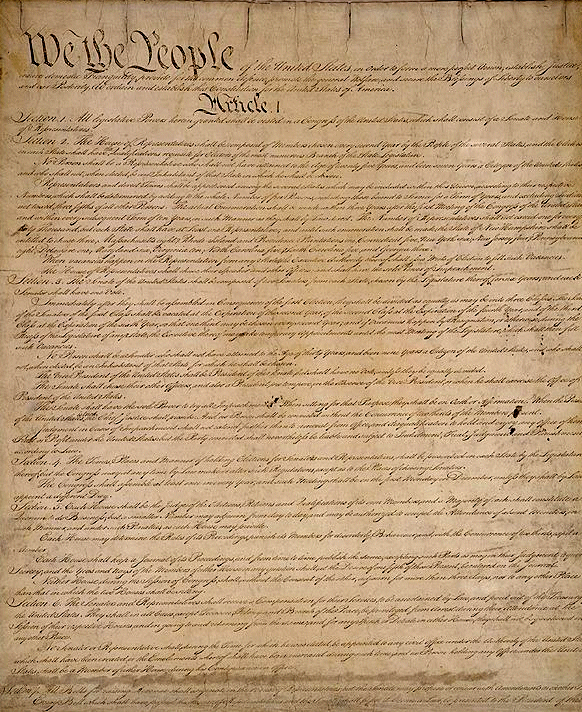
A strong constitutional argument against government involvement in the arts can be found in the doctrine of enumerated powers, especially as it relates to federal support via agencies such as the National Endowment for the Arts (Boaz, 1995).  Although the purpose of the doctrine embodied in Article 1 Section 8 of the Constitution is to differentiate between the functions of the federal and state governments (Diamond, 1976) it also serves as a reminder that government itself is limited.  In the case of this article, the central national government is limited to two of Adam Smith’s three concerns: national defense and institutions supporting commerce (see Part 2), including, I note, the protection of the intellectual property of authors of the “useful Arts” (U.S. Constitution, I,  8) taken here to mean, as it did in the 18th century, products of engineering rather than fine arts.  Education was and continues to be considered the province of the states.

Levi and Sacks (2006) argue that, in Lockeian fashion, government legitimacy results from “quasi-voluntary compliance and, better yet, contingent consent” from its citizens (p. 1).  Ultimately, according to the liberal (small “el” liberal) argument, state action without complicit consent could be considered illegitimate.  Boaz (1995) writes, “The bottom line of political philosophy, and therefore of politics itself, is, “Who is going to make the decision about this particular aspect of your life: you or somebody else!” No matter what the philosophical debate, keep your eye on the bottom line: Politics is about the individual’s relationship to the state, pure and simple” (p. 541).   The extension of the liberal (small “el”) argument here, as it relates to the argument against government intervention in the arts sector, is that the smaller the scope of government, the more likely it is to achieve the contingent consent on which its legitimacy rests.  That is not to say that government funding for the arts is not legitimate.  Rather, the probability of consent is reduced when the scope of government is diversified across multiple, sometimes competing, sectors.

The lion’s share of governmental support for arts and culture in the U.S. is derived indirectly, largely through elements of the tax code, and administrated by third party arts organizations.  Zimmer and Toepler  (1999) assert that “This feature is rooted in the strong resentment of “big government” and the assumption of a crowding-out of private initiative by an ever growing state apparatus” (p. 42).    Walzer  (1984) argues that the boundaries drawn by liberalism (e.g. between civil and political society or between church and state), what he calls the “art of separation,” protect both liberty and equality.  In making his argument he uses the academic freedom of universities as an example of the way in which liberalism’s separations support freedom of expression.  A similar argument can be made about the arts.  This argument contends that by keeping the government separate from the arts, artists are more free than if they consented to government constraints.  Boaz (1995) makes this separation argument as well, writing, “It is precisely because art has power, because it deals with basic human truth , that it must be kept separate from government. Government… involves the organization of coercion. In a free society coercion should be reserved only for such essential functions of government as protecting rights and punishing criminals” (p. 542).  The arts are not completely separated from the state, however, so controversy periodically arises around art that some consider to be objectionable.

It is my contention, however, that it is not necessary for the government to control arts and culture in order for it to fund arts and culture.  Although I disagree with Public Choice economist Tyler Cowen on most things (including the supremacy of the market), I agree completely with his recommendation, as expressed in his 2006 book Good and Plenty, to provide direct subsidy to artists in nascent and underfunded genres at more than arms length from government intervention in the production of that art.  He writes, “Direct subsidies have worked best when accountability is absent, when the marketplace is failing to spot many of the best artists, and when the state can act as a strong-willed funder of idiosyncrasies” (p. 134).  Those idiosyncrasies are also known as innovation and originality, and since they exist outside of the market, require non-market (i.e. state) support.

Some may find the content of such innovations objectionable.  The “objectionable content” argument is based in neoconservative ideology that I will take up in the fourth installment in this series, to be posted later this week.  Stay tuned!

Posted in Arts funding, arts infrastructure, Arts policy, Culture and democracy, Uncategorized | Tagged , , , , , , , | Leave a comment

Waxing Theoretical Part 2: Small “el” liberalism

This is the second in a series of blog posts in which I draw from an essay I’ve been working on to unpack some of the arguments that are made against government funding for the arts.  We are seeing this argument played out this week in real terms as the five employees of the Kansas Arts Commission received their layoff notices while the White House Domestic Policy Director blogged about the importance of arts education.  You can read the abstract of the full essay along with some context here.  In this installment, I focus on the argument that insists that arts funding is beyond the scope of government. My usual disclaimer about this post being a bit more academic in its discourse than most blog posts applies again.  At the end of the series I’ll post a full list of references.

To begin, recall this statement from Texas governor Rick Perry’s 2011 state of the state address:

Frank discussions about the true purpose of state government, must be followed by a willingness to act on our convictions…Let’s suspend non-mission-critical entities like the Historical Commission or the Commission on the Arts

Limiting the scope of government is what Perry is really talking about and that argument has its roots in classical liberalism. [Note that liberalism here refers to small “l” liberalism, not contemporary leftist big L Liberals.]

            There are many perspectives on what constitutes “the true purpose of state government.”  Those, like Governor Perry, who would argue for limiting that purpose often reference the development of the U.S. Constitution and the basic assumptions of its framers, especially Madison and Hamilton, to construct their argument.  The recent popularity of the small government Tea Party movement, for example, is fueled ideologically (some would say fetishistically (Lithwick, 2011)) by adherence to the document and its framing principles.  In the classically liberal form of democracy that grew out of 17th and 18th century political and economic philosophy, government exists to protect the rights of individuals to engage in free trade (Brown, 2003).   Liberal political thought is based, at least in part, in the laissez-faire economics of Adam Smith, whose 1776 The Wealth of Nations was more popular in the newly formed United States than in Europe, and in the notion of individual liberty as articulated by Smith’s antecedent, John Locke, who contrasts liberty in a state of nature from liberty in a society:

The natural liberty of man is to be free from any superior power on earth, and not to be under the will or legislative authority of man, but to have only the law of nature for his rule. The liberty of man, in society, is to be under no other legislative power, but that established, by consent, in the commonwealth; nor under the dominion of any will, or restraint of any law, but what that legislative shall enact, according to the trust put in it.

The “legislative authority” is legitimate only insofar as those it governs consent to the restraints placed upon them by that body.

Adam Smith

Adam Smith (1776) is more specific about the limited scope of government, citing three (really four) legitimate roles for government: national defense, administration of justice, and provision of institutions to facilitate commerce (3) and education (4).  He writes,  “After the public institutions and public works necessary for the defense of the society, and for the administration of justice, both of which have already been mentioned, the other works and institutions of this kind are chiefly those for facilitating the commerce of the society, and those for promoting the instruction of the people” (V.1.70).  He notes, however, that government has a duty to provide “those public institutions and those public works, which, though they may be in the highest degree advantageous to a great society, are, however, of such a nature that the profit could never repay the expence [sic] to any individual or small number of individuals, and which it therefore cannot be expected that any individual or small number of individuals should erect or maintain” (V.1.69).   Smith refers here to a type of nonmarket goods that almost 200 years later Samuelson labeled “public goods”  (Samuelson, 1955).  Smith seems to opens the door to an argument for provision of public goods that could be used by arts and culture advocates if they effectively make a case for arts and culture as a non-market good or a public good, either as a public good in an of itself such as the parade Samuelson cites as an example, or with regard to the positive externalities derived therefrom (Saunders, 2005).  The art-as-public-good argument was used at the time of the initiation of the National Endowments for the Arts and the Humanities.   The opening line of the authorizing legislation that established the Endowments reflects the contention that art is a public (or at least collective) good when it asserts, “The arts and the humanities belong to all the people of the United States” (U.S. Congress, 1965/2010). Regrettably, as Wyszomirski  (Wyszomirski, 2004) explains,

finding ways to describe, categorize, and measure the “public good” value of arts activities and cultural products has bedeviled economists, sociologists, aestheticians, and policy analysts. On the one hand, a general consensus has emerged that the full value of the arts and culture is not captured by economic assessments of their status as consumer goods, their price, or profitability. In contrast, neither a conceptual consensus nor satisfactory methods have emerged for expressing the noneconomic, or cultural, value of artistic products or creative services. (p. 5)

Adam Smith’s allowance for the government provision of advantageous public works was taken up neither by Hamilton in Federalist #23 at the time of the drafting of the Constitution nor by Jefferson several years later.

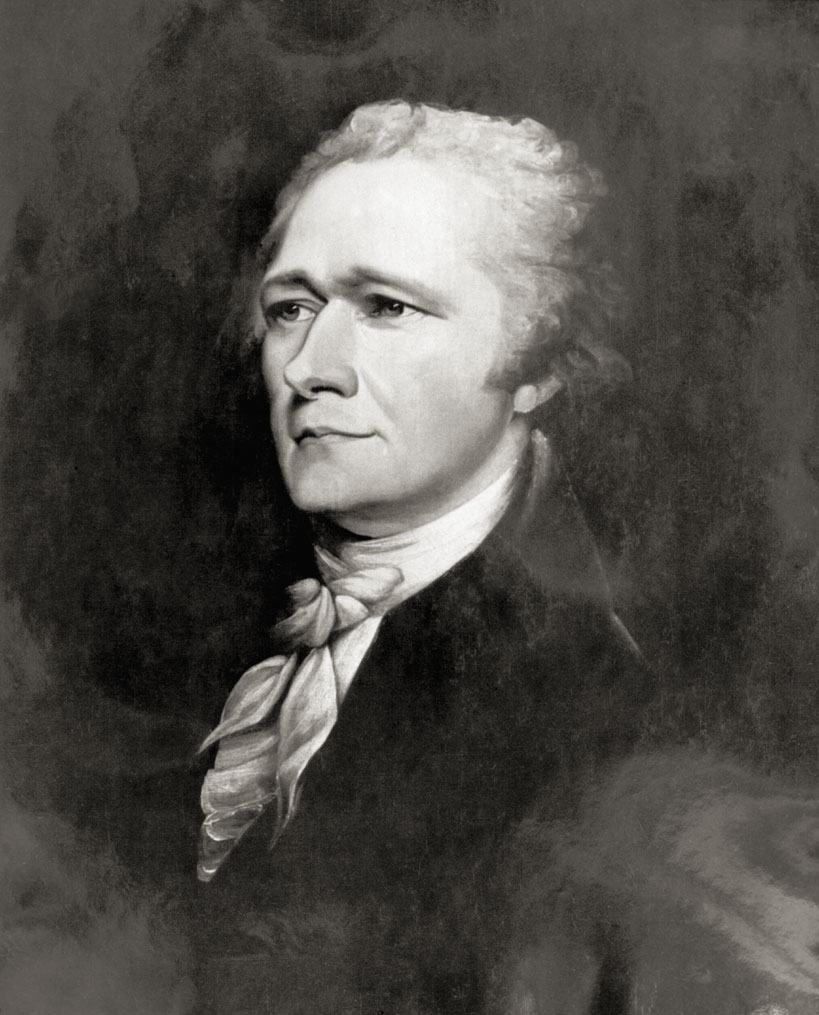
Alexander Hamilton

Hamilton described the scope of government, or its “core functions” thus, “The principal purposes to be answered by union are these — the common defense of the members; the preservation of the public peace as well against internal convulsions as external attacks; the regulation of commerce with other nations and between the States; the superintendence of our intercourse, political and commercial, with foreign countries” (Hamilton, 1787).  Jefferson famously said this of the scope of government in his first inaugural address: “a wise and frugal Government, which shall restrain men from injuring one another, shall leave them otherwise free to regulate their own pursuits of industry and improvement, and shall not take from the mouth of labor the bread it has earned. This is the sum of good government” (1801).

What those who cite Jefferson and the framers need to accept is that we no longer live in colonial times.  People and governments are much more connected to one another than Hamilton and Jefferson ever conceived imaginable. While I’ll address a more pragmatic approach near the end of the series, the next installment will focus instead on the structure of the Constitution and the art of separation.  Stay tuned!

Posted in Arts policy, Culture and democracy, Uncategorized | Tagged , , , , , , , | Leave a comment

Waxing Theoretical

I’ve  been away from my blog for a while, mainly due to the death of my father, but also because I’ve been working on several essays and other projects (you can expect a third edition of “Lighting and the Design Idea” next spring).  One of the essays is a bit of a thought exercise.  When people in the arts advocacy community express concern about budget cuts to the arts, I’ve often replied, “Remember, it’s not about the money.”  What IS it about then?  Although I doubt that Texas Governor Rick Perry consciously channels Thomas Hobbes,  I decided to look at the philosophical and theoretical arguments underpinning statements like that made by him in his state of the state address:

Frank discussions about the true purpose of state government, must be followed by a willingness to act on our convictions…Let’s suspend non-mission-critical entities like the Historical Commission or the Commission on the Arts.

I think that part of the reason the arts advocacy community sometimes struggles to make its case is because we’re mixing oranges and pomegranates.   It couldn’t hurt to look at the roots of the anti-arts-funding arguments – some of which go back to the 17th century  — in order to build our case from the same theoretical basis. It can be done.  So, my plan is to post a series on this blog, each post focusing on one of three different theoretical foundations for NOT funding the arts.  Fortunately, my researches into these counterarguments has not dampened my enthusiastic support for government intervention in supporting arts and culture; if anything it has strengthened it.

With the caveat that the tone here is a bit more academic than usual, I start today with the abstract:

 The legitimacy of government arts agencies at the federal, state, and local levels is contested periodically for several reasons.  Objections to government intervention in the arts and culture sector generally fall into three categories: that such activity is beyond the scope of the government, that the content of government-funded art is not accountable to public values, and that the market should control production of and access to art.   Arguments in favor of such intervention do not take on these arguments directly but rather focus on the arts as a public good, the direct and indirect economic impact of the arts, and the intrinsic value of the arts, among others.  Although the rhetoric around issues of defunding or censorship may become emotional and heated as it has recently, the three categories of objections (scope, content, and market) have deep theoretical roots in liberal, neoconservative, and neoliberal political philosophies respectively.   This essay explores these three philosophical threads and how they have been used to argue against – and occasionally for – government intervention in the arts via its public agencies.

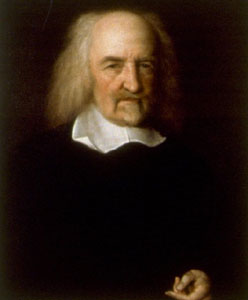
Thomas Hobbes 1588-1679

Posted in Arts funding, arts infrastructure, Arts policy, Culture and democracy, Uncategorized | Tagged , , , , , | 5 Comments

Is Crepe-hanging Premature?

What a way to start the week!*  Intiman Theatre in Seattle cancelled the remainder of its 2011 season to “pause, plan, and prepare for strong seasons in 2012 and beyond” and Philadelphia orchestra filed for bankruptcy protection.  A week earlier, in a typically prescient blog post, Diane Ragsdale offered some sound advice for arts organizations facing financial trouble (paraphrased): avoid redundancy by finding a competitive niche; cooperate to share resources; partner with others to create work and support artists.  To this I add: evaluate and improve board governance. (there’s more, but let’s concentrate on board governance for now.)

What I found most startling about the story of Intiman’s closure – which I hope and believe to be temporary – is this statement in a Seattle Times story: “According to IRS filings, [Intiman] ended each year from 2003 through 2009 in the red.”  I have no knowledge of the Intiman board or the theatre’s specific situation, but this statement is telling.  A board, any board, has a fiscal responsibility to approve the annual budget and review the annual financial statements.  Perhaps the choice Philadelphia Orchestra made to file for bankruptcy will save them from seven years of in-the-red annual financial statements and provide them with the time needed to reorganize and potentially reopen as Honolulu symphony was able to do.

My point is this:  It’s too early to hang the black crepe and bury these organizations.  They have talent, a mission, and community support.  Reorganization means just that, reorganization.  This may mean reorganizing the board, the organizational leadership, and the business structure.

*Thanks to Thomas Cott of You’ve Cott Mail for putting these dots together in his Monday morning digest.

Posted in Arts funding, arts infrastructure, Arts management | Tagged , , , , , | Leave a comment

Teresa Rebeck’s $50K

I am really pleased that the University of Delaware was able to commission Teresa Rebeck to write a play specifically for its professional REP Company and PTTP students.  But as today’s article in the NY Times makes clear, that commission cost a pretty penny — $50,000 to be exact.  According to the NY Times this is about twice what a regional theatre might pay for a new play commission and, according to yours truly, five times what a less well-endowed university (my own) might provide to a playwright for a new work.

I worry, though, about the focus of the Times piece on the size of the fee and what it could mean for future new play commissions by universities.  The article mentions the commissioning fee not once, not twice, not three times, but a total of four times. It must be important if they mention it so often.  Should we who have less cheer that a new play is so highly valued? Perhaps.  More likely, around the country, theatre department chairs who had been considering commissioning new work are throwing their hands up in the air and saying, “Oh well — can’t afford a new play now.”

That $50K is roughly the starting salary of an assistant professor of theater.  Rebeck is not a starting assistant professor, and I don’t doubt that she regularly commands high fees with good reason.  Alternatively, universities might consider investing similar amounts of money in a young-playwright-in–residence program — an annual salary for a new voice who could be a visiting faculty member for a year. Or, they might consider investing in 3-5 plays by new voices.  On other hand, a program such as that, which exist in various forms at other universities and colleges, don’t net their universities large features in the newspaper of record.  For their $50K commission, the University of Delaware netted more than double that (at least) in PR value.

I sure hope the play is worth its weight in gold!

Posted in Arts education, arts infrastructure, Higher education | Tagged , , , , , , | Leave a comment

Takeaways

Last week, the p.a.v.e program in arts entrepreneurship hosted its second bi-annual symposium, “Creating Infrastructure for Creativity and Innovation.” The interactive format allowed for many different levels of participation by symposium attendees.  Although not an exhaustive list or description, here are some through-lines:

Innovation and Competition

The big take-away here is that innovate art requires innovative thinking about arts organizations.  This is a topic that’s been discussed at length in the blogosphere and in arts management classes.  Ben Cameron discussed it in his TedTalk, and he expanded on the concept in his keynote address at ASU.  During the Q&A following the talk, he told a story about a training exercise he took part in that stressed a concept I wrote about here earlier in the year: there is more potential for innovation and for organizational success in cooperation than in competition.  That cooperation can be between artists, between artists and community, between arts organizations (and especially across the nonprofit/for-profit divide), and even between government, artists, and organizations.

Defining the Field

The term “arts entrepreneurship” is still a contested one.  Several participants define entrepreneurship exclusively as new venture creation in which capital investment is used to create value in a market.  Others (myself included) define entrepreneurship as a constellation of “habits of mind” that can empower artists to recognize and generate opportunities to create work.  Having recently read Martha Nussbaum’s “Not for Profit,” in which she “argues that we must resist efforts to reduce education to a tool of the gross national product,” I feel a unique responsibility to carefully negotiate the line between these two approaches to entrepreneurial teaching and learning.

What everyone does seem to agree on is that understanding WHY you make work is important and that IMAGINATION is a precursor to innovation and creativity.  In his opening remarks, Bob Booker of the Arizona Commission on the Arts hit home the point that creativity is a fundamental human value.

Technology

The digital universe presents both opportunities and challenges for artists.  The opportunities include new ways to distribute work to audiences.  Independent film director Adam Collis stressed this point in our opening session.  There are opportunities for collaboration, and for democratizing participation in the arts.

Technology is also forcing us all to speed up.  Sam Pilafian argued that creativity hasn’t changed, but the tools for creativity have changed and the professoriate needs to catch up with technology.  I would add that arts organizations do too.

Experience

Almost everyone talked about audience “experience.”  Not a new idea (“The Experience Economy” was published in 1999), but one that was hit home at several sessions.  Focus on why your audience (or “customer” for the for-profit folks) is there and what they are interested in. Provide an experience, not just a performance or work of art.

Value

The symposium was designed to be interactive. It was also designed to be FREE in order to be accessible to all. We talk a lot in both entrepreneurship and arts circles about the concept of “value.”  Is the value of art only in the marketplace? What is the public value of state arts agencies? How does an organization add value to a project? How does one measure intrinsic value? We set a dollar value of $0 for symposium attendance.  The cost is much higher than $0 (and was covered by a grant for entrepreneurship education from the Kauffman Foundation).  And, despite the zero dollar price tag, there is always the opportunity cost of attendance.  Pre-registration met expectations when it initially opened and became quite brisk in the two weeks leading up to the event.  So brisk, in fact, that we closed workshop registration two days early, because the workshops had reached capacity at 80 attendees, with a 5-10% oversale.  Why then, was attendance at roughly 65% on the first day and even lower on the second (50% or lower)?  I should have practiced what I preach to artists: if your work has value, charge for it!  Even if it’s a nominal amount.  This symposium had significant value for the attendees (as evidenced by both formal feedback forms and informal conversation).  Had we charged a $15 registration fee, many registrants might have self-selected and not registered at all, giving us a more realistic projection of actual attendance, and having paid a fee, registrants would have been incentivized to actually show up.

Following up

The p.a.v.e. symposium “Creating Infrastructure for Creativity and Innovation” is not over.  Videos of some session will be made available on the web soon.  Evaluation activities are just now beginning.  If you attended, please expect a survey monkey soon.  If you registered but didn’t attend, you can expect one too – we really want to find out what kept you away so we can do a better job of engaging you next time.

THANK YOU TO ALL WHO PARTICIPATED!

Posted in Arts education, Arts entrepreneurship, arts infrastructure, Arts management, Higher education, Uncategorized | Tagged , , , , , , , | 1 Comment