Experiencing Cuts to Arts Education

[Six days after writing this piece about cuts in my school district, the New York Times reported on the use of digital technology there: “even as technology spending has grown, the rest of the district’s budget has shrunk, leading to bigger classes and fewer periods of music, art and physical education.”]

Robert Morrison wrote on the School Band & Orchestra blog “I am happy to say that the reported nationwide decline in access to music and arts education in our schools is a myth.” It wasn’t until the third or fourth reading that I realized that Morrison’s word choice, “access,” is very careful.  He may be right in saying that “access” has not declined but there is, in my experience, a very real decline in the quantity and quality of arts education due to cuts to state and local budgets.  Morrison cites data, complete with bar graphs and line diagrams, to back up his claim that “music and visual arts [are] nearly universally available.” The data tells a story: whole programs have not been cut significantly.  My experience tells a different story, a story that is qualitative rather than quantitative with an n=1.

My daughter completed her elementary school education last spring.  She is a talented and creative girl who takes pride in the work she does.  At the end of the year, she brought home the portfolio from her year-long class in art and said, with a tear in her eye, “I’m sorry nothing is finished mom, but we only have art once a week and there wasn’t time. I’m really disappointed.”  Prior to the cuts that took place 2009-2010, the art class met twice each week. The teacher was now serving two schools, however, which means that not only did my daughter receive less art instruction, one art teacher had been laid off or not hired.  In previous years, my daughter brought home a portfolio of projects at the end of each year of which she (and I) was proud.

She started middle school, excited to have the opportunity to learn to play the flute in her band class.  My son had gone through the same program, learning French horn along with other brass players.  My daughter’s experience will be very different.  Instead of a class of woodwinds and a class of brass, and a class of percussion, the band teacher has a 38-student mix of all instruments combined. This cuts instrumental instruction, de facto, by 2/3 while still maintaining the appearance, statistically, of a full band program.  The data will show that all students have access to band and instrumental instruction – that’s great.  The data won’t show that the quality of the music education experience has declined.  [I note that these cuts are not just affecting the arts.  When my son went to the same school, academic classes were capped at 32 and most had 30 students.  My daughter’s English, Math, Science and Social Studies classes have 36 to 38 students each.]

The data that Morrison presents tells another story, one he touches on at the end of his piece: a story about the success of arts advocacy.  If Morrison’s data is accurate – and I have no reason to doubt it – then arts advocates have been extraordinarily successful at helping schools maintain arts education programs, even if the education in those programs is not as deep as in the past.  My fear is that because the programs still exist, albeit in a decimated state, restoration of the strength of programs like those in my public school system will not be a priority should the budget outlook reverse.  We will have to keep telling our stories – both quantitatively and qualitatively.

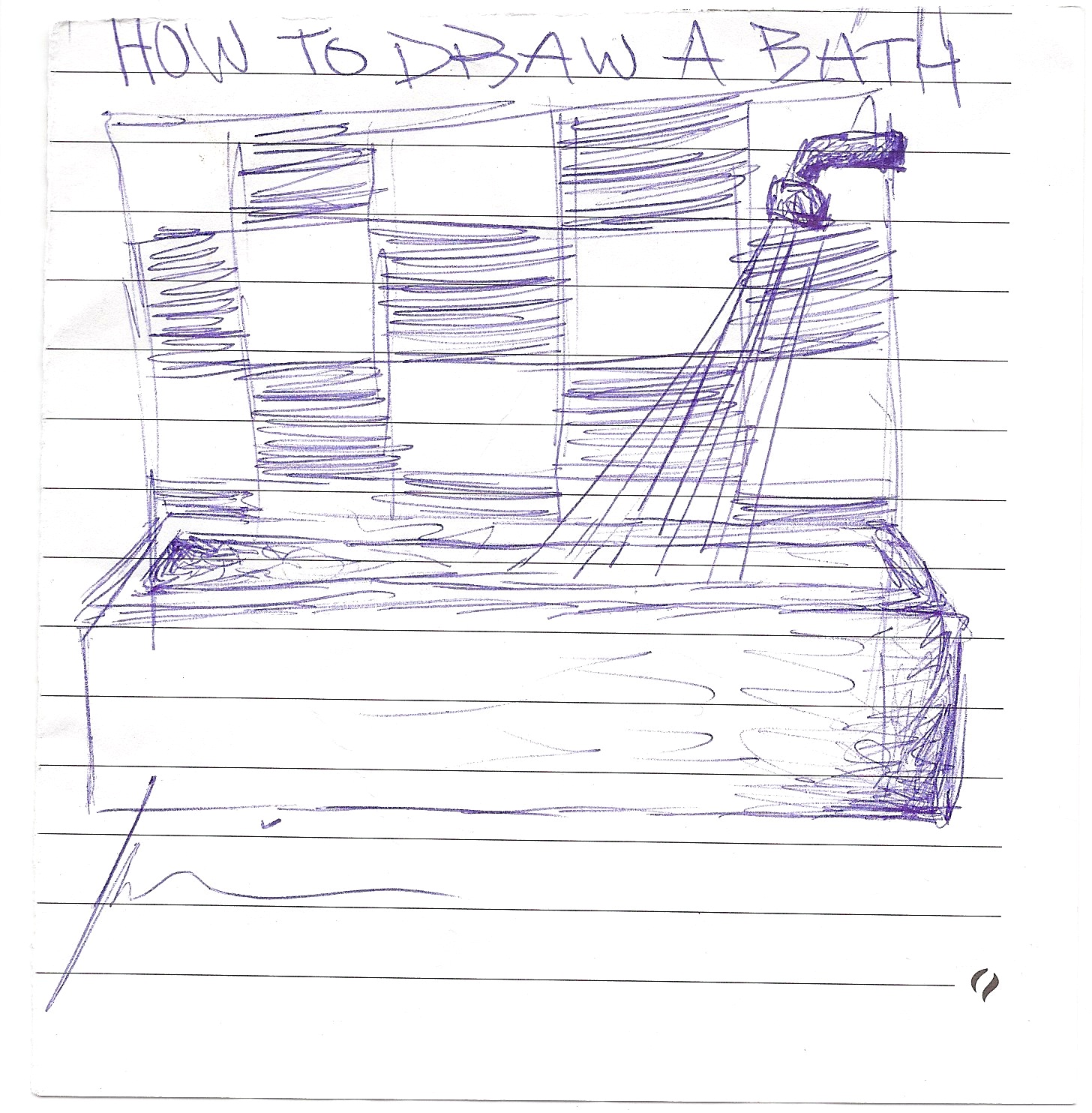
(Here’s a little something my daughter sketched at home:)
Posted in Arts education, Uncategorized | Tagged , , , | Leave a comment

Experience Failure

The TedxPhoenix 2011 submission challenge is ““_____ for a Change”, where the blank will be filled by the speaker’s topic or idea.”  My submission is called Experience Failure for a Change.

Experience and Failure are two concepts that are at the foundation of teaching artists to be successful.

People learn through experience.  John Dewey understood this in the early years of the twentieth century when he founded his lab school at the University of Chicago, where teachers taught students math, science, and history through the EXPERIENCE of cooking.  When you experience it, you learn it. Artists do this too – learning by actually experiencing the making of art in the studio.  The experiential studio training can teach the painter, the actor, or the musician to make art, but without learning failure, it won’t necessarily teach them to be successful.

Why failure? And failure of what kind?  Who would want to fail? An enterprising artist – one who actually wants to make a living making art — needs to be entrepreneurial in their thinking.  Resilience and persistence are two related “habits of mind” that support that entrepreneurial approach.  To teach an artist to be resilient and persist, they must EXPERIENCE FAILURE and then pick themselves up, dust themselves off, and start all over again.  By actually experiencing failure, they learn that they CAN pick themselves up and start over; they can persist.

Too often, educators reward only success and don’t provide even the opportunity for failure.  The proverbial “the show must go on” mentality pervasive even in academia is one example of how arts educators shy away from allowing students to fail. But, if we provide opportunity for failure, emergent artists will learn to persist and develop the resiliency necessary to develop their enterprising minds.  They may even learn some other important skills along the way.

By the way, even Kickstarter is getting in on the failure act, showcasing a project that only succeeds if it fails.

Update 9-16-11: I will be speaking on “Experience Failure for a Change” at TedxPhoenix on 11-11-11.  And, the NY Times magazine dated 9-18-11 is publishing a lengthy piece entitled “What if the Secret to Success is Failure,” so I guess it’s in the ether!

Posted in Uncategorized | 3 Comments

Misplaced Focus?

Yesterday Arizona Republic theatre critic Kerry Lengel reported on his blog that there is a new theatre company in the Phoenix metro area: Roots Performing Arts.  My first reaction was: they should have read Rebecca Novick’s contribution to 20under40, the very useful but poorly named volume of essays about changing up the way we think about arts administration. Her chapter is titled “Please Don’t Start a Theatre Company!” Lengel pointed out to me that they may have (Thanks, Kerry).  You see, Roots Performing Arts is an LLC – it’s a for-profit corporation owned by many of the actors that make up the company.  These aren’t seasoned actors pooling resources, either.  Many of them are recent high school graduates still in college.  Perhaps their youth has helped them avoid the institutionalized, ossified, reified, fossilized nonprofit theatre model decried by the 20under40 contributors.

Lengel’s story, my reaction, and my review of Novick’s chapter got me thinking about something else.  Are we (the artist, arts administration, funding, arts education and arts criticism communities) expending too much energy thinking about business models for the arts and too little time thinking about the art making?  I am as bad – or worse – than anyone else about this.  I teach arts entrepreneurship, so thinking about business models for the arts and artists is kind of my job.  Nevertheless, I am profoundly attracted to Novick’s description of Elevator Repair Service and The Neo-Futurists as “highly regarded experimental theater ensembles that have grown by putting artists at the center, adding administrative structures only after carefully examining whether the administrative model supports the artistic mission.”  Developing a business model for the arts seems analogous to the way I like to read a play that I am designing – from the inside out.  Start with what the play is REALLY about and the design will flow from there: not the external trappings of location or time, but the meaning is what is important and what drives my design decisions.  Similarly, can the art itself drive it’s own business structure?

Last week, Michael Kaiser posted a typically (for him) insightful piece on the Huffington Post that seems to indirectly speak to the same issue.  He focuses on the the need for small arts organizations and the capital to support them.  He writes, “smaller organizations, with smaller project budgets, are more often the crucibles for new exciting artists and art forms.”  I sincerely hope that Roots Performing Arts becomes such a crucible for new exciting artists.  If they don’t, there is no business model on earth that will make the art itself exciting (or worth the price of admission).

Posted in Uncategorized | Leave a comment

More humanism please

In a recent post on the slate.com site, William Pannapacker cynically writes, “It’s my view that higher education in the humanities exists mainly to provide cheap, inexperienced teachers for undergraduates so that a shrinking percentage of tenured faculty members can meet an ever-escalating demand for specialized research.”  Um….no.  Higher education in the humanities exists to further our understanding of what it means to be human.  This is a more important topic in our mediated digitized age than ever before. He goes on to say, “In all likelihood, a humanities Ph.D. will place you at a disadvantage competing against 22-year-olds for entry-level jobs that barely require a high-school diploma.” How does he know? Pannabaker has a PhD so he should know something about citing the source of his assertions.

Pannapacker then proceeds to propose a six-point “plan” for reforming higher education.  The implication of some of what he suggests is that tenured faculty don’t teach undergrads.  Pardon me, Mr. Pannabaker, but at my research-intensive university I teach an intro class of 180 freshman and 100 transfer students every year. Perhaps that’s the exception that proves the rule, but in my department, all but maybe one faculty member of 30 teaches undergraduates. And, they enjoy it, too.

On the other hand, I actually agree with several of Pannapacker’s points, most notably #5 “Train students for real careers. Graduate programs must stop stigmatizing everything besides tenure-track positions at research universities that almost no one will get.”  He’s right.  Tenure-track positions in the humanities, especially at research universities, are few and far between.  A PhD in the humanities or, for that matter, the social sciences, is all about cultivating an understanding of the contexts in which we humans exist and being able to communicate that understanding to others.  Those are important skills for which there is a marketplace not only in academia but also in the private, public, and nonprofit sectors.  The research and critical analysis skills gleaned in a PhD program are applicable to both business and government.  They can even be useful in social enterprises striving to help the world be a better place.

Personally, I would prefer a world with a little less cynicism and a little more humanism.

Posted in Arts education, Higher education, Uncategorized | Tagged , , | 2 Comments

Urban Density

I considered myself lucky when I flew into New York La Guardia last week from the south.  I like that approach because it takes you right over the whole of NY Harbor with a view of the Statue of Liberty and then up the East River before making a right turn, crossing the Throgs Neck Bridge and then turning back again for the approach to the airport.  On the trip up the East River, you can see all of Manhattan from the Battery to Central Park.  The sheer density of New York always amazes me — and I grew up in it.   From 1000 feet up, the city looks like a set of Lego blocks stacked one upon another, side-by-side.

The density of the buildings and the population is reflected in the density of the arts in New York.  There is so much to see and do, events within walking distance of one another, or a short public transit ride away.   This thought led me to recollect the Phoenix Fringe board meeting I had attended the evening before my flight.  PHX:fringe is an arts organization clearly out of infancy, but still in its awkward adolescent phase.  Part of our board meeting focused on a discussion of the very topic of urban density.  For three of its four years, the fringe has fulfilled its mission to bring cutting edge performance to downtown Phoenix by dispersing among five venues in three separate and distinct downtown neighborhoods.  Phoenix, like many cities in the West, does not have a compact, dense, walkable downtown.  Instead it has several neighborhoods where the arts exist, and a limited public transportation system.  The geographic dispersion has not helped the festival.  Audience cannot easily go from venue to venue without getting in a car and driving; careful pre-planning is needed to maximize opportunities to see performances.

We find ourselves faced with a choice: continue the dispersed format or consolidate geographically.  The answer to that question seems clear.  The next is, in which of Phoenix’s three downtown neighborhoods should the fringe consolidate?  Over the next several months, we’ll be looking at where we can find the venues we need, hopefully within walking distance of one another.

My internal monologue at 1000 feet up also caused me to wonder whether urban density is a prerequisite to a vibrant thriving performing arts culture, or a result thereof. That’s a chicken-and-egg question I’ll leave for another day.

(photo by Daquella Manera, creative commons license)

Posted in arts infrastructure, Uncategorized | Tagged , , , , , | Leave a comment

Commonalities and Differences

Jerusalem, War Horse, and Sleep No More have a lot in common:

  1. They’re playing to sold-out houses in New York
  2. I saw all three in a two-day binge of theatre-going last weekend
  3. They all have large ensembles of extraordinarily good performers
  4. They are all – and each in a unique way – ecstatically theatrical
  5. They explore and explode theatrical form in a way that makes me hopeful for the future of the American theatre.

Wait…..scratch that last one. Cross it out.

6. They are all British imports

To be fair, there were two new home-grown dramas that had moderate commercial success this season as well. But these (Bengal Tiger at the Baghdad Zoo and the Motherf&%$#r with the Hat) have already closed and had casts of eight and five, respectively. Is there something about the way we produce in the US that is preventing our playwrights from dreaming big? Or, more probably, preventing our theatre companies from producing big? And by big, I don’t mean production values – at least not alone — I mean big in theatrical scope, vision, and ideas. Could the lack of state support be a factor?

The two Broadway successes, Jerusalem and War Horse, originated and were developed by publicly funded and state theatres, The Royal Court and The National Theatre of Great Britain. I probably don’t need to remind you that we don’t have a “national theatre” or a “national company dedicated to new work by innovative writers” (see http://royalcourttheatre.com). Someone can correct my no doubt faulty memory, but the last time I remember a new play of the theatrical scope of these developed in the US and then produced on Broadway was when Angels in America opened in the early nineties.

My hypothesis is that the lack of government support for developing innovative new work is a major contributing factor to our collective deficit of imaginative dramatic production at the national level. The NSF seeds innovation in the sciences and our national labs (often in partnership with universities) provide the facilities. Most new plays are developed in the nonprofit sector where the fiscal exigencies of producing almost always limit cast size as well as other elements. It’s a reality of the sector that a playwright is more likely to get produced if the cast size is six or less. I’m not saying that a larger cast size is artistically/creatively/aesthetically better than a small cast size, but rather that the sorry state of US American arts funding is a disincentive for playwrights to dream big and subsequently write big. The environment rewards the cost-effective rather than the innovative or unique. Until that changes, the most exciting work we’ll see on our version of a national platform – the commercial theatres of Broadway – will continue to be imports.

Posted in Arts funding, arts infrastructure, Arts policy, Uncategorized | Tagged , , , , , | Leave a comment

Prague reflections

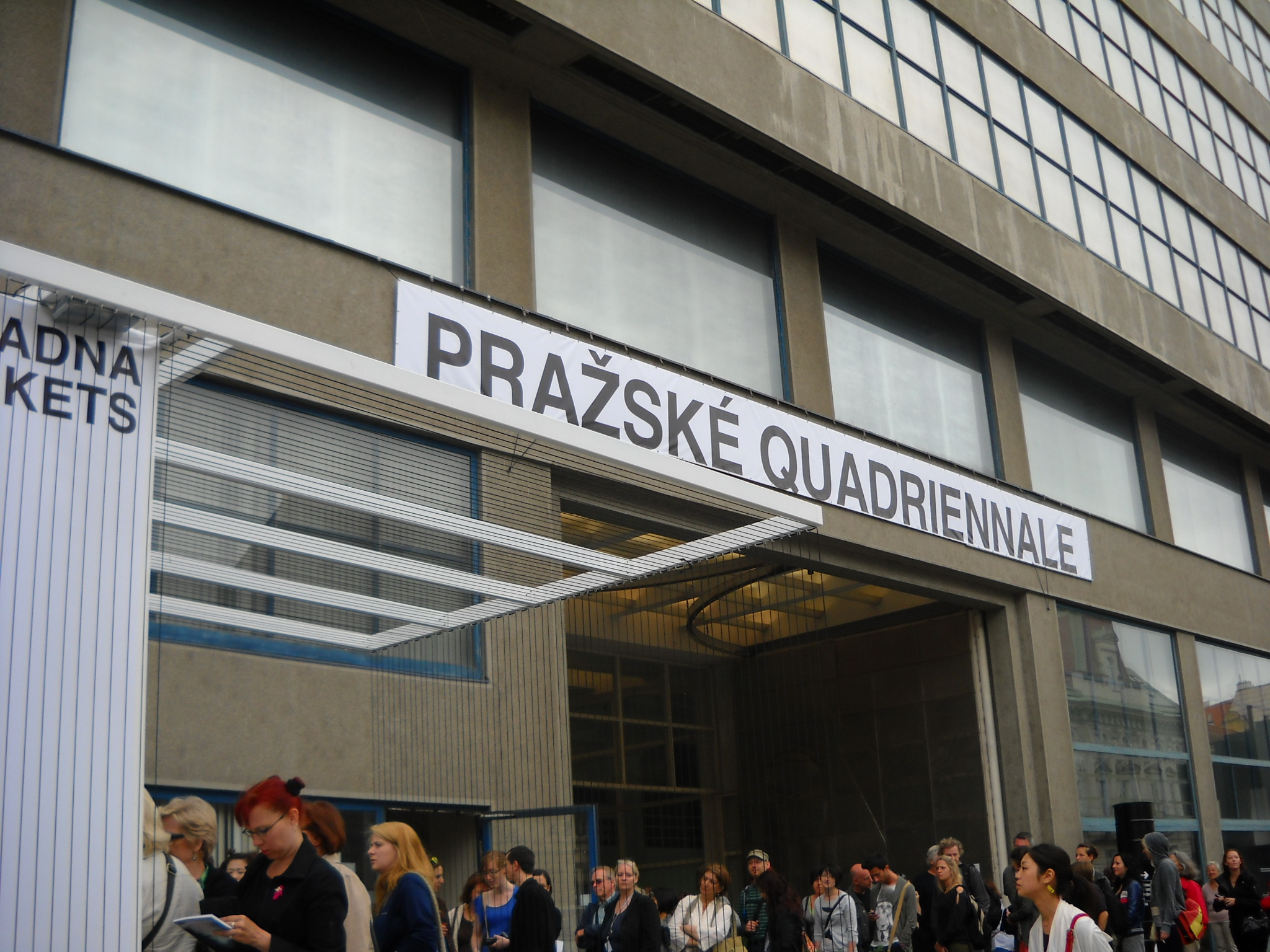
It’s been almost a month since I landed in Prague to see the sites and attend the Prague Quadrennial, the international exhibit of scenography founded by Josef Svoboda in the 1960s now known as “the PQ.”  International pavilions filled several exhibit halls adjacent to the National Gallery in the Veletrzni Palace, mysterious white boxes crowded the plaza outside the national theatre, and strange and unusual happenings were in the streets (not all of them affiliated with the PQ).

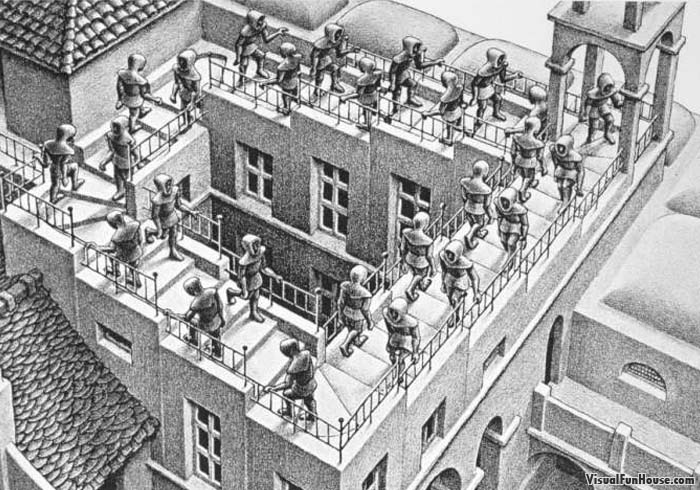
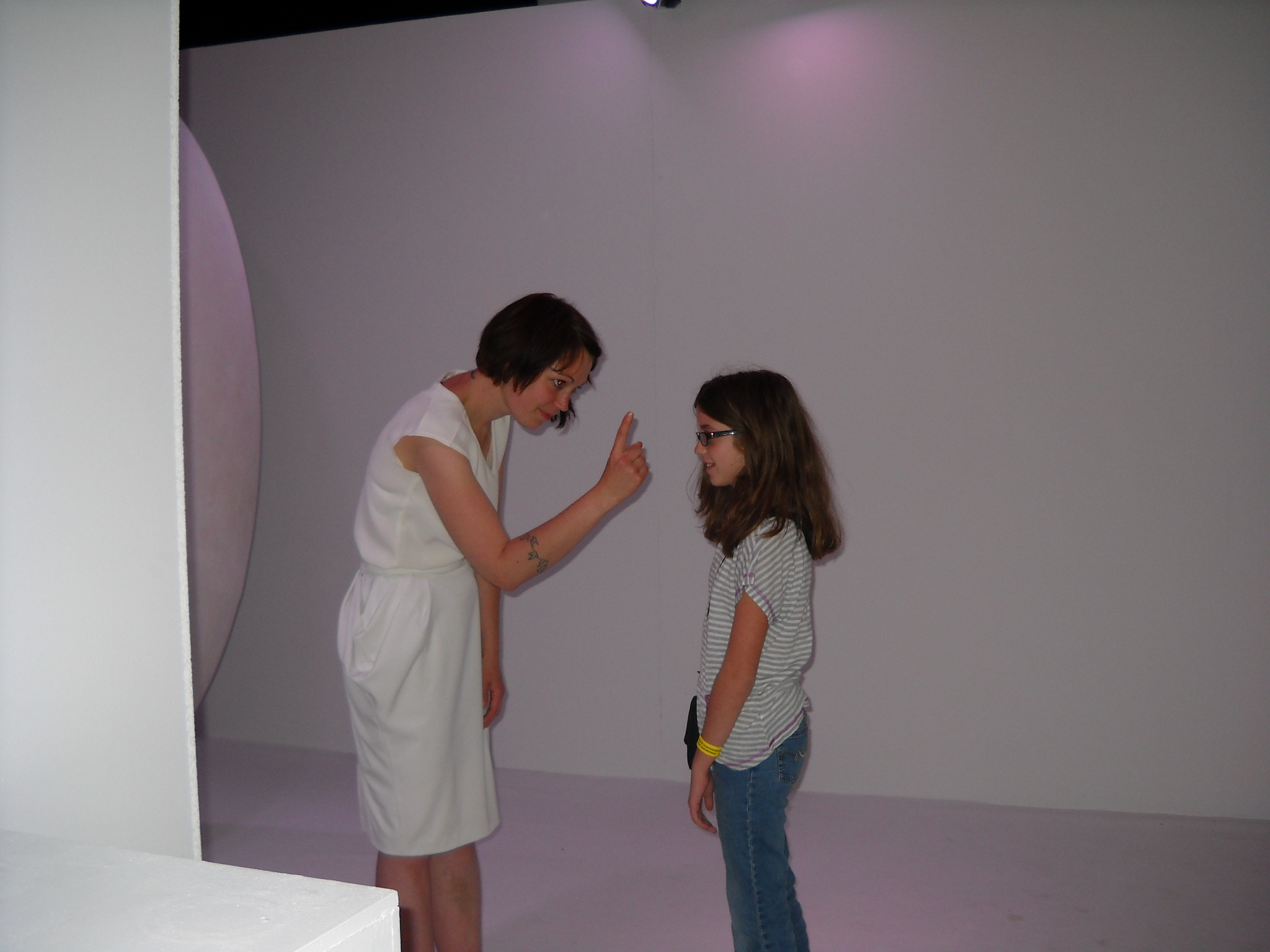
The main exhibits were, thankfully, not dominated by precious model boxes displayed next to costumed mannequins, although that certainly was the format of the USA National Exhibit at the last PQ in 2007.  Instead, the predominant format of the exhibits – or at least what was most notable to me – was the “spectator-as-performer.” Many of the exhibits not only invited audience interaction but required it.  The Portuguese pavilion, for example, required its audience to troop up and down a maze of steps in what became a performance of Escher’s ascending and descending stairs (and, if you paused at the top, you could listen to a site-specific performance dialogue by two English-speaking actors in the exhibit café).  The Iceland pavilion, all in white, enticed the spectator into a small house where a tall woman occasionally recited poetry – poetry that resonated with the pavilion’s landscape of objects.  Troop upstairs to the Brazil pavilion and – if you’re lucky – you can be the audience in a “theatre for one” puppet performance about longing and regret.

In aggregate, I found the student pavilions to be more daring (read “interesting”) than the official displays.  My children spent a lot of time with the Danish students, who had constructed a James Turrell-like egg-shaped chamber that takes the participant (not spectator, not audience, but “particpant”) on a sensory journey. The ripped paper, forced perspective display by Korean students implied a level of action on their part that was missing from other displays (including that of the US students).

The installation of 32 white boxes outside the National Theatre was the most interesting to me.  At the intersection of museum display, performance art, and theatre, these individual artist exhibits were where the audience-as-participant aesthetic was most obvious – and the most engaging.  There was the mystery of not knowing from the outside what would go on on the inside, the wonderment as the event on the inside unfolded, the appreciation of having been part of something unusual and unique.

Some of the people who read this blog and whose blogs I read are concerned about developing not only the next generation of theatre artists, but the next generation of theatre audience.  Consider, then, what my adolescent children said when I asked them, after spending two days seeing PQ exhibits, what they liked the best: “The boxes.”  Why? “Because we actually were part of it; we weren’t just watching.”  Out of the mouths of babes…

Posted in Arts education, Culture and democracy, Uncategorized | Tagged , , , , , , , | 1 Comment

Can’t Stop Thinkin’ about Tomorrow

I always enjoy it when my brother’s Psychology Today blog intersects with the themes here at Creative Infrastructure.  His topic this week is “the future,” or rather the nostalgia he feels for the way we used to imagine the future back when the present wasn’t quite so technologically . . . well . . . present.  As I pondered the Moebius strip of his thesis (how can one be nostalgic for a future that hasn’t yet happened?), the very last space shuttle was taking off on its very last mission, which helped me to understand what Todd is getting at.  As I listened to the launch, I felt nostalgic for that first launch in 1981, still in high school, when I could imagine all of the possibilities ahead of me, metaphorically blasting off into an orbit that lasted three decades.  But, looking backward at the way I used to look forward won’t do anything for the present, or the future.

Until recently, I directed an academic unit that adopted as its PR tag line “crossing borders . . . into the future.” The word “future” still appears in the unit’s mission and in the mission of the p.a.v.e. program in arts entrepreneurship that I continue to head (“paving the way to the future of the arts by investing in student innovation and creativity”).  Nobody can predict the future, although trend analysts try hard to do so.  What artists and entrepreneurs of all kinds can do, though, is look critically at the past while creating the future.     We can imagine the future (sorry to disagree with you, bro) and what we imagine, we can create.  We can imagine a future that is not overrun by sex-bots and other smarter-than-human machines.  We can imagine a future in which we no longer consume energy at a rate that is killing the planet.  We have to imagine that future so that we can create it. And if the distasteful future you describe arrives, I imagine that artists will be on the front lines of its critique.

To create an environment for that kind of imagining will require a different kind of education, one not based solely in solving problems but also in opening doors. The other day, browsing through ted.com, I came across Sir Ken Robinson’s talk from several years ago about how schools are killing creativity.  He reminded me of the importance of failure in the creative process.  Our education system is designed to reward being right.  But perhaps our education system should be (re)designed to reward dreaming, risking, failing, dusting off and starting over – the kind of habitual behaviors of the successful entrepreneur.

George Bernard Shaw wrote  in Back to Methuselah “You see things; and you say, ‘Why?’ But I dream things that never were; and I say, ‘Why not?’”

Have a dreamy weekend!

Posted in Arts education, Arts entrepreneurship, Technology and arts | Tagged , , , , , , | 5 Comments

Good news, good news, bad news?

Yesterday was a bad news day for the arts in South Carolina when governor Niki Haley used her line item veto to cut the state’s art commission.  But, by the end of today, arts advocates and the democratic process won out when the SC house overrode the veto by a resounding 105 to 8 vote.  The state senate followed suit with an override vote of 32-6.  So that’s the good news.

The more good news is from a story in the Phoenix Business Journal reporting that the Flinn Foundation was restoring its arts funding program in Arizona.  This is a great gift to the state.

Then what’s the bad news?  The Flinn Foundation’s program will fund only organizations with budgets greater than $2.5 million or, in order to allow Alliance for Audience to qualify for funding, have audience development as its stated mission.  I don’t want to look this gift-horse in the mouth and think that the Flinn program is commendable in many ways.  It is symptomatic, however, of a larger problem in the arts funding community, a community that favors the status quo over innovation and the creation of new work.  The twenty organizations being invited by Flinn to participate in its new program are the state’s “big boys:” the Arizona Ballet, Scottsdale Cultural Council, Phoenix Art Museum, Tuscon Symphony . . . you get the idea.   Smaller companies are not eligible at all and individual artists – except insofar as they may be supported by one of the eligible companies – are out in the cold.  Requirements for public funding – especially at the federal level – likewise favor the status quo over the innovative, most obviously through the requirements for an organization having been in existence for three fiscal years prior to an award and significant limitations on individual artist funding.

Such criteria built into the arts funding infrastructure create an environment that, if not outright hostile to new work and new forms, is nonetheless not supportive of such work either.  That’s the bad news.

Posted in Arts funding, arts infrastructure, Arts policy, Culture and democracy | Tagged , , , , , | 2 Comments

Prague, Vienna, and artistic production

In the car today, my son asked, “how much art does an artist usually make?”  We had returned less than 48 hours previously from a ten-day trip to Prague and Vienna, during which my children were exposed to more creative output than in any other ten-day period in their lives (or maybe in their lives entirely).  Although often interested in attending theatre performances and occasionally music concerts, they will rarely agree to go to a museum with me when we’re home. During our ten days in Europe they (and I) voluntarily and enthusiastically overdosed on visual and decorative arts.

Just before leaving, I had been reading A.S. Byatt’s excellent (although tepidly reviewed) “The Children’s Book,” which in many ways deals with similar questions about creative output.  In her novel, there are several characters – the most interesting ones – who simply must create: the poor working class boy who is an extraordinary potter, the matriarchal writer of children’s stories, the puppet-maker and his sons.  I don’t recall ever reading a book that so accurately depicts the artist’s need to create, to make stuff.  Near the end of our trip, we visited the Leopold Museum, which was holding a special exhibit of the work of Egon Schiele.  Schiele died in the flu pandemic of 1918 at the age of only 28.  His work was prolific and unique.  How much might he have done – how might he have changed the world – had he survived that epidemic?

Which brings me back to my son’s question.  It was a question about quantity, which makes sense for him given his interest in math.  I told him it was an interesting question and before I answered it, asked him why he was asking.  He replied that it was because we had seen so much, those artists must be producing all the time.  I replied that the quantity of output would be different for different artists but that for those creative geniuses who see the world in a unique way and who feel compelled to express that unique perspective and who have the skills to express that perspective, the artist can produce quite a lot.  For others, there is space and time between important work. I continued,  “It depends on the artist.”

It also depends on the infrastructure in which the artist works or the one she or he creates.  Byatt’s Phillip Warren (the young potter) seeks out an opportunity by apprenticing himself to a master.  Schiele, in a similar real-life story sought out the mentorship of Gustav Klimt and then went on to found the Viennese “New Art Group.”

One of the most striking takeaways from our trip is the sheer presence of the arts in these old European cities.  It seemed that everywhere we went the arts are woven into the fabric of daily life (remember that the first president of the Czech republic following communist rule was a playwright).  In the US, by contrast, artists and arts organizations seem to be in a constant struggle of legitimation.  Perhaps there’s a way to refocus the energy expended on that struggle toward the actual making of art.  Or, perhaps, that becomes the true role of the arts administrator – to mediate on behalf of the artist in their seemingly never-ending struggle to be an artist in America.

Posted in Arts entrepreneurship, arts infrastructure, Uncategorized | Tagged , , , , , | Leave a comment