Opportunity Creation and the Phoenix Fringe Festival

I was talking with a friend recently – a friend far removed from the arts – who suggested that I must be poised to make a lot of money since I know something about (arts) entrepreneurship. What my friend doesn’t know, and I didn’t correct him at the time, is that entrepreneurial action in the arts is not necessarily focused on wealth creation, but on opportunity creation.  Artists, including my students, often develop business entities in order to create opportunities for themselves or others to make work.  Such was the impetus behind the creation of the Phoenix Fringe Festival, one of the first arts-based ventures seeded through the Pave Program in Arts Entrepreneurship.

PHX:fringe is on a mission to develop a culturally engaged urban audience by offering an edgy assortment of performance choices in non-traditional downtown Phoenix spaces.  PHX:fringe promotes artistic exploration by showing the adventurous work of established and emerging artists in accessible, affordable performances for the community.

Founded in 2008, PHX:fringe now finds itself at one of those “put up or shut up” moments in a young arts organization’s development.  It recently doubled the size of its board (full disclosure: I am a member of the board of directors), is looking hard at is mission, its programming (trying to become a year-round presence in downtown Phoenix), and its finances.  PHX:fringe wants to continue to provide opportunities for artists that are outside the mainstream to find their audience, present their work, experiment, and explore.  So, it’s holding a big “Fringe Benefit” on October 12 to raise the money it needs to move on to its next phase.  Even if you are far from Phoenix, you can help the PHX:fringe create more opportunities by donating at its IndieGogo site.  THANK YOU!

Posted in Arts entrepreneurship, Arts funding, arts infrastructure | Tagged , , | 1 Comment

Strategically Planning for Gut Feelings

We’re taught that the strategic planning process is linear and rational. The organization spends time developing its mission, vision, and values, it analyzes given conditions both internal and external, develops goals, objectives, and action plans. But, organizations and strategic planning processes are led by people and people don’t always use a rational decision-making process. This has been on my mind as I build a module on strategic planning for an online arts management course and having recently read behavioral economist Daniel Kahneman’s excellent book Thinking, Fast and Slow, in which he explains system one and system two thinking. System one thinking is what we think of as intuitive, but it is not just gut feelings. System one thinking is a quick assessment based on heuristics, seemingly without conscious intention. System two thinking is the carefully considered assessment of alternatives – what we think of as planning.

Given the human factor – the intuitively human factor – in the planning process, is it possible to harness the power of both types of thinking when planning? As I prepare to help a small arts organization through a strategic planning process, I am considering where to passively allow and actively deploy the intuitive system one approach and when to keep it in check in favor of rational system two decision-making processes. Certainly, the early brainstorming around mission, vision, and values is a place where intuitive thinking can be not only incorporated but also encouraged. Even in the analysis of given conditions phase, intuition has a place – consider the benefit, for example, of asking internal stakeholders to consider organizational strengths and weaknesses intuitively rather than methodically. We may get to a more accurate perception of what the external constituency sees via heuristic signals than we otherwise would. A resource analysis, however, would seem to necessitate a rational approach. Then we come to the part of the strategic planning process where the pedal hits the metal – goals, objectives, and action plans. I can imagine a very useful scenario where objectives arise out of a non-linear brainstorming process but are then evaluated using rational SMART (specific, measurable, achievable, relevant, time-bound) criteria. (I’m a big fan of the “SMART” approach.) Clearly, at least to me, the action plans must follow rationally from the objectives.

While I haven’t yet used this approach, my gut feeling is that embracing both the Dionysian and the Apollonian modes will serve organizations – and the humans that lead them – quite well.

(Image by Maree Conway, Thinking Futures)

Posted in Arts management | Tagged , , , | 3 Comments

The Launch of Artivate

For the last several months, I have been working on a start-up of sorts. Not a money-making venture, but a venture nonetheless, Artivate: A Journal of Entrepreneurship in the Arts is the first scholarly journal in the U.S. focused on arts entrepreneurship.  Co-edited by me and Gary Beckman, a colleague from North Carolina State University, Artivate is published twice yearly by the Pave Program in Arts Entrepreneurship and represents its commitment to original research in the field.  While more scholarly in tone than Creative Infrastructure, you may find coverage there of topics equally important to artists and their creative infrastructure. Please check out the first issue. Subscriptions are free (for now).

Posted in Uncategorized | Leave a comment

In Praise of Cafe Culture

David Dower and I recently discussed infrastructure for the arts in a Friday phone call.  David made the point, with which I agree, that the internet is a kind of digital arts infrastructure that makes traditional bricks and mortar less necessary.  The reemergence of café culture – especially when said café has free wireless – also contributes to the ability of small arts organizations to function. I’ve had Phoenix Fringe Festival board meetings at Xtreme Bean, mentored nonprofit start ups at Fair Trade and Cartel Coffee, and write today from Giant Coffee (pictured, left) in advance of a development meeting.  For $5 worth of beverage, these small arts organizations can undertake the important face-to-face collaboration not possible online without paying $450/month for a shared office.

Steven Johnson, in Where Good Ideas Come From, points out that café culture has historically enabled the creation of great art.  I am so glad it is doing so again. So THANK YOU, independent, locally owned coffee shops. You help make art possible.

You can watch Johnson talk about coffee shops and where good ideas come from here:

Posted in Uncategorized | Leave a comment

Personal Ethics

In my recent “Friday Phone Call” with David Dower, all about infrastructure for the arts, I shared that infrastructure has three meanings or three components: the physical bricks and mortar infrastructure of buildings and studios and light boards; the organizational infrastructure of companies, governments, and policies; and personal infrastructure like the personal symbiosis one achieves between work and that which is not work. Another aspect of personal infrastructure for the arts is (are?) personal ethics.  This topic has been on the forefront of my mind since Jonah Lehrer admitted to fabricating quotes by Bob Dylan (following close on the heels of his admission of “self-plagiarism”).  Today, Fareed Zakaria admitted to copying part of his Time column from an article in the New Yorker.

Image from the “Just a Perspective” blog. Photographer unknown.

Between these two events, I was asked to write a short piece for a trade magazine.  I was faced with a dilemma.  If I were to write about entrepreneurial thinking and teaching, as requested, should I start from scratch, find new sources, attempt to draw new conclusions, or should I write without looking at previous work, drawing on the body of knowledge I keep in my brain. I chose to do the latter, but only if the following disclaimer be included:

Note: While I have endeavored to write something original, what follows inevitably draws from my earlier writings for Theatre Topics[i], the Creative Infrastructure blog[ii], conference presentations[iii], and Chapter 15 of Lighting and the Design Idea, 3e, co-authored with Jennifer Setlow.

Researchers can circle around the same topic for years (some even for decades) so it is inevitable that phrases and even sentences will appear in more than one article by the same author.  In light of recent events, I felt it important to make that obvious to the potential readers of this new article.  Lehrer’s self-plagiarism (I’m not even going to touch the fabrication question, at least not here) violates an ethical principle on another level because the New Yorker had paid him for original writing and he provided material that included segments that were not original.  He took the easy way to his payday and got caught.

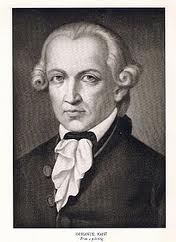
Personal ethics ground our professional choices: our choices about what to submit for publication; about how we treat our co-workers and (especially) our subordinates; about how we (re)present cultural differences; how we grade student assignments.  I am influenced in my ethical choice making most especially by two philosophical treatises.  The first is Immanuel Kant’s “second formulation” of his categorical imperative, which, paraphrased and simplified, basically states that people should never be treated as the means to an end but only as ends in themselves.  (I used this in a recent post about means and ends of policy interventions related to the arts.)  The second, and the one that most influences my thinking about diversity in the arts, is Rawls’ Theory of Justice.  It’s complicated, but it basically calls for the equality of all individuals and the equilibration of social injustices.  His theory is communitarian in nature and antithetical to much of the libertarian thinking that pervades our political landscape.

These ethical constructs work for me because I believe in them.  I am not a preacher or proselytizer for them in the specific.  What I am an advocate for is consciously adopting an ethical position.  If artists and arts managers, and even arts organizations, adopted an ethical position, they would have guideposts for their decision-making, they would be better able to navigate the society that both surrounds them and of which they are part, and they would actuate what Howard Gardner* calls “The Ethical Mind.”  Would that Lehrer and Zakaria had done so.

* If you are a regular reader of Creative Infrastructure, you’ll recognize that I frequently reference Gardner’s work, especially his Five Minds for the Future (HBR, 2008) which include, in addition to the ethical mind, the disciplined mind, the synthesizing mind, the creating mind, and the respectful mind.


[i] Essig, L. (2009) Suffusing entrepreneurship into theatre curricula, Theatre Topics, 19(2), 117-124.

[ii] CreativeInfrastructure.org

[iii] Material related to teaching habits of mind for arts entrepreneurs was presented at the 2011 annual conference of the International Society for the Scholarship of Teaching and Learning in Milwaukee WI and at the 2012 Higher Education Creativity Conference in Chengdu, China.

Posted in arts infrastructure, Culture and democracy | Tagged , , , | 3 Comments

Means and Ends

It is Immanuel Kant who wrote that people should never be treated as the means to an end but only as ends in themselves. I think about this in relation to arts policy quite a lot. All too often, art is treated as an instrument toward economic ends (see my comments on the creative placemaking movement, for example). Art, however is an end in itself. Let’s turn the policy paradigm on its head and consider that economic means are an instrument for the creation of art. That, to me, is the raison d’être of arts entrepreneurship.

Posted in Arts entrepreneurship, Arts policy | Tagged , , , | 1 Comment

Issues of Outcomes and Measurement

After reading Ian David Moss’s critique of the “creative placemaking” logic model (or lack thereof) I couldn’t resist doing a little research so that I could better understand the issue.  After looking at the roots of creative placemaking in public art, urban design, and community cultural development, here are what I see as some of the issues of outcomes and measurement:

Livability, vitality, vibrancy.  They sound similar, but are they synonymous?  What makes a place “livable” and how do arts and culture contribute to that outcome?  Is ArtPlace’s “vibrancy” outcome really coded language for gentrification and the displacement of people that often accompanies it?

Logic Models, Outcomes, and Indicators

Ian David Moss has been very critical of ArtPlace’s theory of change, comparing it to South Park’s “underwear gnomes” (collect underwear à make profit).  Moss argues that without a clear, although not necessarily linear, logic model, it will not be possible to determine appropriate indicators for the program’s desired outcomes.  Laura Zabel, whose organization SpringBoard for the Arts is an ArtPlace awardee, advocates a simple placemaking logic model: “artists –> love –> authenticity = places where people want to gather, visit & live.”  The discrepancies between logic models and their outcomes seems to be a conflict of evaluative methodology as well as of goals. Vibrancy is inherently qualitative and economic development inherently quantitative.   The assumptive relationship between vibrancy and economic development is analogous to that between Richard Florida’s three T’s (Talent, Technology, Tolerance) and economic health: there is an assumption of causation when there is only correlation.

Both Moss’s tongue-in-cheek and Zabel’s heartfelt critiques may be premature. Or, rather, off the mark, at least insofar as the NEA Our Town program is concerned (Our Town is the public sector sibling of ArtPlace).  As part of the initiation of the Our Town program, the NEA launched a study of Our Town community indicators.  The agency’s research office has articulated four dimensions of the program’s primary outcome, livability: affect on artists, attachment to community, quality of life, and economic conditions (see Shewfelt).  For each of these dimensions, there are several proposed indicators based on hypotheses about whether and how creative placemaking efforts impact communities. In other words, creative placemaking is an experiment.  Unlike a laboratory experiment in which an action is performed on a control group in carefully constructed circumstances, the program was launched with the intention of measuring various developmental affects against benchmarks and over time to see which specific indicators significantly reflect the impact of creative placemaking efforts.  This approach is in stark contrast to Florida’s, who predicts a city’s success on the basis of a handful of reductive indices, despite the lip service paid to his influence.

ArtPlace does not provide the same clarity around its “vibrancy” outcome as is provided by the NEA regarding the dimensions of their “livability” outcome.  Like Florida, ArtPlace relies on an index of vibrancy that results from an evaluation of three areas, people, activity, and value (see Cortright).  The vibrancy indicators reflect the more blatantly economic focus of ArtPlace’s development initiatives.  “Value,” for example, literally means property value and asks if property values increase in the area of a creative placemaking project.  “Activity,” is not a measure of civic engagement or even, to use an NEA dimension, attachment to community, but business activity – how many and what type. There is a saying in the evaluation community, “you measure what you care about.”  ArtPlace’s theory of change views community vibrancy through arts and culture as a strategy toward economic development; their metrics are economic.  There has been pushback, primarily informal, against the exclusively economic focus of ArtPlace’s indicators and the organization is commissioning a new set of vibrancy indicators that was set to be released in May, 2012 [I looked, but couldn’t find them].   In the interim, the program has released a list of ten “signals” to be observed by grantees:

1 Is the neighborhood cleaner?
2 Does the neighborhood feel safer?
3 Is the neighborhood more attractive?
4 Are there fewer vacancies?
5 Are there more people on the sidewalks?
6 Is there a popular new outdoor gathering place?
7 Is there a popular new indoor gathering place?
8 Is there new evidence of arts activity?
9 Has the local press reported on it positively?
10 Do people in the neighborhood generally agree that the neighborhood is getting better?

What Is Not (Yet) Being Measured

Despite claims from ArtPlace that “we are keen believers in the intrinsic merits of arts investments,” neither ArtPlace nor the NEA are measuring the intrinsic impacts of increased arts and culture activity in a given place.  There are several reasons why intrinsic impact measures are not included in creative placemaking evaluation.  The first is that the unit of analysis of intrinsic impact is, by definition, the individual, while the target of placemaking efforts is at the community level.  Second, there is little empirical data on effective methodology for the measurement of the intrinsic impact of the arts.  A recent study by Theatre Bay Area provides a positive testing ground. That study, specifically focused on the intrinsic impact of theatre on its individual audience members, uses surveys, interviews, and focus groups to determine, in part, the degree to which a theatrical work created a lasting memory for an audience member.  Because the construction of memory is part of the process of ‘space’ becoming ‘place,’ the qualitative study instruments show promise for use in assessing creative placemaking efforts. The challenges then become those of replicability and cost, both of which are criteria in the development of the NEA Our Town indicator study design.

As I have implied and Stern and Siefert make explicit, “Since its publication in 2002, The Rise of the Creative Class has been used by city officials from New York to Spokane as a how-to manual for stimulating economic growth. The realization that pursuing creative class strategies will actually exacerbate the divisions between rich and poor should give public officials pause.”  The Our Town indicators for economic conditions include median income and loan amounts for housing but do not include a measure of income range or distribution.[i]  Artplace claims that “Having a good balance between high, middle, and low-income families in a neighborhood is one key to promoting economic success and opportunity for neighborhoods in every income group,” but despite two years of grants totaling over $30 million does not yet have measures for that economic diversity.  The effects of creative placemaking are potentially long-term. One hopes such measures will be in place by the time the effects are felt in two-three years.

Social transformation is a goal of the community cultural development movement that is not explicitly addressed in either the Our Town or ArtPlace indicators although diversity was emphasized in a very recent speech by ArtPlace president Coletta as equal to vibrancy in its theory of change.  Diversity does not appear in the program’s grant guidelines, yet “demographics” are included among its outcome indicators in the “people” dimension.  The Our Town program claims as a goal to help transform communities “into lively, beautiful, and sustainable places with the arts at their core.” That level of social transformation would not be reflected by the current list of indicators.  The addition of social engagement metrics such as voter turnout in local elections or volunteer participation in the community may help the NEA assess the impact of the program on, or at least a correlation with, social transformation.

Closing Thought

Creative placemaking combines urban planning, public, and community cultural development practices to achieve multi-dimensional goals and outcomes.  Quantitative measures such as median income or property values are easy to track but do not necessarily indicate the level or type of social transformation that creative placemaking funders claim to pursue.  If we measure what we care about, creative placemakers will need to find more than just proxies for such transformation.  They will need to see if the arts are causing real positive change, not only in communities but also in individuals via their varied experiences of unique places.

UPDATE: Approaching (Vibrant) Clarity

UPDATE #2: The Pave Program in Arts Entrepreneurship is hosting a symposium on “Entrepreneurship, the Arts, and Creative Placemaking” April 12-13 in Tempe AZ. You can read more about it and find a link to registration on Pave’s public programming page.


[i]In an email to Steven Shewfelt of the NEA Office of Research and Evaluation, I wrote the following:

You and your colleague indicated a sincere willingness to listen to suggestions for addition indicators and I offer several thoughts here:

  1. One of the questioners in the podcast mentioned social engagement as a measure of “attachment to community” and suggested looking at modes of transportation as an indicator of social engagement. This seems, at least to me, a fairly indirect, or at least at attenuated, indicator.  I would go further than even social engagement and suggest that one’s attachment to community is exercised via civic engagement. A simple and replicable indicator of civic engagement is voter turnout, especially voter turnout at local-level (congressional district, city council, school district) elections.  Another indicator is volunteerism.  I am not familiar enough with the ACS to know if this is measured, but if so, increases in volunteerism (again, at the local level) would be an indication of attachment to community.  Both are indicators that would be removed from the economic externalities that might affect owner occupation of property.
  2. Several times in your presentation, you mentioned the importance of watching out for the negative impacts of gentrification and development, especially the out-migration of long term residents.  While that is captured in the length of residency measure, the unintended economic inequities that sometimes result from community change is not. Would it be possible and useful to consider not only median income, but range and distribution of income within communities?
  3. Finally, because of my particular interest in arts incubation (in the new venture development sense), would it be possible or useful to include as an indicator the number of new businesses launched that are either artist-owned and operated and/or are in the arts/culture/creative industries sector. Although the arts incubator with which I am involved is quite small, one of the few concrete measurements of our impact is in the number of ventures launched.
Posted in Arts entrepreneurship, arts infrastructure, Culture and democracy, Uncategorized | Tagged , , , , , , , , | 11 Comments

Why Arts Entrepreneurship?

After “Hey Where’d Your Creativity Go?,” the questions I get asked most often is, “WHY Arts Entrepreneurship?”  It seems fitting that for the 100th posting on Creative Infrastructure, I answer that question.  There are many reasons why I decided to concentrate my professional efforts in this emergent field, but I’ll concentrate on the top two.

  1. I want to empower artists to be in control of the production and distribution of their art.  We know that these are economically challenging times – and not only for artists.  But there has been a simultaneous decline in both public and private funding for the arts. What arts funding there had been, for the most part, had been directed at arts organizations, not directly at individual artists.  The only way, really, for an artist to be sure that their work gets produced and seen is to put it out in the world themselves. I want to increase the capacity of artists to do so.
  2. Management guru Peter Drucker wrote “Innovation is the engine of entrepreneurship.”  I would argue that the reverse is also true: entrepreneurial behavior is the engine of innovation. Innovation in the arts is less likely to happen in large nonprofit organizations governed by boards of directors that tend to be risk averse. Innovation will happen when creative people get together and make something new.  Teaching people about entrepreneurial behavior and then helping them develop the capacity to produce and distribute their own work (see #1) will support ongoing innovation in the arts.   [There have been two interesting blog threads recently on the issue of artist/arts institution relationship: the first from Adam Huttler in reaction to Michael Kaiser and the second from Diane Ragsdale – be sure to read the comments too.]

Some people assume that because I teach entrepreneurship, I am some kind of libertarian capitalist extremist; others assume that because I’m in higher education in the arts I’m some kind of communistic left wing extremist.  I’m neither. Yes, entrepreneurship is an invention of capitalism and worker control of the means of production a communist one, but I view the entrepreneurial behaviors of opportunity recognition, creativity, and innovation as the nonpartisan keys to the future of the arts. That’s why.

Posted in Arts education, Arts entrepreneurship, Arts funding, arts infrastructure | Tagged , , , , , , , | 6 Comments

(Not) Having it All

In late April, I posted a short note about “personal symbiosis,” the mutuality of our work and personal systems.  This was weeks before Anne-Marie Slaughter’s piece in the Atlantic that reminded women that having it all is nigh on impossible in our current culture of face-to-face meetings for us and summer breaks from school for our kids.  A follow-up piece by Susan Chira shares her story of a run of success as the NY Times foreign editor, but reiterates “that we’ve made little progress toward building a society that supports working mothers.”  She also wrote, in a sentence that jumped out at me, “Like Ms. Slaughter, I had a supportive husband.”

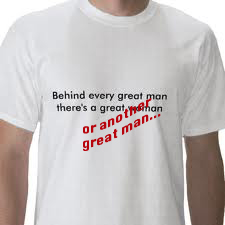
The universe of choices available to women like Chira and Slaughter is far more expansive than that available to me and the millions of other single parents in this country.  I am not complaining about my lot, but pointing out that the social contract of marriage is part of the infrastructure that supported male success (remember this: “Behind every great man there is a great woman”) and makes the success of powerful women like Slaughter and Chira possible today. I chose not to continue in that contract. Sadly, in most states even that choice is not available to my many friends who love someone of their own sex.

As a single parent, I’ve made some difficult choices about how my work interacts with my personal life including what Slaughter calls a “planned descent.” The other day, my daughter asked, “Did you have to take a pay cut when you stepped down [from an administrative post to a faculty position]?” “Yes, a pretty big one,” I replied. “Do you regret it?” “Not at all,” I answered.  She said, “Me neither.”  That is what I call success.

Posted in arts infrastructure, Uncategorized | Tagged , , , | 1 Comment

Off Topic – A Veteran’s Story

I go far off topic to share an important story, beautifully told by a lighting designer from San Francisco.  A veteran, she recently posted something on her twitter feed indicating that another vet acquaintance of hers, let’s call him K, needed some assistance.  Because I have a friend with a big heart and open mind who works in the benefits department of the VA, I connected them to see if he could be of some assistance to K.  Stories like K’s are probably all too common but not commonly known.  What follows is my lighting designer friend’s letter to my VA staffer friend, verbatim except for names.  Please read about the everyday struggles – and everyday generosity – of our vets.

Here’s the deal: I met K on Tuesday night in a subway station, where it seemed he was going to bed down for the night.  His “please help” sign had his VA card clipped to it, so I stopped to see what I could do for him (where I live, one has to pick and choose the homeless one can afford to care about, sadly).  He was crying.  He was in the midst of some kind of panic attack, and so I sat down to try and help.  He told me he wanted to die.

After his two tours in Iraq, he finished college, and because he was able to do so the VA is apparently denying his PTSD status.  However, he’s pretty plainly not okay.  Anxiety, panic, and depression are things I can recognize the symptoms of, and I spent hours with him.  I’m certain he has PTSD, whether the government likes to admit it or not.  Apparently there are additional benefits if one served in direct combat, but he was Air Force, a forward air controller–so he spent plenty of time getting shot at, but apparently that’s not good enough.  He had a job here at one point, but was let go when he went home to visit his ailing mother, and has been unable to get another.  The VA and Swords to Plowshares haven’t managed to give him a steady place to live; the homeless shelters have beds only occasionally and are drug-ridden messes for the most part.  He doesn’t want to live in a place that has hypodermic needles on the floors.  He has no friends and no family remaining, save for his mother who’s in a government home in Arkansas.

Fortunately, I knew who to call right then.  My friend is a veteran and on San Francisco’s veterans council, and she immediately began making phone calls.  We were able to find K a couch to sleep on last night at another local vet’s place.  Today, we found him a job: a friend who owns a restaurant hired him to bus tables.  It doesn’t do justice to his college degree but it’s a start, and he’s happy.  Once he had something to eat and the prospect of a place to sleep, he was able to tell me that he wants to live, but not like this.  He feels abandoned and hopeless, and “not anything a man should be”.

He has no substance abuse problems (insisted on showing me his clean arms; doesn’t smell of alcohol) and is obviously intelligent, and badly wants a job.  He pays for a gym membership so he’ll have a place to shower–at the expense, I suspect, of eating: he is terribly thin–and he keeps clean-shaven and his hair cut.  His bag with clothes in it was stolen recently, and when I found him he had nothing but the clothes on his back, and a small sack with his wallet, cellphone, and a folder of paperwork.  He’s ashamed of what’s become of him but has nothing from which to start, and it appears the system has just plain failed him.

I am lucky and don’t have to rely on the VA for anything currently (the Louisiana offices botched my GI bill impressively, back in the day) so I don’t really know my way around all this.  I know he has a VA case manager and takes advantage of that.  He’s been actively trying to get a job–in fact yesterday, he might have had enough money to get a place to sleep, but he spent the money to take a certificate class to get his guard card.  (He passed.)

So: he has a place to sleep for a couple of days and on Friday he’ll start a job.  I’ve managed to come up with clothes he can wear to work, and between my friend on the council and myself we’ve come up with a heck of a lot of kind people, mostly veterans, who will help him get going.

I’m not sure what I’m asking of you, except maybe whether you know how this happens (why would you? the government is a big place), and if there’s anything we might not know about that would help him.

Thank you!

Posted in Uncategorized | Tagged , , | Leave a comment