Entrepreneurship, the Arts, and Creative Placemaking

cov_creative-placemakingThanks in no small part to the NEA’s Our Town program and its sister consortium of funding partners, ArtPlace, there has been a lot of activity – both actual and in the blogosphere — during the last two years about creative placemaking and the metrics used to evaluate the success of creative placemaking projects.  When the Pave Program in Arts Entrepreneurship started planning for its third biennial symposium, we decided to focus on this important topic: Entrepreneurship, the Arts, and Creative Placemaking.  Pave has put together a stellar two-day program, culminating in participation in an Our Town/ArtPlace funded creative placemaking project special event, “The Feast on the Street.”

What better way to anchor the symposium than to hear from one of the co-authors of the NEA’s definitional report on Creative Placemaking, Ann Markusen.  She will deliver the keynote address on Arts Entrepreneurship and Creative Placemaking on the evening of April 12.  The event kicks off earlier that day with opening remarks by Roberto Bedoya of the Tucson/Pima Arts Council, who, while firmly embracing the concept of creative placemaking, has also reminded us to look at its activities with a critical eye. Interactive workshops have been a hallmark of the Pave program’s symposium approach.  The first of these will be led by Laura Zabel of Springboard for the Arts.  She promises to mark the place of the symposium with a workshop artifact.  On day two, Michael Rohd of Sojourn Theatre will lead a workshop on “civic practice,” and the third workshop is being led by the Phoenix chapter of the Americans for the Arts “Emerging Arts Leaders” program.  Attendees will also have an opportunity to hear student arts entrepreneurs pitch their arts venture ideas and provide feedback to them.

Pave is thankful for the support of the ASU School of Theatre and Film, Herberger Institute for Design and the Arts, and ASU Art Museum, all of whose support has enabled up to keep the cost for attendance at the very low price of $75, which includes a Friday evening reception, and breakfast and box lunch on Saturday.

You can register for the Third Biennial Pave Symposium through the RegOnline system.

I hope to see you in Tempe in April!

initiatives_pave banner

Posted in Arts entrepreneurship, Arts funding, arts infrastructure, Arts policy, Culture and democracy, Higher education, Uncategorized | Tagged , , , , | 3 Comments

Corporate Social Responsibility and the Arts

BP-stainRecently, I came across an article about corporate social responsibility (CSR) in the Harvard Business Review.[i] In it, Michael Porter and Mark Kramer argue that “to advance CSR, we must root it in a broad understanding of the interrelationship between a corporation and society.”  Substitute “large arts organization” for “corporation” and “community [including the community of artists]” for “society” and you can see why this article could have some relevance for the arts.  The authors argue that because of this interdependence, “business decisions and social policies must follow the principle of shared value.”  In order to do this, the corporation (or large arts organization) should look from the inside out, examining what business types call “the value chain,”[ii] for the way it impacts society, and look from the outside in at the way society (or the community [including the community of artists]) impacts the organization. Porter and Kramer assert that an integrated CSR approach can net social and economic benefits at the same time. They advocate for “responsive CSR,” an approach that is simultaneously “attuned to the evolving social concerns of stakeholders and mitigating existing or anticipate adverse effects from business activities.”

The concept having been introduced, I turn my attention to the arts and culture sector specifically.  Most major cities have large institutional arts corporations (yes, Virginia, nonprofits are corporations).  They have a social mission embedded in their mission statement but that does not mean that they enact an integrated or strategic corporate social responsibility program.  What social impacts, positive or negative, result from the value chain of a large regional theatre company, for example? The company that sends its AD to New York for casting, hires actors and designers based out of New York or Chicago or LA has added to their social impact the significant environmental cost of flying all of those people around the country, as well as the potential displacement of local talent.  Contrast this to a tweet on my feed the other day from Julie Dubiner (@jfdubiner), a dramaturge at Oregon Shakespeare Festival (OSF): “I’d rather look at models – like OSF, where we have 500 ppl (100+) actors who can make a home.”  It is not my intention to suggest that everyone must be resident at a large theatre such as that in the first example, but rather that a theatre that hopes to have positive social impact should look at ways to offset the negative impact their policies and practices may have.

Beyond the staffing of a theatre, how else could a large arts entity adopt good CSR principles?  Porter and Kramer suggest that cooperative models can be employed to strategically improve a company’s – or even a whole sector’s – position.  We have seen, especially in recent years, arts organizations partnering together for projects, productions, “initiatives,” but the motivation to do so is generally cost containment, rather than increasing positive social impact.  There are, however, pockets of partnerships that operate from more of a CSR paradigm.  The “never be dark” concept adapted by formal and informal consortiums of small theatres is an example.  But I can also imagine a model where a large museum decides to offset the negative social/environmental impact of a large touring exhibit by providing free studio space to artists in the community.  We could, potentially, have CSR “credits,” that could be bought, sold, and offset, much as carbon credits are already.

Much of CSR has to do with the way the corporation treats its employees (looking inward) and its larger community (looking outward). Perhaps the first step toward greater CSR in our large arts institutions is to adopt a greater mindfulness of not only the direct impact of our programs but of the indirect impact on our internal and external stakeholders.


[i] Porter and Kramer, (Dec. 2006) “Strategy and Society: The Link Between Competitive Advantage and    Corporate Social Responsibility”

[ii] The value chain can be thought of as every step a company takes in creating its value proposition, from hiring policies, to contracts with vendors, to transportation of material and so on.

Posted in Arts entrepreneurship, arts infrastructure, Arts management, Arts policy, Culture and democracy | Tagged , , , , , | 3 Comments

Swimming Upstream: Why I’m an L3C Skeptic

Campbell’s Alphabet Soup Book

I’m swimming against a current of alphabet soup with this post, publicly expressing some skepticism about the hot topic of last week, the L3C, a forum about which was livestreamed on newplay.tv: L3C and the Arts: Understanding the Potential of Low Profit Limited Liability Companies. I remain skeptical of the L3C’s potential to impact the arts infrastructure in a net positive way.  If you have 3 ½ hours, I encourage you to watch the archive video of the forum. But if you don’t, here’s a brief primer on the L3C: The L3C is a special type of limited liability corporation (LLC) authorized by about a dozen states.  Like a regular LLC, an L3C is a for-profit corporation but one with a charitable/educational mission, leading to a legally acceptable “double bottom line” of profit AND mission.  Foundations can invest in an L3C via a loan or even capital investment (with no guaranteed return) if the L3C’s mission is in alignment with the foundation’s as a “program related investment” (PRI).  There has been a lot of excitement about the possibilities the L3C form opens for the arts and culture sector, some of that excitement coming from me at times.  The L3C seems at first blush to be a boon to entrepreneurs with a conscience, people who want to start profit-making enterprises that balance mission with profitability. And, it is that.

But who (or what) benefits from the L3C form?  The chief beneficieries appear to be nonprofit foundations and existing (larger) 501c3 nonprofits.  Foundations can “invest” rather than “give” and thereby get some financial return rather than none, as would be the case if giving to a 501c3 nonprofit corp, with less reporting burden than if they had invested in a regular LLC.  Thus the L3C is, according to attorney Marc Lane, “particularly attractive to impact investors.”   But the giving or PRI requirement for foundations remains at 5% so, in the zero sum game that is the bottom line of an annual budget, if the L3Cs gain through PRI, there are likely 501c3 organizations that are losing out on the granting side.

The other potential beneficiaries of the L3C form are 501c3 organizations (usually large) that form wholly or partially owned  subsidiary for-profit L3Cs.  Thus, the large 501c3 reaps a benefit.  The small start-up independent entrepreneurial artist does not necessarily benefit here.  The L3C as a subsidiary of a 501c3 is a concept that has excited the larger social entrepreneurship community because it enables nonprofit social service providers to undertake some profitable activities that support their core mission without being subject to unrelated business income tax (UBIT).  But, the L3C does not specifically benefit the arts and culture sector.

I agree with Fractured Atlas’s Adam Huttler, who says, “I think the enthusiasm and excitement about the idea is a little bit disproportionate to the actual value it provides, at least right now.” Yes, it’s a new corporate form; yes, it’s another tool in the entrepreneurial toolbox – and I generally favor more flexibility over less flexibility. But is the L3C the panacea that will pull the arts and culture sector up by its bootstraps? Not right now.  If the arts and culture sector advances because of the L3C form, it seems it would be as a byproduct of it, rather than a direct beneficiary.  Let’s watch for developments.

Posted in Arts entrepreneurship, Arts funding, arts infrastructure, Uncategorized | Tagged , , | 10 Comments

My BIG Questions

Here are the questions that keep me awake at night:

How does an arts organization provide value to its community?

Should an arts organization measure the value it provides to its community?

If so, how?

How does the way an arts organization measures its value reflect its organizational valueS?

No wonder I haven’t been getting much sleep lately. 

Posted in arts infrastructure, Arts policy, Culture and democracy, Uncategorized | Tagged , , , , | Leave a comment

Election Eve

I spent an hour yesterday listening to the launch announcement for  In the Intersection: Partnerships in the New Play Sector, Diane Ragsdale’s book-length documentation of a convening hosted by the Mellon Foundation and the Center for the Theatre Commons, then housed at Arena Stage and now at Emerson College. As I listened to Diane, Robert Brustein, and others talk about the relationship between the for-profit and nonprofit theatre sectors, I was most struck by the discussion about how the for-profit “enhancement” environment in larger nonprofit theaters hasn’t necessarily bastardized the artistic product but has changed the way those theatres define success. [i]  The concept of how we define success put me in mind of the election about to commence in just a few short hours.

Yesterday, I heard a news report on NPR indicating that over 6 billion dollars would be spent on this presidential race – that’s billion with a B. Monthly election finance reports let us know which candidate has raised more money.  Should we measure success by how much money one or the other candidate has (much like the friendly competition among large nonprofit theatres for the number of Tony nominations received for productions spawned in their theatres)? Perhaps whomever can collect the most donations should just be anointed president?

Then there is the whole electoral college issue.  Supposedly firmly in Romney’s camp, the state where I live has been completely ignored by the presidential campaigns.  If success is measured by the electoral college math, then there is no reason for a presidential candidate to make an effort in Arizona.  I’m a bit relieved – I wouldn’t want to live in Ohio, Florida, or Virginia in the weeks leading up to this election. It would be a bit like Broadway enhancement money pouring into the community-based performance project I’m working on now. What would some kids in the Boys and Girls club in Mesa do with that kind of money?  Hopefully, they would save it for college.  It wouldn’t make their art any different or “better” or more “successful.”

Photo: Reuters

What if we measured the campaign not by the amount of money collected or spent, but by the impact on lives.  All you have to do is look at the pictures of Democratic president Obama and Republican governor Christie working together on storm relief to see that both sides can win when people come first, when we measure success by the positive impact on lives. Can we define artistic success that way as well?


[i] I have admittedly not had time to read the book yet, but have followed the conversation on this topic for years.

Posted in Arts funding, arts infrastructure, Arts policy, Culture and democracy, Uncategorized | Tagged , , , , , | Leave a comment

What Sandy Taught Me

It is now three days and some hours after I was supposed to have departed New York via Newark airport.  I was lucky – I rode out the storm and some of its immediate aftermath in a friend’s apartment in Brooklyn Heights where the power stayed on and the Gristede’s stayed open.  My inconveniences were minimal compared to those of many, if not most.  Waiting now as I am at JFK for my flight home, I know that I won’t have to deal with the cleanup – at least not directly.

What can we learn from this total infrastructure failure? Or, rather, what have I learned?

1. Maintain real friendships. I had a pretty easy time of it until it came time to get to the airport.  The car service I had reserved (talk about first world problems!) said they couldn’t guarantee a car.  I called four others and was told that nobody was driving because they couldn’t get gas – the tanks were empty and the dispatchers were pulling the cars off the streets.  Being who I am, I turned to a social media solution, posting my conundrum on facebook and twitter.  A grad school friend in Colorado messaged me the phone number of a classmate with a car who lives in Queens. I called him and, even though we had not spoken in ten years or more, offered to “be there for me” if I couldn’t figure out another way. It would have been a tremendous imposition on him.  Fortunately, another facebook “friend” (also someone I hadn’t spoken with in years) messaged me the map of the working train lines – a short walk would get me to the beginning of a three train journey to JFK. As luck/karma/fate would have it, I walked out to get to the train and into a waiting yellow cab!

The story is just a precursor to the point: I so so so wish that I had maintained my own direct line with my friend in Queens, with the one in Colorado, and the one with the subway map.  We rely so much on facebook, we think that that is what friendship means – but it is not.  Friendship means real bi-directional communication, shared experiences, fondness, and trust.  It means helping when you need it and celebrating together when you don’t.  So if you are one of my old friends, be warned, I may actually call you on the phone and want to talk to you or, as I have been doing lately, I may write you a letter (a real one, on paper) and hope that I will get one in return.  And know that if you are stranded you can call on me for help – and I will do the same; and when it’s time to celebrate, I’ll want to do that with you too.

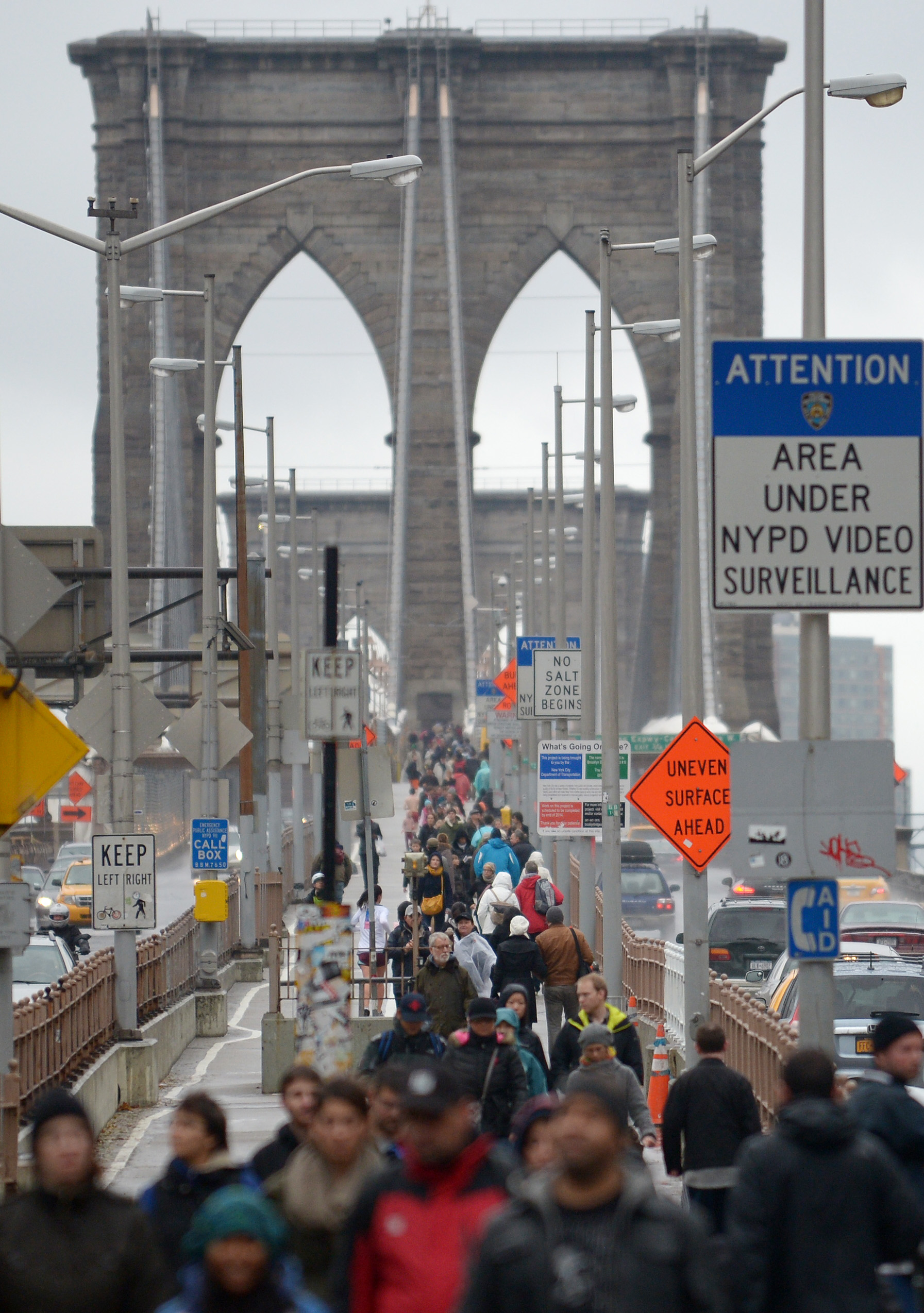
2. Have a plan for non-electronic communication. Related to the same topic, consider how much you rely on electronics for communication.  What will you do when you can’t plug in your iPhone? Or send an email?  I wanted to see my brother, so I walked across the Brooklyn Bridge to meet him for lunch.  Do you have an analog means of getting word to the people you love?  What if walking isn’t an option? There was intermittent or no cell service below 14th street.  I am rethinking my decision to do away with a landline phone.  What is YOUR backup plan?

3. Be part of a support network back home. If there wasn’t a reliable support system back home, things could have been a disaster in my home in Phoenix too.  Friends close to home need care and feeding (i.e. real bi-directional communication) as much as those spread out across the country.  Like many in the arts and/or academia, I don’t live in the same city as my extended family, but have, over the years, developed one wherever I am that can help out if needed (and whom I, of course,  would help).  Sometimes, however, asking for help isn’t easy.  The fact is though, people – especially friends – like to help their friends.  It deepens the bond between friends.  Consider who is in your local support network, and treat them well.

4. Stock extra toilet paper This is the basic stuff we always hear about: have bottled water, canned food, etc on hand. In my own case, it was toilet paper that we came dangerously close to running out of.  But I also know that I don’t stock much food at home, because I rely so much on my CSA produce.  I think I’ll shift my thinking a bit and put in some canned beans and such, just in case…..

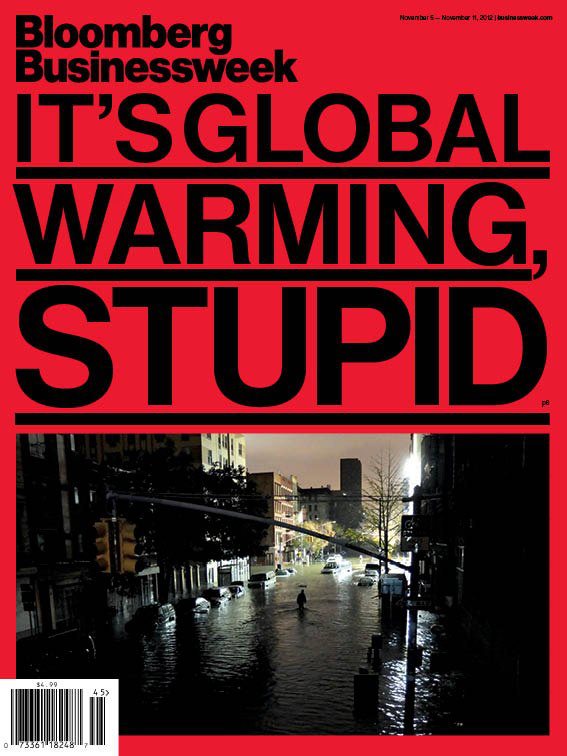
5. Prepare now for the rising tide The NY Stock Exchange has not been shut for two days in a row due to weather since 1888.  I would bet it won’t be another 124 years until it does so again.  Global warming is causing the oceans to rise and storms to become more intense.  (Scientists agree – this is not me being an alarmist.)  New York, Boston, Washington, LA, Seattle, all of our coastal cities  — and all my friends who live in them — should prepare now, in ways that are more permanent than stocking up on toilet paper.  We need to do everything in our power NOW to stop global warming from increasing exponentially while simultaneously preparing for its immediate effects on the arts and on our lives and those of our friends.

Related post: Personal Symbiosis
Posted in arts infrastructure, Uncategorized | Tagged , , | 1 Comment

Reading List in Progress

Many thanks to those of you who responded here or via email to my query, “What to Read?” With just seven sessions, it is especially challenging to decide what to read in a short one-credit course focused on arts policy and even more challenging to decide what can be left out.  So far, the readings seem to lean more toward economics; perhaps next year we will focus more on the arts as a tool for civic engagement.  Although still very much a work in progress, I share my current thinking about the seven sessions and the themes they will address:

  1. Overview:  Cherbo, Stewart, Wyszomirski (2008)  Understanding the Arts and Creative Sector
  2. Policy history and economics: Selections from Lowry (The Arts and Public Policy in the United States), Baumol (Performing Arts – The Economic Dilemma), Netzer (The Subsidized Muse),  Rand Foundation Gifts of the Muse (entire document)
  3. Policy tools and policy targets: Cowen, Good and Plenty; selections from Schneider, Policy Design for Democracy
  4. Art and Money: Garber, Patronizing the Arts; selection from Abbing, Why are Artists Poor?; (on Blackboard)
  5. In coordination with the third biennial Pave Symposium on Entrepreneurship, the Arts, and Creative Placemaking:  Markusen and Gadwa, Creative Placemaking; Bedoya, Creative Placemaking and the Politics of Belonging and Dis-Belonging;
  6. Art and conflict: Tepper, Not Here, Not Now, Not That; various newspaper articles
  7. Art, Money, and Advocacy, or how we talk about the arts: Americans for the Arts, Arts and Economic Prosperity IV; ArtsWave, The Arts Ripple Effect; special guest from the Arizona Commission on the Arts

There is so much that is not in this list and the arts policy landscape is forever changing; hopefully we’ll catch some of what we miss in a subsequent course. In the meantime, your feedback continues to be welcome.

Posted in Arts education, Arts policy, Higher education, Uncategorized | Tagged , , , , , , , , , | 2 Comments

What to Read?

Next spring, I will be teaching a short one-credit course for grad students “Readings in Arts Policy.”  The format is such that over the course of 7 ½ weeks we will read and discuss arts and cultural policy (in the U.S.) via some of the literature of the field.  My training in policy studies comes from the public administration tradition and my practical experience in the arts is in the trenches of the nonprofit theatre sector rather than as a policy actor.  Thus, I find myself pulled in several directions as I search for the center of this course; policy process, advocacy, economics, are but three of the possible foci. And so, I turn to you, dear readers, for suggestions.  Some of you are policy actors, some of your are artists, some of you are graduate students, some are faculty colleagues – most are probably some combination of two or more.  If you were to take or teach such a class, what would be on YOUR “must read” list.

I have some ideas, of course, but welcome you input. Please share your suggestions by posting a comment here. Thanks!

Posted in Arts education, Arts funding, Arts policy, Higher education | Tagged , , , | 11 Comments

Approaching (Vibrant) Clarity

Issues of Outcomes and Measurement included implicit criticism of the ArtPlace Creative Placemaking program for not using evaluation outcome indicators that reflected stated program goals, their overarching term for which is “vibrancy.”  I was not alone in this critique.  Therefore, I was very pleased to see a new post from ArtPlace, Principles of Creative Placemaking.  It clarifies many programmatic goals and responds to criticism about the potential downside of creative placemaking as nothing more than gentrification with an arts component.  They also published revised vibrancy indicators.  Without changing the three-fold focus on people, activity, and value, the program has selected several measures of vibrancy in the people and activity categories that may correlate with the principles elucidated in the recent update.  The thorniest issue for me – and apparently for the program – is value.  The initial presentation of vibrancy indicators used property values as the measure of creative placemaking.  It’s easy to see why an economic outcome measure that potentially displaces current residents (especially renters) met with some criticism.  The problem is not yet resolved: “We are still gathering data on appropriate value indicators, which will be added later,” the website states.

The new indicators make use of available data from a range for sources from census block data on population and employment to SpotRank data on cell phone use.  I understand the desire to use quantitative data, both for its appearance of truthiness and its cost-effectiveness.  However, the last of the newly clarified “principles” is: “convinces people that a place can have a different and better future.”  To measure whether or not people are convinced, I suggest asking them.  In other words employ qualitative as well as quantitative methods of data gathering to get to what is essentially a qualitative question: is this place better than it was?

So, bravo to Carol Coletta and the folks at Artplace for thinking creatively and responsively about these issues. But, there is still work to do, and some of it will involve people rather than numerical data.

UPDATE: Please see this excellent critique from Roberto Bedoya who reminds us that it truly is not all about the money: Creative Placemaking and the Politics of Belonging and Dis-Belonging

If you’re interested in creative placemaking, please save the dates April 12-13, 2013 for the third biennial Pave Symposium: Entrepreneurship, the Arts, and Creative Placemaking.  Full disclosure: Pave is partnering with the ArtPlace-funded Roosevelt Row Cultural District on the symposium’s culminating event – a “feast on the street” in downtown Phoenix.

Promo for Roosevelt Row CDC’s “Pie Social”

Posted in Arts policy, Culture and democracy, Uncategorized | Tagged , , , | 1 Comment

Trial and Error

I usually use my kitchen for cooking and have sometimes written about parallels between my cooking and arts participation.  Recently I’ve started to use my kitchen to experiment with the craft of papermaking.   This started on a whim when I received a letter from a friend written on some beautiful handmade paper from Nepal.  My paper will probably never attain the delicacy and beauty of the paper I received, but through trial and error I’m making progress.

My first experiments taught me that the quantity, color, and quality of the material I put into the pulp will directly effect the outcome. Too much newspaper led to uninteresting gray-green cardboard, almost too heavy to fold up into an envelope.  A later experiment taught me that technique matters: the overzealous use of a rolling pin caused the paper to break apart as it dried. I’ve started to collect materials, papers, leaves, flowers, that can go into my trials.  Today’s experiment taught me that the paper will pick up any texture, intended or not, that it comes in contact with while drying.  Finally, though, I managed to create a delicate piece of paper of relatively uniform thickness, a mottled pink color, and the lovely scent of rosemary from the leaves added to the pulp at the last minute.  The papers have been or will be sent to people close to me, the friendliest of audiences who will honestly critique my craft while still appreciating and loving the gift of it.

Artists need my kitchen, metaphorically speaking.  Really, they need their own – a place for trial and error, for experimentation, innovation, a place where they can collect materials and store them for later use, a place where they can share their work in progress with honest but receptive critics.  There are, of course, artists lucky enough to have such a creative home, but for many – if not most – that experimental infrastructure does not exist, especially after the artist completes her education.  How much creativity is thwarted by the want of a kitchen?

Posted in arts infrastructure | Tagged , , , | 1 Comment