n=1

The following has been previously published as a chapter in Theatre, Performance and Change edited by Stephani Etheridge Woodson and Tamara Underiner (Palgrave, 2018). Now that a year has passed since the publication of the book, I am happy to share the text with you here. 

A theory of change is about causation: we theorize that if we undertake action “A” it will cause impact “B.” When public funding underwrites “A,” the impact, “B” may be measured in the return on the investment of those public funds. Sometimes all it takes to tell the story of cause and effect (or return on investment) is an “N” of 1 and a means of connecting that “1” to the many.

“At Home in the Desert: Youth Engagement and Place” embedded nationally renowned visiting artists and Arizona State University faculty artists in Phoenix and Mesa youth communities to create a series of original, meaningful, multi-disciplinary performance works showcased at South Mountain Community College (Phoenix, AZ) in April 2012 and subsequently in an expanded site-specific performance in December 2012 as part of the Desert One Festival in Tempe, AZ. This collection of activities consisted of three inter-related performance projects. In this comprehensive and innovative program connecting art, science, technology, culture and communities, young people examined their desert city and their experiences through an artistic lens and used collaborative, creative tools to find new ways of knowing and understanding their desert home. As director of evaluation for the project, I wanted to assure our community partners and our funders, the National Endowment for the Arts and the ASU Institute for Humanities Research, that the project caused positive change and was a good use of public funds.

Statistical analysis in this situation has significant limitations. There were 60 youth participants and approximately 25 university students, staff and faculty, too small a group to achieve truly significant results, although we did conduct pre- and post surveys of participants that indicated a positive correlation between program participation and some changes in perception of their desert homes. As the saying goes, correlation does not prove causality.  What does?

An individual, unsolicited, telling another person, “I did this because of that;” or “that helped me to do this” sounds like one way of showing causality, albeit only for that one individual. The fall after completing the Home in the Desert pilot residency at a local high school, I ran into one of the youth participants at a university freshman orientation event. He volunteered, “yeah, that really helped me understand where I am, cause you know, I’m not from here.” Project goal number one, to broaden and deepen participant perspectives on the desert as home, had been met for this one participant.

The project was partially funded by the National Endowment for the Arts. Is the impact on this one person a good investment of public funds? To answer that question, it is helpful to combine the small data (n=1) observations with big data conclusions. The young man I ran into addressed another goal of the program: youth participants would envision college in their future. Here I was, talking to a newly minted freshman who had not been sure he would attend college six months earlier. “When I worked with the ASU students, it really helped me want to come here,” the young man added. On the same day I write this, I watched him walk across the stage at undergraduate convocation.

But one student’s decision to enter—and complete—college is just the proverbial tip of the iceberg. Big data helps explain the scope of the return on public investment. A 2014 study from the Pew Research Center indicates that the median income of a young person with a bachelor’s degree is over 50% higher than someone who attains only an associate’s degree and such a person is also far more likely to find full time employment (Pew 2014). Not even accounting for the fact that the gap between the college educated and those without a college education will increase over time, if he works for 42 years, the young man I ran into at the incoming freshman event will earn $735,000 or more over someone who just has some college. He will return in taxes more than three times the $32,000 investment made by the NEA. Further, as a college graduate he is more likely to vote, more likely to send his own children to college, and, as a dance major, is likely to have high levels of job satisfaction.[1]

This young man was just one of 60 youth participants. While we can’t assume the same positive outcome for every participant, it is safe to assume his story is not the only story of success. Formal observation and informal conversations with participants indicate that youth participants were deeply engaged in the creative process across multiple artistic media at all three sites.  At the Gabel Boys and Girls Club, youth were observed creating “beats” that used poetry they had written. Using an “I am” poem format, one young teen wrote  “I am hard like a rock; bright like the sun…am I me?” while another wrote of God the creator.  They listened to each other respectfully, all while in the context of learning how to digitally edit their text with recorded percussion. The sessions at the South Mountain High School site, both with the site faculty and guest artists, were rich in creativity and artistic expression.  For example, guest artist Cassie Meador led the high school youth and ASU participants through an exercise in which they explored that which is visible in the desert and that which is invisible.  Two weeks prior, the group had been visited by a member of the ‘Ecology Explorers’ team from ASU who provided a primer on desert ecology.  The youth combined their new knowledge of desert ecology with their own subjective impressions of their lived experience in the urban desert to develop text for “Above the streets/Below the streets” poems that developed over the course of months into choreographic material.  One youth participant commented that a “mirrored pair” reminded her of the bulldozer on her street, in an example of how the students synthesized new creative experiences with their real lived ones.

In a post-performance discussion, one youth commented, “Now I think about keeping things not so dirty. I think about heaven, how you would want it to be in heaven, and make it so.” This is a good example of the “broadening perspective of desert as home” objective of the project.  Also at this showing, family and other community members participated in a post-show workshop, exploring their relationship to the desert and its sustainability in a kinesthetic embodiment of their experience. A Girl Scouts staff member noted, “They loved being here; they felt so special.”  This comment echoed one made by a Boys and Girls Club staff member during preparations for the earlier showing: “This is the first time any of these kids have had a chance to perform anything—even for friends and family.  The boost it has given to their self-confidence is awesome.” Youth, college students, faculty and guest artists were deeply engaged in art-making and in exploring their desert home through a variety of artistic media. They were changed by this program, one individual at a time. Each of these “1s” is a wedge, leveraging their own entry into culture and education.

AtHomeDesert©Sean+Deckert-8

Arizona State University’s Herberger Institute with South Mountain High School, Arizona Cactus/Pine Council Girl Scouts and Boys and Girls Clubs of Metro Phoenix. Tempe AZ. Photo from http://www.ejengagethroughdance.com/photography/

References

Pew Research Center.  2014. “The Rising Cost of Not Going to College.    http://www.pewsocialtrends.org/2014/02/11/the-rising-cost-of-not-going-to-college/. 11 Feb. 2014.  Accessed 1 Oct. 2016.

Strategic National  Arts Alumni Project.  http://snaap.indiana.edu/. Accessed 1 Oct. 2016

[1] For more information on job satisfaction levels among arts graduates, visit the Strategic National  Arts Alumni Project at http://snaap.indiana.edu/.
Posted in Arts education, Arts policy, Higher education, Institutional Infrastructure | Tagged , , , , , , , , | Leave a comment

Reconnecting in Repurposed Buildings

One of the great advantages of “maturing” is that along the way, one’s circle of acquaintances and friends expands and grows to include people near and far. Sometimes, someone you meet through a friend relocates and then you relocate, and then you find yourself within 30 miles of one another and reconnect. When I first met Shannon Daut several years ago at a party in Phoenix, she was director of the Alaska Arts Council but now is manager of Santa Monica Cultural Affairs. I am immensely grateful to Shannon for spending a few hours introducing me to Santa Monica’s “creative infrastructure.”

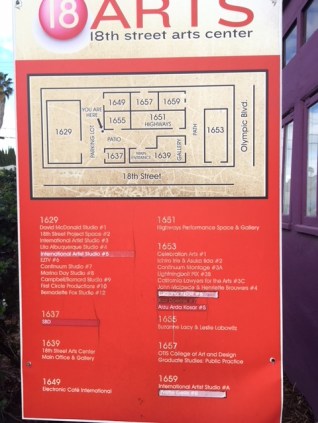
18th streetOur first stop was the 18th Street Art Center, the largest artist residency program in SoCal. I first came across 18th Street when doing preliminary research on arts incubators as it has, over the course of its 30 year history, also served as an arts incubator. Executive Director Jan Williamson was kind enough to give us a personal tour of the campus of artist live/work spaces, a campus that is also home to Highways performance space.

As I drove up to the area, I was struck by its resemblance to the neighborhood where one of the incubators I studied in some depth is located: Arlington Arts Incubator in Virginia. Both are in light industrial areas in medium-sized cities populated by single story commercial buildings or double-height warehouses, some of which have been repurposed. Even the rural incubator I studied, Mighty Tieton, is in a repurposed warehouse and so too was the central city Intersection for the Arts in a repurposed building (they have since moved). I hesitate to draw a broad conclusion, but it does seem – and not only from these four examples — that arts incubators, unlike performing arts facilities, are not generally purpose built, but instead in-fill. More on that in another post…

After 18th Street we visited Santa Monica Airport Studios, located in a re-purposed (it’s a theme!) hangar building adjacent to the soon-to-be decommissioned Santa Monica airport. Twenty-three artists’ studios and a gallery will soon be managed by 18th Street in a partnership with Santa Monica Cultural Affairs.

Our last stop was Bergamot Station, a complex of several buildings, repurposed (of course!) warehouses and trolley station buildings, now housing about 30 different commercial galleries, one nonprofit gallery, and a performance space. Our timing was excellent as many of the galleries had coordinated their efforts to open shows all on the same evening, an evening when broken rains clouds were lit up with bright sunset colors and, for a brief moment, a rainbow! (Pictures could not capture the spectacle.) Confirmation of Bergamot Station’s reach beyond the borders of Santa Monica was that we happened to run into the director of Cal State LA’s own University Gallery, Mika Cho, who was there scoping out the gallery openings.

What seems clear from just this brief introduction to Santa Monica is that its cultural infrastructure, under Shannon Daut’s deft leadership, is vibrant and multi-faceted. I owe Shannon a debt of gratitude, of which this blog post is but a small part. (Shannon, if you read this, I promise there will be wine too.)

Posted in arts infrastructure, Arts policy, Culture and democracy, Institutional Infrastructure, Physical Infrastructure | Tagged , , , , , , , , , | Leave a comment

I’m Still Here

I’m still here.

I launched this blog on December 31, 2010 and have written an anniversary post on or near New Year’s Eve each year since. These eight years have seen a lot of change – in the world, in the blogosphere, and in my life. The past six months have seen particularly significant changes with regard to the last, having taken a new job in a new city, both of which I love. I launched the blog eight years ago to test ideas about infrastructure for the arts: personal, physical, and institutional. While the frequency of postings has become quite sparse, I still continue to publish the blog for this purpose, especially as it relates to ideas I am developing for An Ouroboros: Art, Money, and Entrepreneurial Action. It has been a struggle to maintain steady progress on this book, but I managed to put another chapter to bed last week and my New Year’s resolution, to the extent that I have one, is to establish a writing routine the keeps me on course to completion a year from now without detracting from my work as dean of the College of Arts & Letters at Cal State LA.

In the meantime, here’s Creative Infrastructure’s 2018 by the numbers:

  • Total views: 11,328, the lowest in five years, which is to be expected because…
  • Total posts were by far the lowest ever: 11 (12 if we include this one).
  • Most popular post: What is an Arts Incubator? about which I am particularly happy as it speaks to continuing interest in and usefulness of my research on this topic. (For the actual research, see “Arts Incubators: A Typology” in the Journal of Arts Management, Law, and Society and “Value Creation by and Evaluation in Arts Incubators” in International Journal of Arts Management).
  • Most popular post published this year (of the 12 I managed to eke out): Values + Opportunity = Change, about my transition to LA.
  • Who are the readers: about half are in the US, but there are quite a few in Canada, India, and the UK as well.

So…I’m still here in the blogosphere, but also on campus helping students succeed, in the kitchen testing out new menus and recipes, and, when I get a chance, on the hiking trail.

HAPPY NEW YEAR! May 2019 bring you all that you wish for in your personal creative infrastructure.

new years eve

Posted in Arts entrepreneurship, arts infrastructure, Higher education, Personal infrastructure | Tagged , , , , , , , , , | Leave a comment

Home

It takes some time to adjust to living in a new place and a different space: on this second night of Hanukah, I still can’t find where I packed (or unpacked) my menorah. But I have now been in Los Angeles long enough to begin participating in its culture, from that palace of culture, the LA Opera, to the street tacos cooked on a sidewalk grill by the butcher at the bottom of the hill I live on. I went to a talk at The Broad Museum, where I saw an amazing new piece by Mark Bradford and met an artist working on an economic census of LA artists. I joined the Huntington Library and Gardens because….GARDENS! and have taken off and landed at Bob Hope and LAX airports more times than someone concerned about global warming should. I’ve also learned that despite its population of over 13 million people, Los Angeles is small: I walked into a restaurant in Burbank and was greeted by a friend yelling my name who had moved to LA from Arizona a year earlier.

As I walked home from work at sunset tonight, I said hello to one neighbor who was taking out his trash and another just getting home from work, who greeted me with “hello there, it’s so nice to see you.” With that — and this view — I realized I have fallen in love with the city I now call home.

IMG_8471

Posted in Culture and democracy, Personal infrastructure | Tagged , , , , , | 3 Comments

#LaborDay Reflection

Screen Shot 2018-09-03 at 10.45.08 AMIn 1985, I walked into Pace University, a light plot and section for Cat on a Hot Tin Roof under one arm and an opera score under the other. I waited all day for my turn – I was last — to go into the theatre where I directed a crew to focus sixteen lights and then sat down and wrote nine cues for a scene from Pelleas and Mellisande. A panel of experienced lighting designers who would decide my professional fate sat behind me. I was so focused on the stage, I didn’t realize they were not in the dark. “Aren’t you gonna turn the house lights down,” bellowed Lee Watson; I did. The scene finished, I brought the lights up and left the theatre with Allen Lee Hughes, a panelist and friend, who walked me to the subway. “Don’t worry, we throw out Lee Watson’s score sheets.” A few weeks later I got my United Scenic Artists Local 829 stamp and proudly used it for the next 25 years. For most of those years I benefitted from the collective bargaining agreements my brethren had negotiated with LORT theatres, agreements that protected my rights, my time, and my compensation.

When I started teaching at UW-Madison I no longer relied on the union’s health insurance for coverage, but was happy to pay my quarterly dues and have the theatres I worked for outside of the university (faculty at UW-Madison are not represented by a union) pay into a fund that would support my union member colleagues who did not have the benefits of a teaching position – that is the nature of the collective action that organized labor supports. Now, as an academic administrator in a collective bargaining environment, I may find that I am represented on the opposite side of the bargaining table from organized labor but we are not on opposite sides conceptually; we are all on the side of the students and their success, much as producers and designers are on the same side: that of a healthy and productive American theatre.

Posted in arts infrastructure, Arts management, Arts policy, Culture and democracy, Institutional Infrastructure | Tagged , , , | Leave a comment

One sentence at a time

As my book project, An Ouroboros: Art, Money, and Entrepreneurial Action, developed, I began posting paragraphs or short passages to help me work through ideas and garner feedback. With my transition into a new job, I am sometimes only able to muster a sentence or two. Here is today’s sentence:

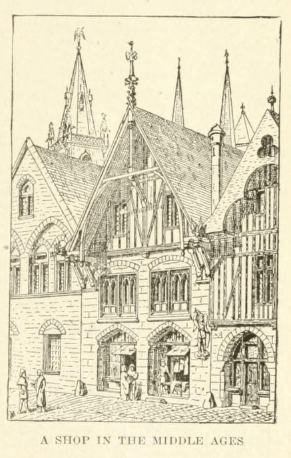
Unlike traditional capitalist enterprises as they began to develop in the late Middle Ages or early Renaissance in Europe as separate entities from their owner’s household, the arts entrepreneurial enterprise is inseparable from the artist herself.

shop in the middle ages

That’s all I got this weekend…

Posted in Arts entrepreneurship, Institutional Infrastructure | Tagged , , , | Leave a comment

Working through an idea

Now that I’m almost four weeks in to my new position as Dean of the College of Arts & Letters at Cal State LA, I have some headspace to return to An Ouroboros. I’m working through a thorny section of the second essay in the book, an essay on art, experience, meaning, and value. Here’s the Moebius strip I’ve create for myself:

Bill Sharpe, in his short book Economies of Life: Patterns of health and wealth, argues that art is the very currency of experience, much as scores and statistics are the currency of sport and money is the currency of the market. To understand his explanation, one first needs to accept his basic premise that an economy is “a coordinated pattern of human activity enabled by a currency.”[1] Sharpe’s contention, with which I agree, is that although we each experience art individually, when patterns form of multiple experiences, we have culture. Art, then, is the way in which these patterns of multiple experiences are made visible; art is the currency of experience.

However, one could argue that the reverse is also true: experience is the currency of art. If, as in the market economy, the value of a product is measured in its currency, money, then in the economy of culture, the value of art (the cultural “product”) is measured in its currency, experience. We understand the value of art through our experience of it.

Thoughts?

[1] Sharpe, B. (2010). Economies of Life: Patterns of health and wealth. London: International Futures Forum, p. 32.

MobiusJoshDif

Moebius Strip By JoshDif – Own work, CC BY-SA 3.0, https://commons.wikimedia.org/w/index.php?curid=18456094

Posted in arts infrastructure, Institutional Infrastructure | Tagged , , , , , , | 5 Comments

Values + Opportunity = Change

The Creative Infrastructure blog is in a period of transition because my career (and life) is in a period of transition. I don’t yet know what the future will bring for the blog, but I do know what the future brings for me: beginning July 1, I will be Dean of the College of Arts & Letters at California State University, Los Angeles. At an open forum with faculty and staff a little over a month ago, I talked about my professional trajectory and my interest in joining the CSULA leadership team. Here is what I said:

My first love – professionally – was lighting design.

After completing my MFA at NYU Tisch School of the Arts, I worked full time as a freelance lighting designer, but after several years realized I had something valuable to say to others about lighting design, so took my first teaching job at UW Madison. I soon after became head of the design programs in the Department of Theatre and Drama.

Later, I became director of University theatre and then Chair of the department, which is when I realized that my first love might be lighting design, but my true love is academic administration (yes…there are people who truly love academic administration).

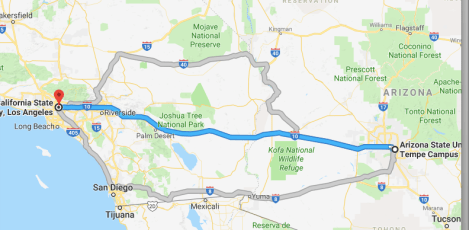
So, when I was recruited to run a much larger unit at ASU and work to transform it into a school of Theatre and Film, I jumped at that opportunity.

As the Director of the School of Theatre and Film at ASU, I led a large and diverse unit; by the time I stepped down to concentrate on my personal loves — getting my children through high school — we had 32 tenure/tenure track faculty; numerous PT faculty; 12 FT staff; about 45 graduate teaching assistants. We grew the budget from $2.6M to $5.1M during my tenure as director, despite the economic downtown in the middle of that period. We built programs, including a very popular BA in film.

Since 2011, I have concentrated on growing the arts entrepreneurship programming we launched in 2006 and fed my love of administration by building programs and by undertaking formal education in the field leading to a second terminal degree in the topic. Two years ago, we moved the fledgling arts entrepreneurship programs into the dean’s office, where I am now director of Enterprise and Entrepreneurship Programs for our college-level entity, the Herberger Institute for Design and the Arts. In this position, I am not just director of a graduate program, but serve the entire college in a broad portfolio relating to design and arts enterprise and entrepreneurship. This includes graduate and undergraduate programs, public programming, research, and enterprise support, which has included helping almost 40 student teams develop arts-based businesses many –if not most – of them with a focus on social impact and public good.

In each of my administrative positions, I have led the unit forward by articulating a shared vision and implementing that vision to advance the mission of both the unit and the university.

Teaching arts management and cultural leadership, which is where my teaching is focused now, I lead my students in an exercise every semester in which they have to examine their  own values. I do that exercise along with my students. Although the rank order of them varies, for the last several semesters, my top 5 values have pretty consistently  included Justice (inclusive of social equity), integrity (inclusive of honesty), empathy, usefulness, and….love.

Becoming the dean of the college of Arts and Letters at Cal State LA will give me the opportunity to both live my values and realize my professional true love. The values of the university – that higher education is a tool for social equity and mobility – align clearly with the values I try to live daily. I will be able to live my values of justice, integrity, empathy, love and, perhaps most especially for this audience, usefulness here.

I can be useful to you here as someone who is more than a mere manager, but rather as a leader who sees both the big picture and the particulars, as someone who bundles resources to support program growth and development, as someone who is deeply committed to both faculty development and student success and sees those as intrinsically connected.

Twenty-first century skills are the skills learned in the humanities and the arts: critical thinking; idea generation; working in collaborative groups; multi-faceted communication. The ability to not do just “one thing” but to do “many different things” over the course of one’s work-life. The College of Arts & Letters is positioned to be a leader in supporting the students it serves by giving them tools to navigate the uncertainty that they will face, to understand the technological world humanistically and creatively, and to advance social justice and equity. I want to help you all do that – and that’s why I’m here.

Screen Shot 2018-05-07 at 8.32.02 PM

Posted in Arts education, Arts entrepreneurship, Higher education, Institutional Infrastructure, Personal infrastructure | Tagged , , , , , , , , | 7 Comments

Willingness

You may have heard about the recent late winter storm that rocked the east coast. Thanks to that storm, I was stranded in Washington DC in between a meeting of the RUPRI/NEA Rural Cultural Wealth Research Lab and the Mike Curb MA in Creative Enterprise and Cultural Leadership Field Experience class trip to NYC. This unexpected extra night in DC afforded me the opportunity to reconnect with a dear friend who happens to be the Properties Director at Arena Stage.

Over dinner, Monique and I got to talking about collaboration. Then she said:

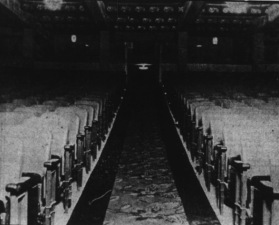
Collaboration is the WILLINGNESS to sit in darkness together.

Screen Shot 2018-03-24 at 4.58.58 PMMic drop. What a great way to think about artists’ collaboration. Being a theatre artist, she meant it both literally (she and I spent a lot of time sitting in darkness together at the Utah Shakespeare Festival in the early 1990s) as well as figuratively. Collaboration requires a kind of mindset, a WILLINGNESS, that is intentional, open, and non-judgmental. Finding companies and “company” where that kind of collaboration happens consistently is rare in my experience. I have seen a director throw a chair across a room, a choreographer get up in the face of a student and stare her down, a faculty member shout down a colleague for no apparent reason other than as an exercise of intimidation. When artists behave in this way they are not collaborating; they are asserting power. In collaboration, even when power differentials exist (and they always do) all the participants enter the darkness together and willingly.

In my arts entrepreneurship classes, we often talk about “uncertainty.” In a way, entrepreneurship, like collaboration, requires a willingness to sit in darkness, hopefully together, but maybe alone, navigating the uncertain with the limited information at hand. Despite the distance of years (it had been four since we last saw each other), Monique and I were able to sit together, willingly sharing our experiences, not in darkness, but in the light of a lifelong friendship.

(photo: Plymouth Theatre; photographer unknown; public domain)

Posted in Arts entrepreneurship, Institutional Infrastructure, Personal infrastructure | Tagged , , , , , | Leave a comment

Sharing and Value

I continue to explore, somewhat casually and, unfortunately, intermittently, the concept of “sharing” and what it could mean to have a true “sharing economy” for the arts. As part of that exploration, I am reading Arjo Klamer’s Doing the Right Thing: A Value Based Economy. In it, he differentiates between “willingness to pay,” a familiar concept in both economics and market research, and “willingness to contribute.” “Willingness to pay” is a concept of exchange in which something of value (a private good) is traded for something of value (a currency of some kind). “In the case of willingness to contribute, the expectation is that the contribution will add values to a shared good” (Klamer, 2017, p. 88).

If we consider that artist and audience co-create the value of art, then we begin to value the role of the audience and begin to conceive of art not as a private good, or even a public good (per Samuelson) but as a “shared good.” A “consumer” is antithetical to the concept of a shared good because a consumer reduces the value of a good through her very consumption of it (think of ice cream here or a car, which depreciates with every mile driven). [Sidenote: If we consider knowledge to be a shared good, as Klamer does, then the student-as-consumer model of higher education falls apart, as well it should; students and faculty co-create knowledge and understanding.]

Seymour_Joseph_Guy_-_Knowledge_is_Power

[Shared] Knowledge is Power by Seymour Joseph Guy

But an artist creates work and wants to sell it to support the creation of more work (and the material needs of her life). Is such work — the product of an artist’s mind and labor — a shared good? Not yet; for this reason I can’t buy Klamer’s argument wholesale. But, as I am beginning to understand, the value of that work — its exchange value, its social value, and even its aesthetic value — is enhanced by the participation of the audience. So, it’s not that the audience co-created the work itself, but the audience, through participation, collection, attendance, co-creates the work’s value as a shared good.

Posted in Arts entrepreneurship, Arts funding, Culture and democracy, Institutional Infrastructure | Tagged , , , , , , , | Leave a comment