Opportunity is Knocking

Bill DeWalt, former (and founding) director of the Musical Instrument Museum, wrote an op-ed piece in the Arizona Republic that delineates the challenges faced by the new arts leaders coming in to replace not only him, but also the leaders of other large institutions in the state such as Arizona Theatre Company, the Children’s Museum of Phoenix and Arizona Opera. “The principle issue for all organizations is lack of funding,” he writes, before explaining some of the reasons why arts funding is particularly challenging here.  I urge you to read his full piece as it carefully explains why the unique philanthropic climate of Arizona is particularly challenging.
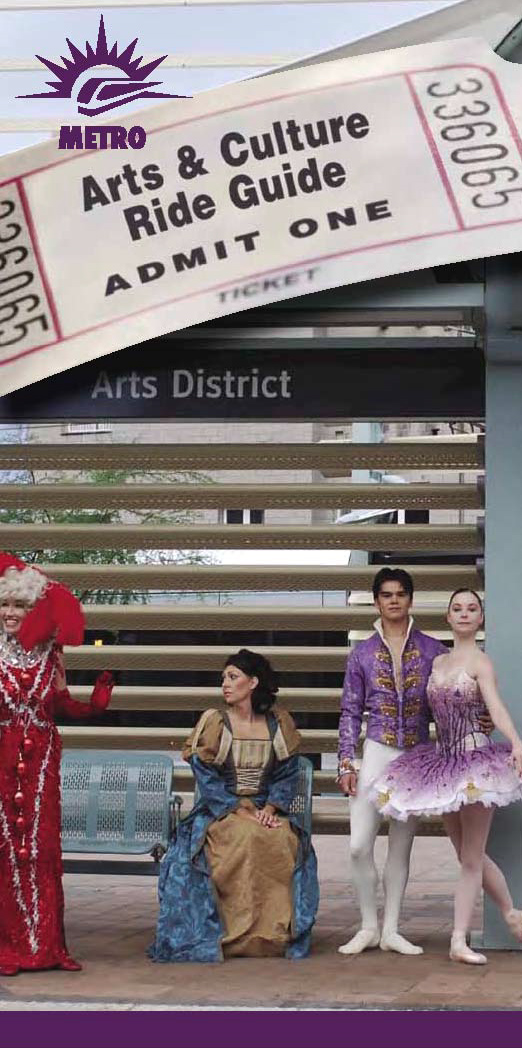
phoenix arts and culture ride guideI want to focus on another point he makes, almost in passing, “Such rapid change in leadership of a city’s major cultural institutions may be unprecedented.”  A couple of new leaders are already in place; searches are planned or underway for others. This is a tremendous opportunity not only for the individual organizations experiencing leadership change, but also for the culture of Arizona and, indeed, its funding climate.  This unprecedented shift in leadership means that there will be an influx of new ideas, new talent, and new programming.  Coincident with this upheaval in the cultural community comes the resignation of Phoenix city manager David Cavazos.  There is – or should be – an opportunity here for the city of Phoenix (where all but one of these organizations is based) to re-envision and re-evaluate its commitment to arts and culture.  There is – or should be – opportunities here for the many communities that make up the cultural fabric of the Valley of the Sun to participate in the next stage of development for these large organizations.  And, “the next generation of cultural leaders” as DeWalt calls them, have unprecedented opportunity to work together to enrich the culture life of the region.

In my work, I generally engage with very small or brand new arts organizations or even individual artists. But, the fate of the larger arts institutions affects everyone in the arts and culture community and, I would argue, everyone in the city, whether they realize it or not.  So, here are some thoughts for the “next generation:”

  1. Can the organizations work together in a consortium format on their fundraising efforts? This was tried on a small scale with some of the smaller arts organizations and didn’t get very far, but the target was small donors (in a kind of crowdsourcing effort, before we all were comfortable with that term).  What if there was more cooperation and less competition for the philanthropic dollar among the big five as well?
  2. Can the large organizations work symbiotically with small organizations to help the latter develop both artistically and business-wise, thus diversifying not only the content but also the scale of cultural organizations?
  3. Can the organizations, under new leadership, provide more opportunities for authentic community engagement? (Not “outreach,” but true two-way engagement, even to the point of co-creation/co-curation)
  4. Can the large organizations diversify their revenue streams, perhaps even developing auxiliary enterprises, to better fund their day-to-day operations?
  5. And, lastly but not finally, could the fundraising consortium suggested in #1 be used to build a cash reserve for Phoenix Arts and Culture?

Opportunity is knocking. Let’s answer the door!

(image by Kristin Roberts, METRO for the Phoenix Arts and Culture Ride Guide)

Posted in arts infrastructure, Arts management, Uncategorized | Tagged , , , , , , | 6 Comments

Valuing Relationships

mourning-black-ribbonYesterday, I could count the number of Black stage managers I know on one hand – on two fingers, actually.  Now, sadly, I only need one finger.  Tayneshia Jefferson died very unexpectedly today, according to a friend, from a brain aneurysm.  Less than two weeks ago, audience development consultant Rick Lester, founder of TRG Arts, was participating in a charity bicycling event when he too died suddenly and unexpectedly.   I don’t know if Rick and Tayneshia had ever met. They may have, although Rick focused on audiences and Tayneshia on backstage operations. I am not endeavoring to eulogize either of them, a duty best left to those who knew them and loved them better than I.  Instead, I write to implore you to value your relationships, because tomorrow they can end.

I knew Rick and Tayneshia only as professional acquaintances and primarily via interactions at conferences (Tayneshia at USITT, where she had recently been elected to the board of directors, and Rick at AAAE). I go to a lot of conferences, and meet a lot of people.  Some of them are people I actually sit down and have a meal with, debate ideas with, exchange email addresses with.  My reflection upon meeting both Rick and Tayneshia was similar: “this is an interesting smart person; my world is richer for having met them.” The loss of both in the same month has me thinking of other people who are “conference friends,” people we see only once a year to listen to and maybe have a drink with, and resolving to stay in closer contact with them.  As I write this, many of my closest ASU colleagues are at the ATHE annual conference in Orlando.  I hope they read this and take it to heart; that they not only connect with colleagues in Orlando, but value the relationships they build there enough to continue them between conferences. They are precious and one never knows when they will cease.

Posted in Higher education, Uncategorized | Tagged , , , , | 1 Comment

Trying Not to Feed the Beast

I started writing this post a couple of days ago about adding an ownership incentive to arts organizations:

When I teach my arts entrepreneurship students about different business forms that are available for artists and arts organizations, I explain a fundamental difference between for-profit and nonprofit corporations: the former have owners and the latter do not.  We can talk about both the stockholders and shareholders of a for-profit corporation but the nonprofit has only stakeholders. Theoretically, given the nonprofit tax status of the institution, every taxpayer is a stakeholder. But do they feel that they are?  Public support for nonprofit arts institutions might be stronger if all taxpayers truly saw themselves as stakeholders in the arts community but their contribution via tax expenditure is so attenuated and so small that the general populous doesn’t even have “nonprofit arts sector” on its radar. What if we could make these stakeholders into stockholders to help motivate them to be more involved in the nonprofit arts institutions in their communities? Huh??!! There is a hugely successful model for doing just that, an organization that has been around since 1919: The Green Bay Packers.packers helmet

But then I read this by Warren Buffet’s son Peter about keeping “the existing structure of inequality in place,” about how micro-lending and financial literacy is really about integration “into our system of debt and repayment with interest.”  If I followed my original thread about symbolic ownership interest in nonprofit arts orgs, then I would be “feeding the beast,” as Buffet puts it, perpetuating the crisis of imagination that has led both to worldwide inequality and insufficient arts infrastructure.  As he says, “we need a new story.”

It’s time for a new operating system. Not a 2.0 or a 3.0, but something built from the ground up. New code.

Posted in Arts funding, arts infrastructure, Culture and democracy | Tagged , , , , | 2 Comments

Enough Already!

gmail iconI got one of those emails today in my personal inbox – one of those emails with bad news about arts funding.  The subject line read “House Subcommittee cuts NEA by 49%.”  The political posturing over what amounts to less than two one thousandths of one percent (0.001791%) of the federal budget seems like an especially egregious form of micro-management by congress – ENOUGH ALREADY!

afta-logoThis news came via Americans for the Arts Action Fund along with a helpful link to an email template that would enable me, with just a few clicks, to send an email to my representative and senators imploring them to “Please Support Arts and Culture Funding.”  Why should my representatives do so? Because “The arts mean jobs for our district! The nonprofit arts industry generates $135.2 billion annually in economic activity, supports 4.1 million full-time equivalent jobs in the arts and related industries, and returns $9.6 billion in federal income taxes.”  ENOUGH ALREADY about the economic impact of the arts. Even the NEA, in its report on and map of “How Art Works” notes “Recent arts policy and casemaking for the arts has overemphasized the critical value of art’s direct and indirect economic impacts on society. Although those analyses and resulting numbers certainly matter and are attractive because of their concrete nature, our research suggests that the other individual and community values of art—if they were more directly quantifiable—in all likelihood far outweigh the measurable financial values of the arts.”  I thank AFTA for making it so easy to customize my email to Rep. Sinema and Senators McCain and Flake, but I don’t think the economic argument works, at least not on its own.  So, I added the following: “Even more important than the direct economic benefits of the nonprofit arts sector are its benefits to the vibrancy and livability of the communities in our district, and the health and well-being of its inhabitants. The nonprofit arts sector supports jobs, tourism, community cohesion, and civic participation – which of these would you choose to oppose?”

The economic argument is used to support enterprises as diverse as sports stadiums and scientific research.  Should the arts be competing for attention there or instead standing its ground on its own strengths? I advocate – and when I advocate, I advocate for a more holistic approach to advocacy.

If you would like to contact your representative and senators to voice your support for arts and culture funding, here is a link to AFTA’s customizable email: https://votervoice.net/ARTSUSA/Campaigns/30433/Respond I encourage you to use it – and to customize it to be inclusive of all of the arts sector’s benefits.

Posted in Arts funding, Arts policy, Culture and democracy | Tagged , , , | 3 Comments

Language and Intention and Business

Although my last post was deeply personal, I return here with a systems level look at a problem facing the nonprofit and for-profit arts sectors – that we use language imprecisely – and a corporate form that could help ameliorate that problem.  I am reacting in part to a recent post by Alorie Clark about the need to change the language we use in the nonprofit arts sector to describe what the sector does and what it needs. I would argue, as Jaan Whitehead has long before me, that part of the problem is defining a group of organizations by what it is not (profit) rather than what it is for (mission).  When I was a lighting designer, I didn’t  discriminate between nonprofit and for-profit organizations as long as the work was interesting and meaningful and the artists and crew were paid adequately for their work and treated with respect.  Many young artists I work with today are less concerned about being in a “nonprofit” or “for-profit” organization and more concerned about what business form will allow them to do the work they want to do and have the impact they want to have.

Is there a way to describe an arts organization business structure by what it “is” rather than what it is not? In Arizona and 13 other states, there is – the “Benefit Corporation.”  The benefit corporation (or “B-Corp”) is being advocated for by a nonprofit corporation called B-Lab to push states to allow corporations to have a triple bottom line of social benefit, positive environmental impact, and profit.  The incentives for forming a B-corp are not strictly economic, just as the incentives for forming a 501c3 are not.  Arts organizations could do well to investigate the B-corp as a means of aligning social mission with economic reality and their language with their intention.

Posted in Arts entrepreneurship, arts infrastructure | Tagged , , | 4 Comments

Protected: UN-BULLY-ABLE

This content is password-protected. To view it, please enter the password below.

Posted in Arts education, Higher education | Tagged , , , , | Enter your password to view comments.

Open-ended Questions

question mark

Over the last several years, as I’ve undertaken a program of retraining to support a social scientific approach to research on arts entrepreneurship and evaluation, the importance of “the research question” has been emphasized – drilled into me – by colleagues, teachers, editors, and even my teenaged reviewers at home. Although the methodology for answering research questions is different for artists than for social scientists, they ask research questions too.  In a recent conference call with Polly Carl, David Dower, and Aaron Landsman, David recounted founding mother of the regional theatre movement Zelda Fichandler’s response to his query about why she left Arena Stage to head the acting program at NYU (where, coincidentally, I was a design student at the time).  He relayed that she said, in effect, that she wakes up every morning with questions she wants to answer and needs to be in the right institution for answering them.  “So the day she woke up and found that her line of inquiry could no longer be pursued in the context of a producing, subscriber-based theater, she changed her context to one that aided and abetted her inquiry. It wasn’t that Arena had stopped being a good theater, it was that her questions had evolved to the point of needing a new context.”

The call was initiated by Polly’s question,  “how do we bring artists in to a better process and be more involved in developing that process?” and revolved, in part, around the creative process Aaron undertook with collaborators Mallory Catlett and Jim Lindsay to create City Council Meeting.  Aaron wrote in a follow-up, “We wanted to see if a work about the forms through which we govern ourselves could yield something people wanted to see or participate in.”  The content – driven by the artistic inquiry – was and continues to be open-ended. Keeping the content open-ended, “allowed for people from across the political spectrum to at least get in the room with us,” Aaron continued.

Artists and researchers aren’t the only ones asking questions.  Evaluation questions are important too, and so is their timing.  As institutions – and their projects – are built to answer the important questions of our day, evaluators may ask “are we doing what we set out to do?” or “are we impacting the people we thought we would be impacting?” but these questions imply knowing where you’re going before you start.  Artists and, hopefully, the arts institutions that support them, ask open-ended questions that may not begin with a fixed end in mind. What, then are the appropriate evaluation questions? Perhaps “Are people engaged in the moment?” “Are we proceeding without harm?” “Is our process respectful of diverse viewpoints?”  Or, perhaps the question is even more open-ended: “Where do we think we’re heading?” The answer to which could very well be, “Let’s try this and see where it takes us” in a grounded theory approach to both artmaking and evaluation.

Posted in arts infrastructure, Culture and democracy | Tagged , , , , , , , | Leave a comment

Arts Incubators: 47 and Counting

baby-chicksHaving recently completed a pilot study of university-based arts incubators and their evaluation tools, my attention turned to the larger question of arts incubators nationally. What are the primary activities of arts incubators and what business and organizational structures are best suited to achieve an incubator’s goals? How do they measure their success?

Before I could address these larger questions, I needed a national inventory of arts incubators, activities, and business forms. I contacted the NBIA (National Business Incubatian Association), NASAA (National Assembly of State Arts Agencies) and AFTA (Americans for the Arts).  The research director of each organization responded similarly and along the lines of, “no, we don’t have or know of a list, but are really glad you’re doing this research.” So I hunted and pecked through previoiusly published literature on the topic (there’s not much), scoured research databases, and made systematic use of that font of all knowledge: google.

abacusIn the interest of open access and the knowledge commons, I’ll share some of the raw data here, with the formal analysis and a typology of forms forthcoming at the STP+A (Social Theory, Politics, and Arts) conference and, hopefully, subsequent publication, following peer review. Some numbers[1]:

  • There are 47 arts incubators currently operating in the US (while there are organizations that serve incubation functions that are not included in this number, the 47 either refer to themselves or are referred to be others in publications as “arts incubators”)
  • Of the 47, seven are university programs or university extension programs (including the Pave Arts Venture Incubator), three of which started up in the last 18 months
  • Nine are city, county or state agency programs
  • Most are 501c3 corporations, three of which are community development corporations
  • Four are programs of larger 501c3 corporations
  • It appears that only two are owned/operated as private for-profit entities
  • Five incubators are currently in development, in addition to the 47
  • Three incubators that were supposed to have opened in the last several years never started operations

And now, the real work can begin.

[Update: My article, “Arts Incubators: A Typology” is published in Journal of Arts Management, Law and Society 44(3), 169-180 and further research has now been published as “Value Creation by and Evaluation of US Arts Incubators,” International Journal of Arts Management, 20 (2), 32-45.]]


[1] These numbers may change slightly but probably not significantly, as I dig deeper into each of the organizations and confirm the data collected thus far.

Posted in Arts entrepreneurship, arts infrastructure, Arts policy, Higher education | Tagged , , , , | 14 Comments

Can the Commercial and Nonprofit Sectors Co-exist?

t_medallion03_NEWDiane Ragsdale didn’t necessarily write her post on the “long tug of war” between commercial and market forces in the nonprofit theatre in reaction to the Tony Awards, but that it was published the morning following is very apt.  Throughout the evening, we heard the winning directors (both female, for a change) and producers of commercial successes like Pippin, Who’s Afraid of Virginia Wolf, and Sonia and Vanya and Masha and Spike thanking nonprofit and even university partners for creating the environment in which these commercial and artistic successes were nurtured. (Pippin at ART on the Harvard campus, Virginia Wolf at Steppenwolf, and Sonia et al at the McCarter Theatre on the Princeton campus).

Diane’s post cites research that seems to indicate that market incentives – not just money, but the exchange of something for something else (usually money) – negatively affect the moral nature of decision-making. She shifts the level of analysis from the individual to organizations in discussing how market forces affect the programming and hiring policies of nonprofit theatres.

Let’s shift our thinking up one more level and look at the system as a whole. Tracy Letts, in his acceptance speech, alluded to a system-level approach to theatre production.  Can commercial and nonprofit organizations exist not only side-by-side, but symbiotically in a system of mutual beneficence? In my perhaps overly optimistic and utopian view, the answer is yes.  Rather than considering the nonprofit and commercial (theatre) sectors as in opposition to one another, consider a system of development —- real development – that supports artists at every phase. In such a system, the nonprofit sector wouldn’t just be a farm system for the big leagues but rather a laboratory for experimentation that actually supports its scientists [pardon the excessive mixing of metaphors].  Nonprofits, especially in partnership with universities that are already tooled up for knowledge creation and dissemination, would develop new work and new processes.  Some products of this experimentation are commercialized, while others exist as “basic science,” experimentation for experimentation’s sake. Those creative products that do transfer to the commercial sector generate revenue that gets re-invested into the nonprofit experimental sector to support the artists and the work they do there.   This is the part of the system that is missing.  While the individual theatres credited by the Tony winners may reap a substantial financial benefit from commercial success, the sector as a whole does not, thus concentrating the wealth of that sector in just a few institutions (a topic both Diane and I have written about before).  This leaves the non-winners with inadequate resources for experimentation and a lot of incentive to do either the tried-and-true per Diane’s Coconut Grove example, or chase the commercial juggernaut.  Could commercial productions that benefit from nonprofit development pay a certain amount of after-cost profit into a fund, perhaps administered by an organization like Creative Capital or Doris Duke or even an agency like the NEA (noted with more hesitation), that would in turn support artists creating new work at theatres across the country, theatres that in turn support local talent?

Asking a profit-making venture to give up some if its profit for the good of the system brings us back to the moral conundrum of the mouse in the experiment Diane cites.  Ultimately, the Jerry Frankels and Barry Weisslers of the world would need to forgo some miniscule percentage of the ten dollars to save the mouse, and that is an individual moral decision.White Mouse in front of a white background

Posted in Arts entrepreneurship, Arts funding, arts infrastructure, Higher education | Tagged , , , | 11 Comments

I Ran Off and Joined the Circus

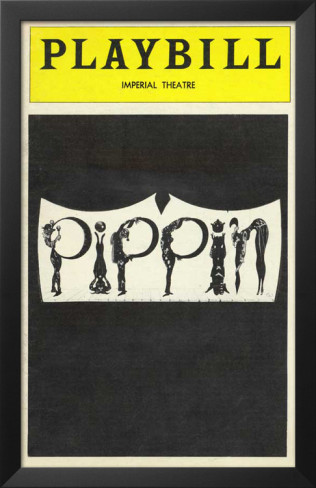
ringling posterI was fortunate to have grown up near and then right in the middle of New York City. When I was a young child, each spring I would be taken to see the Ringling Bros. and Barnum & Bailey Circus in its annual run at Madison Square Garden, which happened to coincide with my birthday.  It was fitting, then, that when it was time to see my first Broadway show, for my 12th pippin-broadway-poster-1972birthday my parents took me to a circus-influenced musical, Pippin (this was in its original 1970s incarnation, not the current revival).  But I was already hooked before I set foot in the Imperial Theatre.  Jules Fisher had me at the first light cue.

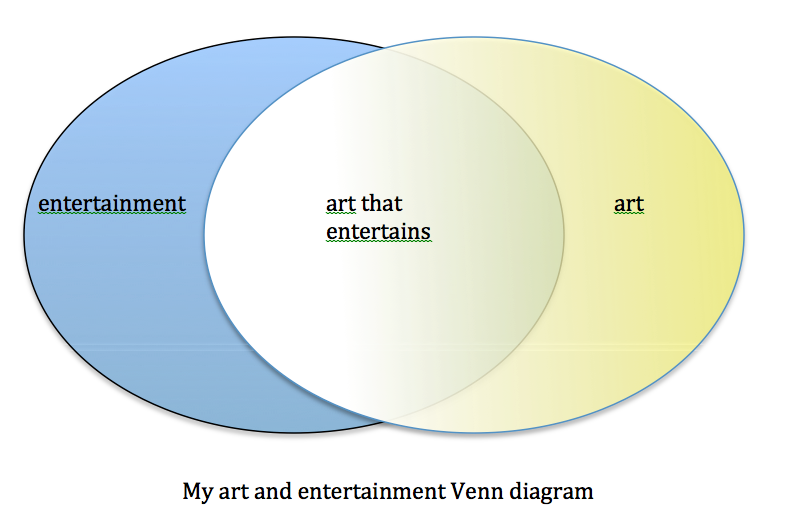
Years earlier, my tone deaf father appeared in a small speaking role in The Mikado produced by what must have been the men’s club of Temple Beth Shalom.  He was so proud of himself for his two lines, he was beaming with joy. Unfortunately, the dinner at The Pearl Chinese restaurant was too much for my four-year-old constitution.  I vomited in the hallway of the junior high school where they were performing, and never got to see him on stage.  My annual trip to the circus and the joy I saw in my father’s face are what I today attribute (or blame for) my lifelong dedication to theatre, and to the arts more generally.  I thought about these events as I read Barry Hessenius’s recent blog about entertainment and engagement as well as the comments that followed a week later.  On the one hand, I agree with Barry that entertainment is a way of engaging an audience, of grabbing and keeping the audience’s attention. On the other hand, I also agree with Carter Gilles (a frequently commenter on this blog as well) when he writes that:

Entertainment is not always a good facilitator of commitment and longevity.
Engagement actually IS a form of commitment, and it inspires longevity. If art is only the means to entertainment then entertainment is the goal, and art is in service to that end and is judged strictly by how well it entertains. It could be achieved by other means and that would satisfy us equally. If, on the other hand, art is something of an end in itself, then being entertained by it is incidental to the value of the art. A nice side effect, perhaps, but not its reason for being.

The circus is “entertainment” at its best, but is it art?  Ten years after seeing Pippin (and longer since my last Ringling Bros. show), Cirque du Soleil played its first US shows in a big top in Battery Park City. I was as mesmerized as an adult as I had been as a child.  Serious critics were writing about Cirque as a new form of performance art.  Everyone (or almost everyone) accepted it as art that entertains – its future as a Vegas spectacle not yet imagined.  That it was entertaining did not make it “not art.”

I like Carter’s defining characteristics of longevity and commitment, and the notion that the entertainment value of art is a byproduct of art rather than its reason for being.  BUT – and this is a big but – if it weren’t for the entertainment value of the circus and family participation in amateur community theatre, I wouldn’t be writing a blog about art now. I joined the arts circus as a child forty years ago because I was engaged by it.

Screen Shot 2013-06-05 at 9.51.42 PM

Posted in arts infrastructure, Arts management, Uncategorized | Tagged , , , | 6 Comments