A Brief Update on my Incubator Research

If you’ve been following this blog for a while, you know that I have been researching arts incubators and how they create value. The research is continuing, but a few thematic commonalities have surfaced through my cross-case analysis of four typical arts incubators. Briefly, these are:

  • Arts incubators lower barriers to market entry for artists or arts organizations
  • Arts incubators offer client artists and organizations a “stamp of approval” that conveys legitimacy to their local arts community and to funders
  • Arts incubators cushion financial risk, empowering artists or arts organizations to take artistic risk

Stay tuned for periodic updates….

Chaunte Howard Lowe clears the bar. Photo by Grzegorz Jereczek, CC-SA license

Chaunte Howard Lowe clears the bar. Photo by Grzegorz Jereczek, CC-SA license

[UPDATE: This research has now been published as “Value Creation by and Evaluation of US Arts Incubators,” International Journal of Arts Management, 20 (2), 32-45.]

Posted in Arts entrepreneurship, arts infrastructure | Tagged , , , , , , | 1 Comment

Supportive Grids, or, “There’s No Ego in a Leko”

RYT logoAt a recent participant parent event at Rising Youth Theatre, a terrific young company for which I serve as board secretary, one of the parents, who happens to also be a work colleague, noted that our discussion of the company’s work to build the social assets of the youth participants reminded her of the grid I had shown her in my office a couple of weeks prior. “Which grid do you mean? I have a lot of grids,” I replied. (She was referring to an inventory of means template that I use with student arts entrepreneurs to help them assess who they are, what they know, and who they know — but I didn’t recall that at the time.) A short time later, the board’s incoming president whispered to me, “I have a lot of grids” was the most characteristic self-description he could think of for me.

Leko

USITT Lighting Museum: 1968 Century Leko (6×9) model# 2321. Photo by Josh Williamson

I did not take it as a compliment at the time, but in retrospect, “grids” of one kind or another have been a critical component of my professional life since I first started out as a lighting designer and, especially, an assistant lighting designer. As an ALD, I was responsible for keeping track of hundreds of lights, their positions, colors, focus points, and so on across hundreds of cues as they changed intensity and, later, position and focus too. To do that (especially in the pre-laptop early years) required a lot of grids. Every one of those charts and forms — the hookup, the tracking sheets, the instrument schedules — were 100% in the service of the art on the stage; the grids themselves or the lights they tracked had no value except insofar as the kept the performance looking the way it was meant to. A long time ago, I said to one of my early graduate students in the lighting design program at UW-Madison, “There’s no ego in a leko,” meaning that the work on the stage is what’s important; if you have to move a light, change a cue, re-format a spreadsheet (aka “grid”), it is to make better art. The phrase must have stuck, because when the student graduated, he presented me with a wooden plaque with the saying on it, which I still have to this day.

As an academic administrator in the arts, grids were also an important part of my work, especially insofar as they communicated production schedules or personnel budgets. Again, the grids were deployed in the service of the art. Now that most of what I do is research and teach arts management and arts entrepreneurship, I find that students often have a hard time with grids – especially budget spreadsheets. The gridlines are not worth the paper they are printed on, but the art that they support is priceless. If the grid isn’t working, throw it out and start over. After all, “There’s no ego in a leko.”

Posted in arts infrastructure, Arts management, Higher education, Technology and arts | Tagged , , , , , , , | Leave a comment

Art, Change, and Small Steps

There is an interesting Op-ed in the New York Times today written by Antanas Mockus, a former mayor of Bogotá, Columbia. (Between Mockus’s two terms, Bogotá was led by another visionary, Enrique Peñalosa.) In his article, Mockus describes an art intervention he implemented to address the problem of corrupt enforcement of traffic laws:

Another initiative in a small area of the city was to replace corrupt traffic police officers with mime artists. The idea was that instead of cops handing out tickets and pocketing fines, these performers would “police” drivers’ behavior by communicating with mime.

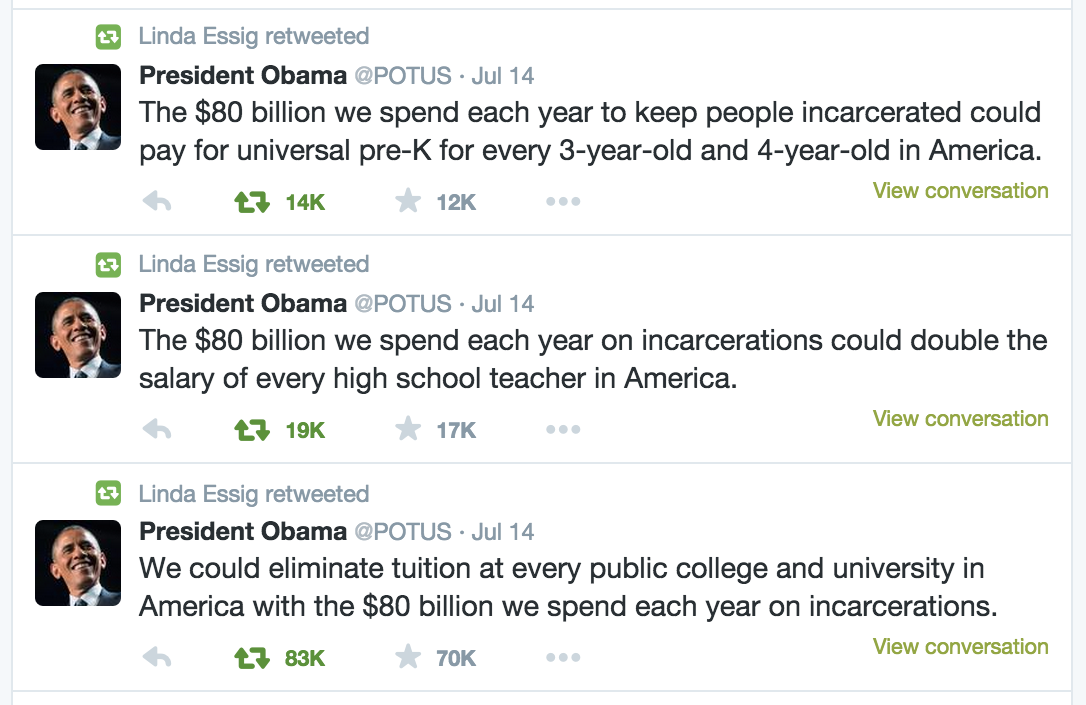
It’s not a huge idea, but it is a very creative one. Our own president was communicating a few creative ideas this weekend as well, via his twitter feed. In a series of tweets, President Obama suggested alternative uses for the $80 billion spent annually on incarceration in federal prisons. (Keep in mind that figure does not include state and local expenditures.)

Obama 80B tweets

These are big, creative ideas, but difficult ones. Change of this scale is really really hard — politically, socially, and logistically. Mockus closes his Op-ed with a dose of reality:

Changing a city is not the greatest political challenge; sustaining that change is. I used to have a Darwinian attitude toward politics: Just let ideas that are not sufficiently strong perish. Today, I realize that strong ideas can perish, too. As quickly as a city can progress, it can also fail. But never forget that huge changes can be achieved through surprisingly small steps.

What are some small art interventionist steps we can take today to make progressive change in our cities, our states, our country?

Posted in Arts education, arts infrastructure, Arts policy, Culture and democracy, Higher education | Tagged , , , , , , , , | 1 Comment

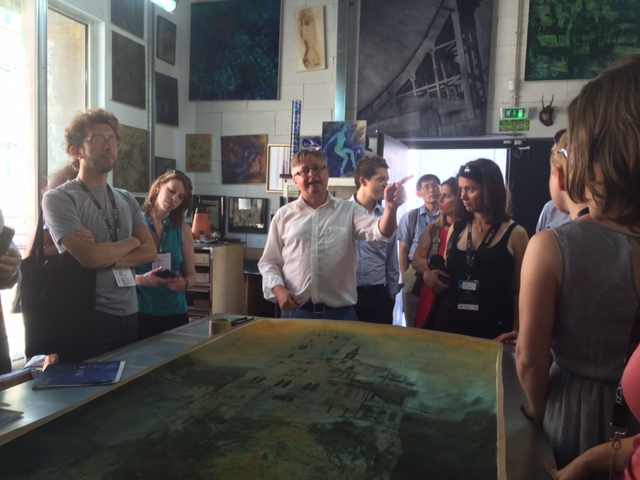
Artist Alfons Alt at La Friche

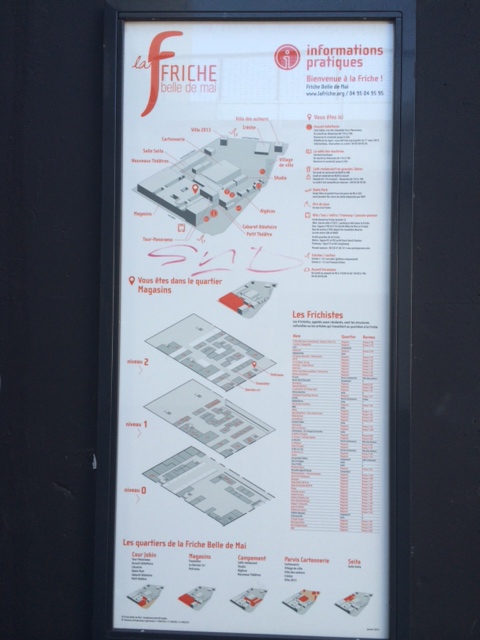
LaFrichePlan

The last day of the recent AIMAC Conference was held at La Friche in Marseille, an urban arts redevelopment project in a former tobacco factory. La Friche includes artists’ studios, performance and exhibition spaces, a skate park, rooftop event space, and support services for the Belle de Mai neighborhood, including a daycare/preschool. At La Friche, “culture” is an implement of both social and economic development. “’Economic’ in the sense that cultural products are produced, bought, and sold – but certainly not taking a solely economic approach. ‘Social’ because culture is a space where the essential questions of our society today arise in political terms.”[1]

AltStudio
Between conference sessions, small groups made visits to some of the artists’ studios. I visited the studio of Alfons Alt. Alt uses large format, historical photographic processes combined with earth-based pigments. He explained:

It’s interesting to bring painting and photography and engraving together to make new thing. This technique is not industrializable. I want to make photographs that in 200 years will still be here. I don’t believe in digital. The pigments I use are long lasting, permanent.

Alt doesn’t like to rely on public funding to make work:

When you have public money you have to do public things and that is not always aligned with art.

Alt makes the work he wants to make how he wants to make it. He finds the public for that work in museums, galleries, and private commissions in a way that has sustained his career for 30 years. He models the kinds of artist entrepreneur that is always keeping the art at the center. I note, however, that La Friche itself was developed with public funding in what in the US we would most probably call a “creative placemaking” effort.

[1] Roughly translated from the La Friche website.

Posted in Arts entrepreneurship, Arts funding | Tagged , , , , , , | Leave a comment

The Arrogance and Humility of the Monolingual (L’ arrogance et l’ humilité du monolingue)

Flag_Map_of_America_and_French_Louisiana_(1802)Quick on the heels of the Americans for the Arts annual convention, I headed to France for the biennial conference of AIMAC (International Association of Arts and Culture Management) where I presented a paper titled “Means and Ends: A Theory Framework for Understanding Entrepreneurship in the US Arts and Culture Sector.” Context is important; the framework I posit may not necessarily apply in the European context where “cultural entrepreneurship” is more widely studied and understood. An American in Provence with only a few years of high school French to help me, I quickly felt incredibly humbled by my position as someone who could not follow a complex conversation, read (or find) a street sign, or understand the conference plenary session without simultaneous translation headphones.

It is astoundingly arrogant to presume that anywhere Americans travel in the world, we will encounter only people who can speak English. Time and again in the last few days while away from the conference, I have witnessed American tourists walk into a shop or up to a counter and immediately begin speaking English, expecting to be served with the immediacy we have grown used to in the US. The unalienable rights we hold to be self evident on this 4th of July do not extend to a right to impose our language on others abroad (or at home, for that matter). If all men – and women – are created equal, we each have equal and individual right to our culture, including our language.

How, then, can we communicate across cultures? Given the topic of the conference, arts and cultural management, and my own interests both professional and personal, I couldn’t help but think that art in many forms is extra-lingual. We can share, appreciate, and understand much art across the boundaries of our linguistic capacities, even if we may not be able to talk to one another about it.

I estimate that 80% of the AIMAC conference attendees were not native English speakers, yet with the exception of the opening plenary, the conference was held in English. That means that 80% of the scholars presenting were presenting in a second language! In every country except the US (or at least most), the higher education system and the schooling leading up to it teaches people to navigate the world multilingually. I am thankful that enough high school French has come back to me that I can have an (almost) conversation with a French person, albeit not at a very high level.

Coincidentally, just as I was starting to write this post, an article in the Atlantic came up on my feed that seems relevant. Maybe we don’t like to speak other languages because we don’t like making mistakes. As the article points out, we should get over it because making mistakes is how innovation happens. It also makes us humble — and a little humility is a good thing.

Posted in Arts education, Culture and democracy, Higher education | Tagged , , , , , , , | 1 Comment

My First AFTA

AFTAI recently attended the Americans for the Arts (AFTA) Annual Convention for the first time. Unlike the AIMAC conference (International Association of Arts and Culture Management) I will be attending next week, AFTA is not academically oriented. It also is very much its first name: American. The conference “centered on Power and Empowerment, and the role of the arts in empowering communities and individuals.” This concept of empowering individuals is unique to – or, more accurately, more prevalent in — the US than perhaps any other country. The Declaration of Independence was published the same year as Adam Smith’s Wealth of Nations. This is not a mere coincidence, but rather a confluence of Enlightenment thinking that has led us to believe, profoundly, that individual rights are paramount.

With individual rights comes individual responsibility as well. The session I was asked to moderate at the AFTA conference was titled by the conference organizers, “How Can We Nurture Artists as Entrepreneurial Drivers of Creative Economies?” I suggested at the onset of the session that it is not the responsibility of the individual artist to drive the economy but rather that it is the responsibility of the artist to make art. I reframed the question as “How Can We Nurture Artists as Entrepreneurial Drivers of Their own Economic Lives?” In an economy built on the concept (rightly or wrongly) that individuals operating in their own self-interest will collectively serve the common good, we must give artists access to the knowledge, skills, and ability to maintain their creative practice in an economy that is not particularly friendly to them.

One of my co-discussants, Carla Dirlikov, talked about cultural entrepreneurhip as a move toward changing belief systems about the value of art in communities. The other, Beth Flowers, talked about setting up programs that incentivized people to work together to act on the arts business training they receive by building partnerships between artists, businesses and other community organizations. I shared some research we did about field-based arts business training. There was a theme shared among the three of us, as well as the over 50 people who participated in the discussion, that more can be done to remove barriers and obstacles to artist sustainability. In no particular order, here are some of the other topics, themes, and issues that were raised:

  • There are emotional barriers to accessing the business of art bred by traditional conservatory artistic training
  • Arts agencies can help artists with the “red tape” of dealing with bureaucratic issues like permitting and licenses [Revolve Detroit publishes a guidebook for use locally in this regard]
  • More can be done to engage the business community in partnering with artists [Some examples of this being done, in addition to Revolve Detroit, are Spaceworks Tacoma and Irrigate]
  • Teach artists how to identify resources
  • Consider that we are in a purpose economy and an experience economy where social entrepreneurship can be successful
  • Concentrate on cooperation and the aesthetics of the art rather than fostering competition among artists
  • Help mid-career artists [Pave has recently published a resource guide on “Asset Building for Artists“]

It was a lively and very positive discussion and I only tap the broadest themes here. The discussion participants included people from local and state arts agencies, artist services organizations, a few educators, citizens advocacy groups, and artists (mostly Chicago-based). To sum up my initial answer to the question both as posed by the organizers and reframed by me, I quote from Theaster Gates’ keynote address: “it starts with listening.”

(Stay tuned for news from the AIMAC conference in about two weeks)

Posted in Arts entrepreneurship, arts infrastructure, Arts policy, Culture and democracy | Tagged , , , , , , , , , , , | Leave a comment

What is the “Arts and Culture Sector?”

On the plane to Chicago for the Americans for the Arts (AFTA) annual conference, I was working on my presentation for another conference, AIMAC (International Association of Arts and Culture Management). This paper, “Means and Ends: A Theory Framework for Understanding the US Arts and Culture Sector,” includes an operational definition of “arts and culture sector” as context for the discussion of arts entrepreneurship. I though about this definition over and over again during the first day of the AFTA conference as the issue of sector boundaries arose again and again in different ways.

First, at a meeting of arts researchers at which we were asked to develop a “wish list” for arts research, a colleague commented on the need for a standardization or defining of the sector so that we wouldn’t be “always talking about apples and oranges.” Then, Bob Lynch unveiled AFTA’s newest advocacy video in which a young adult asks, “What is art, anyway?” before reading a dictionary definition that focused on human expression and creativity. Then, during a brief Q&A with Theaster Gates following his keynote speech, the moderator quoted Stephen Colbert who, during his interview of Gates on The Colbert Report, said “You are turning things into art that I used to not have to think about.” So art is expressive and creative, and makes us think in new ways. Good, but is it enough to define an entire sector of human endeavor? I share below an excerpt from my paper that uses three characteristics to define “arts and culture sector.” Not being a philosopher, I hesitate to take on the bigger question of “what is art?” but for research purposes think a sectoral definition useful. In a more academic tone, the short version of this follows. Feedback is welcome, as always.

Chicago Panorama by Danimir

Chicago Panorama by Danimir

            In Europe and the Commonwealth countries the “creative industries” are more widely understood than in the US. For the purposes of this paper, however, “arts and culture sector” is not a set of industry codes, as might be the case in defining “creative industries,” but rather considered to be that sector of economic and social activity that places artistic production at its center and from which culture results. This sector has three primary characteristics.
Products of the arts and culture sector convey symbolic meaning, have a use value first in the communication of ideas and only secondarily in their functional capacity (see Bilton & Leary 2004, and Martin 2004), and may be produced by industrial or artisan means. However, Caves (2000) notes that regardless of the method of production, the products of the sector are differentiated by what he calls the “infinite variety property (2000, p. 6). Thus, the arts and culture sector is distinguished by the uniqueness of its products from the larger “creative economy” defined by Howkins (Howkins, 2002) as inclusive of the copyright, patent, trademark, and design industries. Another important distinction is made by Williams (1981) “between the corporate ownership of the means of cultural production associated with the development of mass reproductive technologies, and the survival of older artisanal methods of production, typically the non-market area of cultural production supported by public subsidy” (in Galloway and Dunlop 2007, p. 24). The control of the means of production by the artist and/or artistic producer is a method for arts and culture entrepreneurs to convert available means into desirable ends. Thus, for the purposes of this research and its conceptualization of arts entrepreneurship, the arts and culture sector is understood to produce outputs that are unique, have symbolic meaning, and the production of which is controlled, at least in part, by those who generate the creative ideas at its foundation.

Posted in Arts policy | Tagged , , , , , | 5 Comments

Arts and Public Policy (a syllabus)

Little orange roomIn the very early days of this blog, as I was transitioning my research focus from lighting design to arts management, entrepreneurship and policy, I was frequently asked, “Do you miss it?” or, more bluntly, “Where’d your creativity go.” I replied “To a little orange room in a repurposed dorm in Tempe, Arizona” where I was creating curricula for a new undergraduate course in arts entrepreneurship. That led to creating a new MFA program in Arts Entrepreneurship and Management. Since its launch two years ago, I have been looking forward to the opportunity to teach a graduate seminar for third year students in arts and public policy. Over the last several weeks, I have been creating the framework for the course and today completed a syllabus. I am sharing the first draft of that syllabus here. You are welcome – even encouraged — to comment and to suggest additional or alternative readings. (Many thanks to my colleagues across the country who have shared their syllabi with me as models – the best parts of mine are adapted from theirs but, as the saying goes, errors and omissions are totally my own.)

—————————————————————————————————–

THP598: Arts and Public Policy

Goals and Objectives, or “Is There Such a Thing as ‘Arts Policy’?”

Before we can answer the question, “Is There Such a Thing as ‘Arts Policy’?” we must first answer a host of other questions: What is public policy? How do we define “Arts” as a policy sector? Where are policy decisions made? By whom? What policy tools do these policy actors deploy? Who benefits? Through your work in this class, you will develop an understanding of the relationship between public policy and the arts in the United States so that you can begin to answer these questions in ways that will inform your work as an arts manager, artist, and actor in the arts policy environment. (Please note that the context for our class is confined to the U.S. and occasionally focuses on AZ and the West). In this course you will:

  • Examine the goals, problems, and solutions common to US policymaking as they affect the arts locally, regionally, and nationally.
  • Review the history and central tensions of arts policy and funding in the U.S.
  • Dive deeply into the policy areas articulated by Bill Ivey in his “Cultural Bill of Rights.”
  • Increase your arts policy literacy and currency.
  • Produce a policy brief that demonstrates professional skills in research, analysis, visual literacy, writing and presentation.

Framing, perspective, and advocacy

We each enter this classroom with unique perspectives and opinions. Your policy perspective may result from many factors, including your artistic practice, your faith, the political leanings of your parents, the influence of newspapers and media, and so on. Rather than assuming an advocacy position, this course is designed to provide you with the knowledge and skills to craft an effective argument about arts policy, to make a policy recommendation based on research and analysis and to present that argument professionally and effectively. Thus, the central framing of this course is provided by two contrasting texts: Bill Ivey’s “Arts, Inc.” and Tyler Cowen’s “Good and Plenty.” These two authors take radically different views on the same subject: what is the role of government in arts and culture and what should be the role of government in arts and culture. Bill Ivey was the chair of the NEA under Bill Clinton; Tyler Cowen, an economist, was commissioned by the George W. Bush administration to write “How Government Funds the Arts,” a work that led to the book you are reading for this class. Ivey described himself during a recent visit to ASU as “a Liz Warren Democrat;” Cowen runs a libertarian economics think tank called the Mercatus Center (Google its board of directors if you’re curious). To craft thoughtful and well reasoned policy recommendations requires both careful analysis and an understanding of the multiple viewpoints that may inform decision-making. By reading policy analysis from different sides of the ideological spectrum, you will gain an understanding not only of what the policy issues are, but also how to analyze the policy environment and craft an effective argument. This is not to say that I personally do not have a point of view; I do. The course, however, exposes you to many, not just one.

All this goes to say that all political ideologies are welcome in the course and will be respected. However, if you choose to adopt an advocacy position in class discussion, presentation, or your writing, it must be clearly articulated and supported by fact and analysis. There is an “Advocacy Resources” folder on the course site should you find it useful.

The crucial question common to the entire cultural sector, both cultural industries and supported sector (a false dichotomy in our view), is democracy and freedom of expression. The role of cultural policy is to ensure this, creating the space for different types of cultural expression, including local, regional and national cultural identities, which may not play to a global market, and may never make big bucks (Galloway and Dunlop, 2007, p. 29]

How we will learn together (requirements):

You will achieve the learning objectives for the course by: reading and reviewing published materials; listening, asking, and answering questions in class; finding new resources; compiling materials in a literature review; conducting research; arguing persuasively in writing; and making formal presentations. This is a graduate seminar, thus attendance and active participation in class discussion is expected at every session and counts for 20% of your course grade. Reading is due on the dates listed on the schedule that follows. In order to actively participate in class discussion you are expected to complete all the reading prior to class and are encouraged to take reading notes. If you do not do the reading and participate in class discussion, your grade will be negatively affected. Yes, there is reading due the first day of class, August 26.

  1. Online discussion in lieu of 9/2 class. 10%. By Monday 8/30 noon, post a link to a press release or news item published in the preceding week that you think is important vis a vis US arts policy. Briefly summarize the issue and explain why you think it is important. By Wednesday 9/2 noon, post a response to each of your classmates postings, articulating why you agree or disagree with what they have said. By Friday 9/4 at noon, respond to each of your classmates on your thread. I will participate in this virtual class as well, posting material and responses.
  2. Discussion leadership and literature review. 30%.  In “Arts, Inc.” Bill Ivey expands on his “cultural bill of rights,” across six policy areas, listed in the schedule following. You will each lead one of the “deep dives” into these. Doing so necessitates not only leading discussion based on the required reading, but also conducting significant background research on the policy area under discussion. You are required to present the context for discussion to the class, lead the discussion, and follow up with a comprehensive literature review two weeks after your deep dive presentation. The lit review should be 10-15 pages in length (with roughly twice that number of references), be thoroughly researched and formatted according to the most recent APA style guide. Note that each student will have a different due date for their literature review based on the date of their discussion leadership.
  3. Policy brief. 40% In each of his six main chapters, Bill Ivey identifies a policy problem, articulates who the stakeholders are, and poses a policy solution. For your final project, you will do similarly: identify a policy problem; summarize relevant literature; identify the stakeholders, policy actors, and agencies involved; gather statistical data to support your argument [you are not expected to gather primary statistical data, but are expected to find the data you need in order to craft your argument]; interview actors in the policy space of interest; make a policy recommendation. You are expected to: submit a proposal for approval; make a presentation to the class during the last class meeting; submit a completed policy brief via email – in one PDF file on Wednesday December 9, by noon. Student work will be shared with the class on the course site. Your final submittal should both read well and look good. You will be reading examples of policy briefs periodically throughout the semester and these should serve as examples for both content and form. Clear visual presentation of data is expected.

Written materials should adhere to APA style for in-text citations and reference lists. I take academic integrity very seriously. Although you are expected to synthesize previously published work, the work you submit must be your own. Students who violate ASU’s academic integrity policy in any way will receive a grade of XE for the course and risk expulsion from their graduate program.

Required Texts:

  • Bonin-Rodriguez (2014). Performing Policy: How Contemporary Politics and Cultural Programs Redefined U.S. Artists for the Twenty-First Century. London: Palgrave McMillan
  • Cowen, T. (2010). Good and Plenty: The Creative Successes of American Arts Funding. Princeton NJ: Princeton University Press.
  • Ivey, B. (2010). Arts, Inc: How Greed and Neglect Have Destroyed Our Cultural Rights. Berkeley CA: University of California Press

Additional articles, research reports, and policy briefs on Blackboard. 

All three books are on reserve in the Haydn Library. Cowen is available through ebrary.

STAY INFORMED! The policy environment for the arts is informed by the past, but exists in the present. Relevant material will be found in the following media outlets – and more:

Weekly Schedule.

Subject to change, especially as guests become available; there will be guests.

Reading that is not from the required books can be found on the course blackboard site.

WEEK 1 – August 26.

Course introduction and expectations

What is policy?

What is cultural policy?

  • Bedoya (2004). US Cultural Policy, It’s Politics of Participation, Its Creative Potential. National Performance Network.
  • Mulcahy (2006). Cultural policy: Definitions and theoretical approaches. Journal of Arts Management, Law and Society (JAMLS)
  • Kidd (2012). Public culture in America. JAMLS

Conceptual grounding: Public and Private

  • Wyszomirski (2002), Raison d’Etat; Raisons des Artes. in Cherbo and Wyszomirski (eds) The Public Life of the Arts in America.

How is “arts policy” the same as and different from “cultural policy”

WEEK 2 – September 2

Virtual discussion: current events in arts policy. See discussion posting requirements above and get started on your reading for Week 3.

WEEK 3 – September 9

Policy process

  • Stone (2002), Introduction and Chapter 1 in Policy Paradox

Policy types

Where does policy “happen?”

Policy actors

The concept of “public value”

  • Moore and Moore (2005). Creating Public Value Through State Arts Agencies, 9-80.

The artist in the US policy environment

  • Bonin-Rodriguez (2015), pp 1-49

Policy tools and targets

  • Schneider and Ingram (1997). Excerpt from Social constructions of target populations. Excerpted from Policy Design for Democracy

 Guest: Jaime Dempsey, Deputy Director of the Arizona Commission in the Arts, on the policy process.

WEEK 4 – September 16

Where, what, and how, continued.

Background: the economics of arts and culture;

  • Excerpt from The Arts and Public Policy in the United States,
  • Excerpt from Performing Arts – The Economic Dilemma
  • Excerpt from The Subsidized Muse
  • Rand Foundation Gifts of the Muse (entire document)
  • NEA (2012). How the United States Funds the Arts, 3rd edition.

No class September 23 – Yom Kippur

WEEKS 5 through 11: DEEP DIVES into the policy “problems” or “Cultural Rights” Ivey identifies. Your written lit review is due two weeks after your discussion leadership.

September 30: Heritage

  • Ivey, pp 1- 56 (introduction and chapter 1)
  • Cowen, pp. 1-30
  • Rosenstein (2006). Cultural heritage organizations. Urban Institute.

Guest TBD

October 7: Artists

  • Ivey, pp. 57-93 (Ch 2)
  • Cowen, pp. 31-64
  • Urban Institute. Investing in Creativity: A Study of the Support Structure for US Artists
  • Jackson, MR (2004). Investing in creativity [this is an article in JAMLS about the report above, written by its primary author]
  • Bonin-Rodriguez, pp. 107-126

October 14: A Creative Life

  • Ivey, pp. 94-123 (Ch 3)
  • Novak-Leonard et al (2015). Cultural Lives of Californians. NORC.
  • NEA (2014). A Decade Engagement in the Arts
  • Alvarez (2005). There’s Nothing Informal about It.
  • Tepper, S. and Y. Gao (2008). Engaging art: What counts?” in Tepper and Ivey (eds) Engaging Art: The Next Great Transformation of America’s Cultural Life

October 21: America, Art, and the World

  • Ivey, pp. 124-154 (Ch 4)
  • Nye (2008). Public Diplomacy and Soft Power
  • Grincheva (2010). US Arts and Cultural Diplomacy, JAMLS

Guest TBD

October 28: Lasting value

  • Ivey, pp. 155-183(Ch5)
  • Cowen, pp. 101-132
  • Bonin-Rodriguez, pp. 71-89

November 4: Strong Responsible Institutions

  • Ivey, pp. 184-221
  • Cowen, pp. 65-100
  • Reidy, B (2014). Why Where? Because Who. AEA Consulting/Irvine Foundation

Coda: The Role of Government

  • Ivey, pp. 222-296
  • Cowen, pp. 133-152

November 11 – VETERANS DAY

DUE via email: Final project proposal

WEEKS 12-13 Arts Policy “hot topics”

November 18: Creative Placemaking, Creative Cities, Community Vibrancy

  • Markusen and Gadwa-Nicodemus, Creative Placemaking. NEA [this is review for students who have taken THP551]
  • Bedoya (2013). Placemaking and the politics of belonging and dis-belonging. GIA Reader
  • Nicodemus (2013). Fuzzy vibrancy. Cultural Trends
  • Tucson/Pima Arts Council. Place Report
  • Rushton (2015). Cultural districts and economic development in American cities. Poetics
  • Reference: Community development investment review: Creative Placemaking. San Francisco Federal Reserve.

Guest TBD

November 25: “Arts and Economic Prosperity” and its role in arts advocacy

  • Americans for the Arts. Arts and Economic Prosperity IV
  • Topos Partnership (2010). The Arts Ripple Report
  • Hawkins (2012). Leveraging the power of individuals for arts advocacy. JAMLS

Guest: Rusty Foley, executive director of Arizona Citizens Action for the Arts

WEEK 14

December 2: Final presentation of policy brief

WEEK 15

DUE December 9 noon: Final Policy Brief
Posted in Arts education, Arts policy, Higher education | Tagged , , , , , , , , , , | Leave a comment

The Razor’s Edge

Razor's edge by Tim Allen

Razor’s Edge by Tim Allen. Available for purchase from http://fineartamerica.com/featured/razors-edge-tim-allen.html

My social media universe lit up over the weekend with the news of the entire first year Art MFA class leaving University of Southern California’s Roski School of Art and Design half way through their two-year program. A day or two later, all but one of the graduating class boycotted graduation. There were 7 students in the first year class of what is described as a “selective” program at a private university where annual base tuition (before fees) topped $47,500 this year.

In their open letter, the first year class cited changes to funding packages promised at recruitment, changes to faculty (including one high-level resignation), and changes to curriculum. The coverage of the students’ departure and editorializing around it, although not the letter itself, explicitly or implicitly blames the school’s (and perhaps the field’s) embrace of a “structural overhaul that valorizes neo-liberal corporate clichés.” An anonymous Roski faculty member defines the problem this way to Hyperallergic, “It’s an economic vision of austerity and neo-liberalism that is one-sided and short term, and does not take in to account the symbolic value of programs in the humanities.”

This is the razor’s edge on which I walk as an arts entrepreneurship educator. On one side of the razor an artist risks being dragged into the abyss of exclusively financial motivation — fueled by student debt — to make work that is inauthentic, derivative, uninteresting, or just plain bad (think Thomas Kinkade). But on the other side of the razor is the very opposite of austerity: abundance. I don’t mean financial abundance, but abundance of spirit and creativity that can be supported by (arts) entrepreneurial action. Arts entrepreneurship educators and higher ed administrators listen up: we can avoid USC’s tragedy not by teaching artists to make money from their art but rather the mirror image, teaching them to make art from the money art generates. Money is the tail, not the head, of entrepreneurial arts practice.

As arts entrepreneurship education continues to advance and grow in universities, faculty and students must navigate this razor’s edge without cutting their feet (or their spirit). Consider that entrepreneurial action by artists makes them the principal in their own career rather than the agent of a third-party producing structure over which the artist may have no control. To not provide students with an education that includes the skills and knowledges needed to navigate the creative economy does young artists a disservice. To provide an education that includes only the skills and knowledges needed to navigate the creative economy does them an even more egregious disservice, one that potentially diminishes the quantity and quality of the art that becomes our shared culture.

The Cherusker, from Albion Europe

The Cherusker, from Albion Europe

Posted in Arts entrepreneurship, Culture and democracy, Higher education | Tagged , , , , , | 3 Comments

+, Δ

Plus/Delta is a popular format for formative evaluation and organizational learning. What are we doing well (the “plus)? And what should we change (the “delta”)? Used summatively, the questions are similar: What went well? What should we change for next time? It is in the plus/delta spirit that I offer initial reflections on the 4th Biennial Symposium on Entrepreneurship and the Arts: Creativity and New Venture Creation, which finished just 48 hours ago.

The Plus(es)

Overall, the event exceeded my expectations, but that overall assessment needs to be broken down into specific chunks to be 1) useful organizationally and 2) interesting to the readers of this blog.

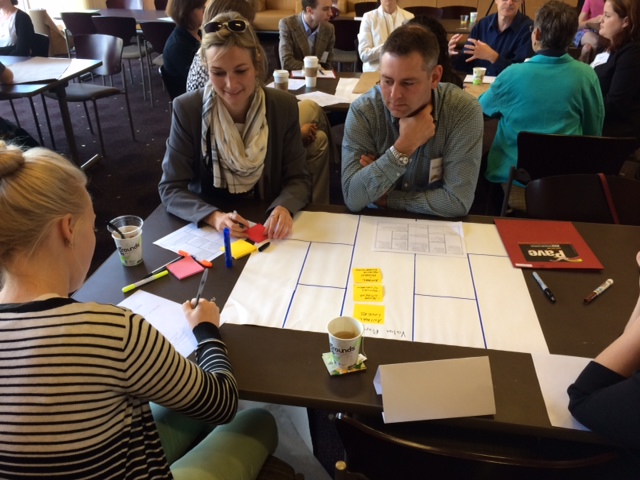
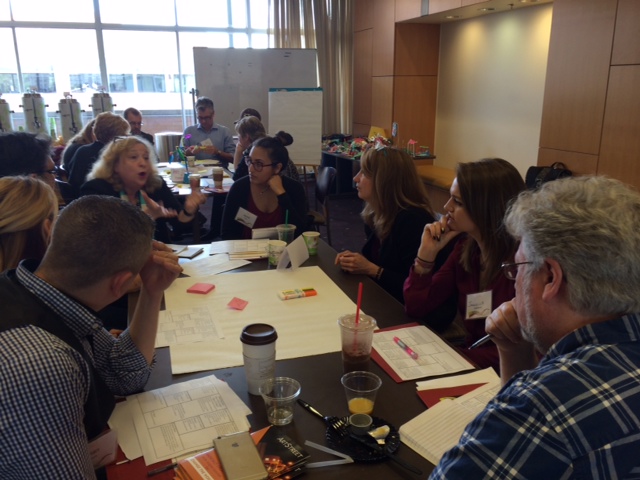
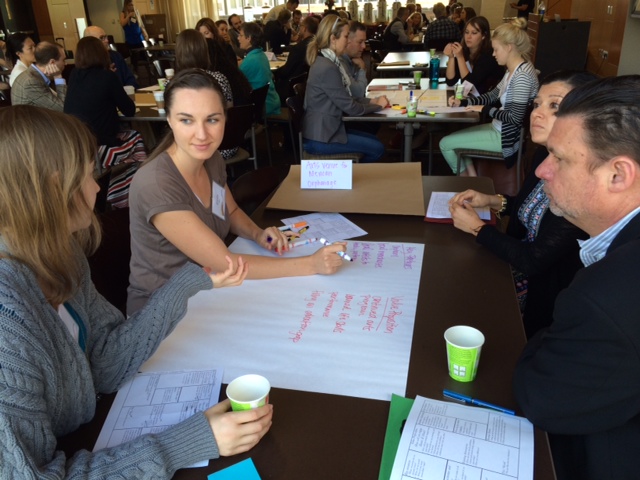
Active engagement. Traditional academic conferences can be dry and, most problematically, often result in small groups of people talking within their small groups about things they already know. We (and the “we” here is me and the small cadre of terrific graduate students in the arts entrepreneurship and management program as well as members of our steering committee) wanted to host an event that included active engagement and interaction. This was an area where the symposium truly excelled. From the icebreaker activity over breakfast (participant super-bingo) to the small groups working collaboratively and creatively during Elizabeth Long Lingo’s workshop, participants were actively engaged. They listened to each other empathically, shared ideas openly, and even got out of the building for some physical stretching led by Jessica Rajko to complement the stretching of our minds.

Symposium 5

Small group activities encouraged collaboration

Creative interaction across many spectra of expertise. Again, the symposium met or exceeded expectations. There were students, faculty, and administrators from ASU, students and faculty from other universities (to name just a few: UT Austin, Millikin, University of Missouri, Seattle University, Colorado State, American U, Pratt Institute, New England Conservatory, Peabody, Indiana U and more), arts industry leaders such as key note speakers Ruby Lerner of Creative Capital and Diane Ragsdale, policy actors from the Arizona Comission on the Arts and Phoenix Office of Arts and Culture, independent artists such as Rick Noguchi and Chris McGinnis, people who work in artist support like Beth Flowers of Arts Incubator of the Rockies and Kristine Maltrude of ArtSpark, funders [big THANK YOU to the Women and Philanthropy Program for making the event possible], and others. It wasn’t just that these people were all in a room together – they were meeting each other and working together. One graduate student wrote in social media: “It was amazing to be with such passionate, gifted, beautiful people. This very much felt like a wonderfully intimate gathering with friends.”

Symposium 7

Ruby Lerner and other participants share ideas

[speaking of social media, you can search hashtag #paveASU on twitter]

Elizabeth Long Lingo leading a workshop on New Venture Creation from the Ground Up

Elizabeth Long Lingo leading a workshop on New Venture Creation from the Ground Up

Knowledge sharing. In addition to the programming we created, an open call had gone out for workshops or presentations on arts entrepreneurship theory, practice, and pedagogy related to Creativity and New Venture Creation in the Arts. We received numerous outstanding proposals that constituted the “concurrent sessions” that ran on Friday afternoon. This segment was the most like an academic conference, but since by then we had mostly all met one another and because of the mix of backgrounds, interest, and expertise, the sessions avoided the pitfall of the academic conference: spiraling inward with the same people who attend such conferences. Especially given the attendance by undergraduate students (not too many, but some), I feel confident that new knowledge was disseminated.

Between Plus and Delta is “wait and see.” It’s too early to know if the pedagogic techniques and research presentations will have impact, but presenters are being encouraged to 1) share their presentation materials with attendees and 2) consider submitting material for publication in Artivate, Pave’s peer-reviewed journal.

The Delta(s)

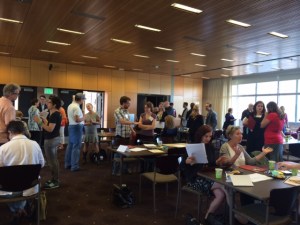
Diversity. The room was packed; conversations about art, policy, business, and design thinking were taking place between people of different ages and backgrounds. I walked up to the podium to deliver my introductory remarks and knew immediately what the theme of the Fifth Biennial Pave Symposium on Entrepreneurship and the Arts would be: Minority Arts Entrepreneurship. There was a lot of diversity in the room, but not of the observable type one usually associates with the word “diversity” (with the exception of the observable age diversity).Symposium 4 Of the almost 90 people in the room, I observed that less than 10% were people of color. This homogeneity does not reflect my personal or professional values. Neither does it support the growth and development of he field. So, before I uttered the first words of the Fourth Biennial Symposium, the Fifth was on my mind.
Symposium 6Students. Approximately 20% of the attendees were ASU students. I want to increase that to 30% and to do that, we need to more clearly articulate why the event is important to them. We should also get a student sponsorship program in place well ahead of time so that price is not a barrier to entry (this year the student registration price was $50, inclusive of meals). Timing is tricky for students, but sandwiched between finals and graduation, we’re probably going to keep it where it is as a “best compromise.”

Programming costs. This iteration of our symposium was only possible because of a generous grant from the Women and Philanthropy Program of the ASU Foundation. We have already taken steps to reduce the 2017 cost by using our own theatre spaces and will need to be strategic about both fundraising and expense reduction for 2017.

So, although I am extremely pleased with what happened here May 8-9 2015, there is room for improvement. We are sending out our formal evaluation to attendees this week, which will give us data for a more formal plus/delta evaluation. For now, I’m just going to thank the support team of graduate students: Shelby Maticic, Mollie Flanagan, and Kara Chesser, and our sponsors: Women & Philanthropy; Herberger Institute for Design and the Arts; School of Film, Dance, and Theatre.

And this quote from an attendee:

I loved the diversity of the arts that was represented, as well as the various ways the attendees were engaged – thinking, creativity, networking, etc. I’m still thinking about all that transpired and wishing for more…

… more to come May 5-6, 2017! [and watch for our 2015-2016 speakers series too]

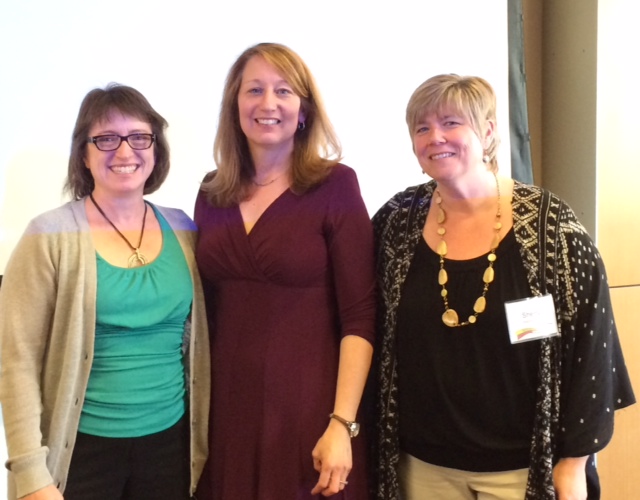
In the post-conference glow with speaker Diane Ragsdale and co-conspirator Sherry Wagner-Henry of the UW Madison Bolz Center for Arts Adminsitration

In the post-conference glow with speaker Diane Ragsdale and co-conspirator Sherry Wagner-Henry of the UW Madison Bolz Center for Arts Adminsitration

Posted in Arts entrepreneurship, arts infrastructure, Culture and democracy, Higher education | Tagged , , , , , , , | Leave a comment